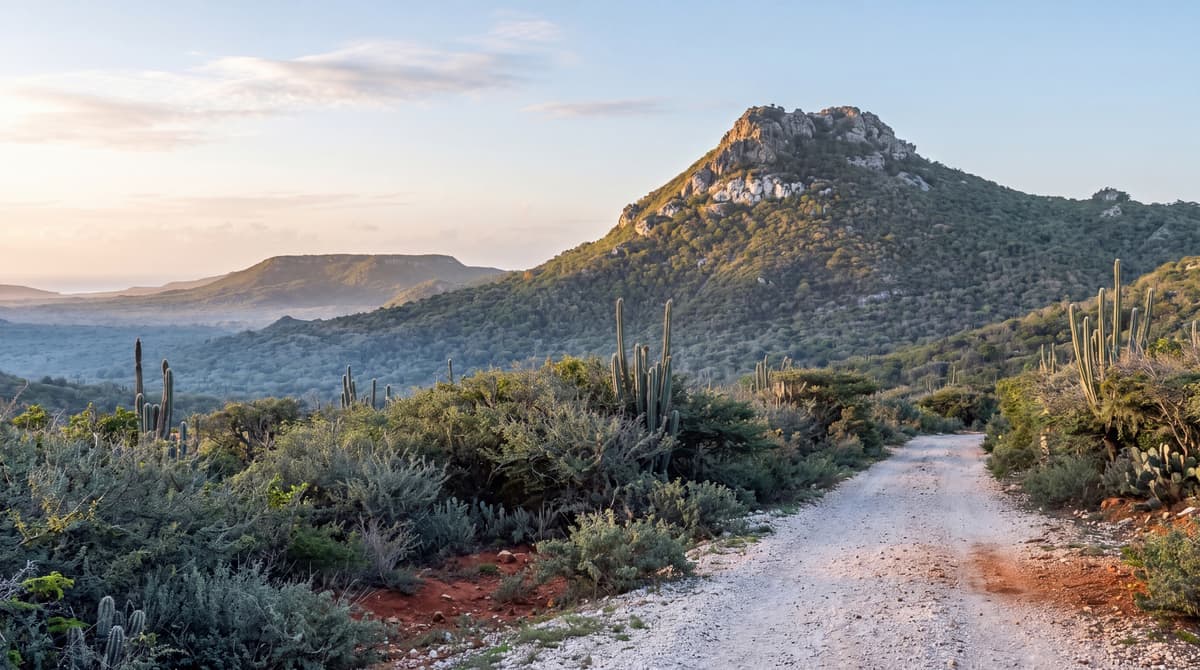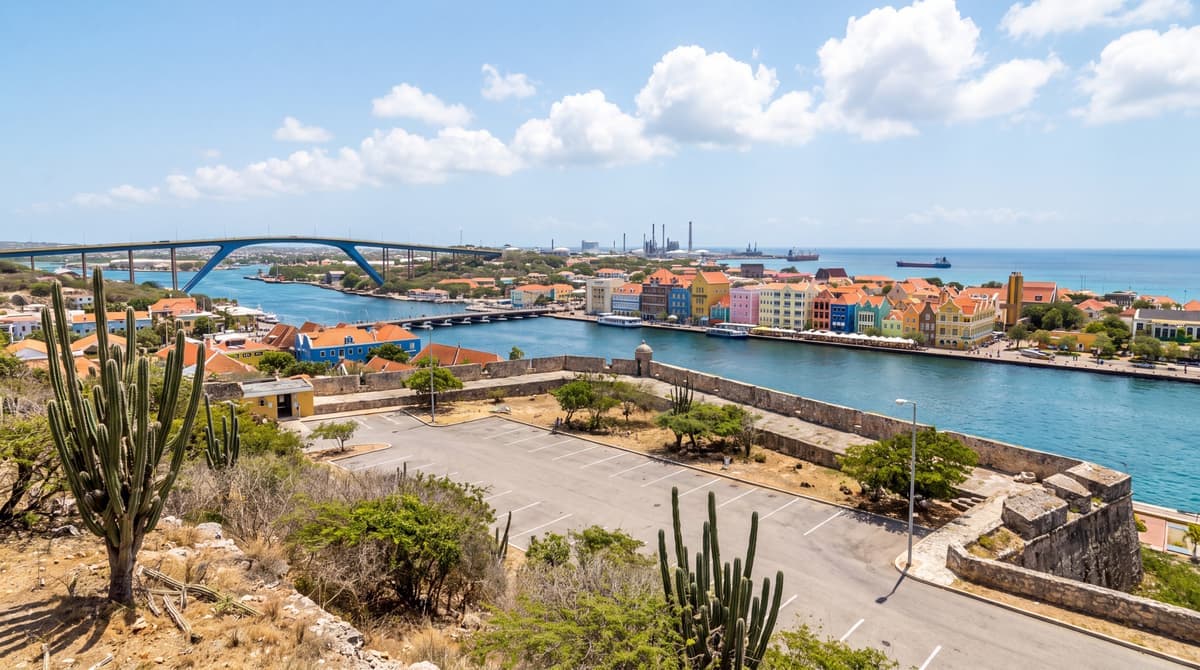
Once your beach days are sorted, the next question almost every Curacao visitor asks is what to do when the sun is brutal, when a rare rain band rolls through, or when the group just wants a break from sand. Hato Caves is the island's standard answer, and has been for decades. It is Curacao's best-known cave, an easy, shaded, family-friendly stop a few minutes from the airport, and on a hot afternoon the cool, humid dark underground is a genuine relief. It is also short, guided-only, and mildly touristy, so it helps to know exactly what you are getting before you drive out. Here is our honest local rundown, including whether to add the Ostrich Farm that every combo tour pairs it with.
What Hato Caves actually is
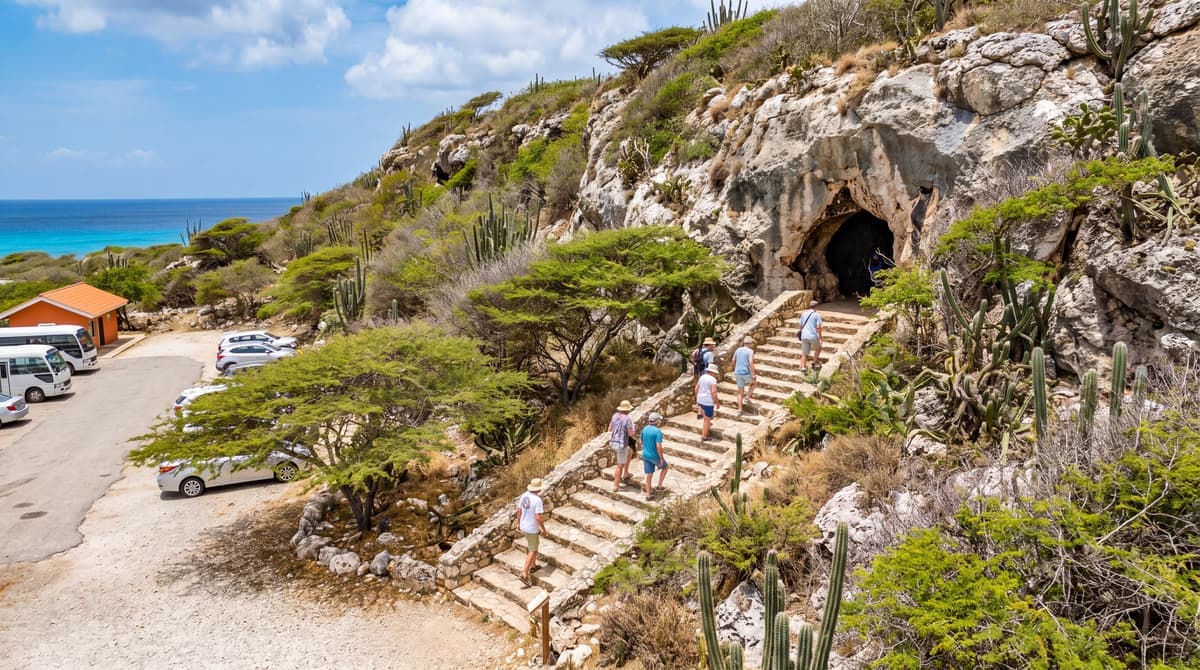
Hato Caves sits in a limestone hillside beside Hato International Airport (CUR), roughly a 15 to 20 minute drive north of Willemstad. The chambers were dissolved out of ancient coral limestone over a very long stretch of geological time as the island slowly rose from the sea, and today a portion of the system is lit, railed, and open to the public on a guided walk. This is not a wild, scramble-through-the-dark caving experience: it is a well-trodden path with steps and handrails, led by a certified guide who tells the stories behind the rock. That makes it one of the few Curacao attractions that works for almost any age, with one real exception we cover below.
Hato Caves, Turtles & Beach
7 hours · from $90/pp. Live prices, dates, and the honest details, one page.
The practical details
The visit is guided-only, and the schedule is simple. The site opens daily from around 8:50am, tours leave every hour on the hour, the first at 9am and the last at 3pm, and each tour lasts up to about 50 minutes. Entry is inexpensive: at the gate it runs roughly $10 for non-resident adults and about $8 for children. Here is the catch that trips people up: you buy tickets on arrival, in person, not online. The official site sells no online tickets except through licensed tour operators, so bring cash. US dollars are accepted islandwide, though Curacao's local currency is the Caribbean guilder (XCG); our currency guide covers how change and cards work here. Because tours run on the hour, aim to arrive at least ten minutes before the slot you want, especially at busy midday times.
What you actually see inside
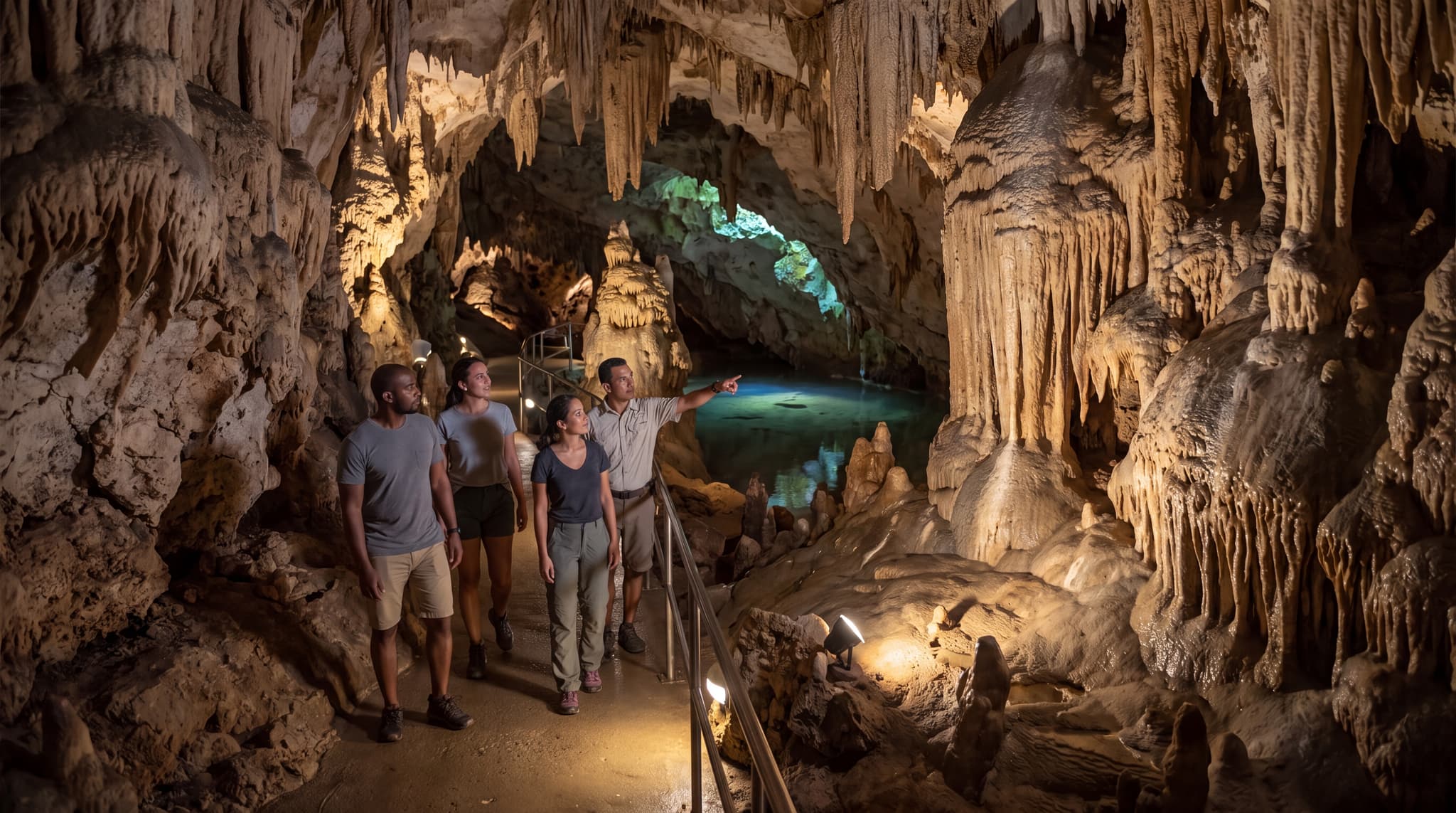
The walk leads through a series of limestone chambers hung with stalactites and rising stalagmites, past a still underground water pool, to formations the guides have nicknamed over the years, from a Madonna figure in the rock to shapes they call the Sea Tortoise and the Sleeping Giant. Deeper in, a chamber holds a colony of long-nosed fruit bats; with the guide's lighting you can usually see them roosting overhead, and part of the cave is kept dim and quiet on their account.
The human history is the more surprising layer. On the walls, faint petroglyphs left by the Caquetio (Arawak) people, the island's original inhabitants, are pointed out as roughly 1,500 years old, and on the ceiling of one deeper chamber you can still see dark soot marks from torches, dating to the period when escaped enslaved people are said to have sheltered in the caves. It is a genuinely atmospheric 50 minutes, and the guiding is what makes it, not the size.
Want a local to plan the whole trip?
Our concierge builds your days around what you actually want, from $149. A small curation team, never pay-to-play.
The honest caveats
A few things worth setting expectations on. First, it is short and it is guided: you move at the group's pace on a fixed route, so this is a 45 to 60 minute stop, not a half-day on its own. Second, it is warm and humid inside, not air-conditioned cool; the relief is from shade and getting out of direct sun, not from cold. Third, there are 48 steps up to the cave entrance and uneven, sometimes damp footing inside, which makes it a poor fit for wheelchairs, strollers, or anyone unsteady on stairs; the surrounding park paths are gentler if part of your group needs to sit it out. Fourth, it can feel crowded and a touch touristy when a tour bus lands on the same slot. And because there is a bat colony, your guide will ask you not to touch the formations and to keep noise down. None of this is a reason to skip it. It is a reason to go in with the right expectations.
Stay in the Curaçao loop
Curaçao news and deals, in your inbox.
Get island news, fresh activity ideas and deals when available, straight to your inbox.
Occasional emails from Curaçao Playbook. Unsubscribe anytime.
Email signup is temporarily paused. Please check back soon.
Browse the latest Curaçao storiesThe Indian Trail outside
Beyond the cave itself, the same site has a short above-ground walking path, sometimes called the Indian Trail, that loops through arid scrub past more Caquetio rock art and native plants. It is a pleasant add-on if you have the time and the heat is bearable, and it puts the cave's petroglyphs in context. Bring water and a hat: there is little shade out here, which is the opposite of the cave.
Let us plan this trip for you
A small curation team builds your days around what you want, share your dates and we'll build the rest.
Should you add the Ostrich Farm?
Nearly every packaged Hato Caves tour pairs the caves with the Curacao Ostrich Farm, so it is worth knowing what the farm actually is. It sits on the other side of the island, out on the road to Groot Sint Joris in the arid east, roughly a 25 minute drive from Willemstad and about a 30 minute drive from Hato Caves, so the combo is a genuine half-day that needs either a rental car or a booked tour to link the two.
At the farm, hourly guided tours run daily from about 9am to 4pm, last around 30 to 40 minutes, and take you across the grounds in a safari-style truck to see ostriches at every stage from egg to adult, along with emus, potbellied pigs, and a few Nile crocodiles. There is a feeding element that kids tend to love, plus a playground, a souvenir shop, and the on-site Zambezi restaurant serving African-inspired food for breakfast and lunch. Entry runs around $17 for adults and roughly $13 to $14 for children, though prices change, so confirm current rates when you book. The honest caveat: it is a working farm, so expect dust, sun, and farm smells, and the safari itself is short. For an animal-loving family it is a fun, genuinely different couple of hours; for a couple with no kids, the caves alone may be enough.
How to fit it into a Curacao trip
Because Hato Caves sits right by the airport, it slots neatly into an arrival or departure day when you have a few hours but do not want to commit to a beach across the island. It also pairs well with a central or west-coast beach day, or with the island's other land attractions like Christoffel National Park if you are building a full nature day. You will want your own wheels for any of this; sights here are spread out and public transport is thin, as we lay out in the car rental guide. Families in particular tend to slot the caves and the farm into the mix: our Curacao with kids guide has more low-effort, high-payoff stops, and the full things to do in Curacao rundown puts them in context alongside the beaches, Willemstad, and the boat trips. If a first afternoon in the capital is next on your list, our Willemstad first-timer guide covers that. To have the whole week mapped for you, start with our planner and activities page.
Find your hotel by month, beach & budget
Compare current Curacao rates across the major booking sites in one place, in USD. Most rooms are free to cancel.
The honest bottom line
Hato Caves is not the most spectacular cave in the Caribbean, and it will not fill a day. What it is, is a reliable, cheap, shaded, family-friendly hour with a good guide, real history, and a bat colony, a few minutes from the airport and easy to reach. Go in expecting a well-run 50 minute walk rather than an epic expedition, bring cash and water, and it earns its place on almost any Curacao list, especially on a scorching afternoon or the rare wet morning. Add the Ostrich Farm if you have animal-loving kids and a car; skip it and just do the caves if you are short on time. Either way, keep your beach days as the main event and treat this as the easy, dependable change of pace it is.