If you are a US citizen or hold Dutch or other Kingdom-of-the-Netherlands nationality, Curacao offers something most Caribbean islands do not: up to 180 consecutive days within any 365-day period without a visa or residence permit, per Curacao's own tourism board guidance and corroborated by the US State Department's phrasing of "a maximum consecutive period of six months each calendar year." That is six months of legal stay on a tourist basis, which changes the math on a remote-work trip entirely compared with islands that cap tourists at 30 or 90 days. Other EU nationals fall under the general rule, 30 consecutive days with a maximum of 90 days within any 180-day period, so check which category applies to you before planning a long stay.
Everyone still needs the Digital Immigration Card, known as the DI Card, completed online within 7 days of arrival; it is free and mandatory for all non-resident foreign travelers. This is not a work visa or a nomad program, it is the standard tourist entry requirement, and Curacao's tourism authorities do not require a formal Foreign Investment or business registration for someone working remotely for an employer or clients based outside the island. If your situation involves anything more complex than remote employment for a foreign company, get real local guidance rather than relying on a travel blog for legal advice.
Where nomads actually base themselves
Pietermaai is the strongest fit for anyone who wants a walkable day: the restored district puts cafes, restaurants, and late bars within a short walk of most short-term rentals and boutique stays, and the neighborhood has enough daytime foot traffic to make working from a cafe feel normal rather than like the only option. We cover the after-dark side of that same neighborhood in our Pietermaai nightlife guide, and the accommodation landscape more broadly in our where to stay guide.
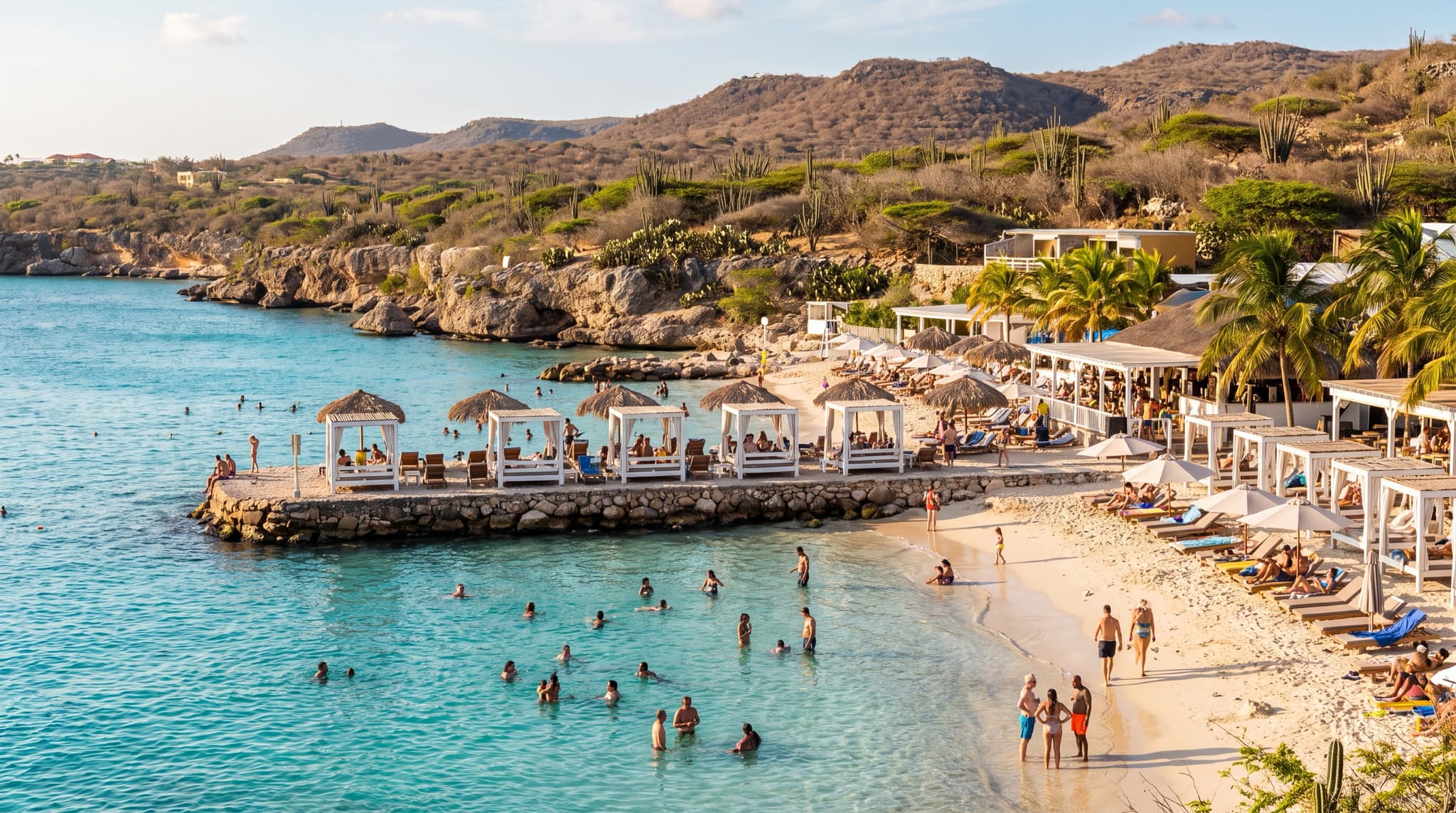
Jan Thiel is the other common base, trading some of Pietermaai's colonial-district walkability for beach access and a calmer, more residential feel. It suits nomads who want to close the laptop and walk straight onto Jan Thiel beach within a few minutes, at the cost of needing a car or taxi more often for variety in food and errands. Both bases work; the choice mostly comes down to whether you would rather end the workday at a bar table or a beach chair.
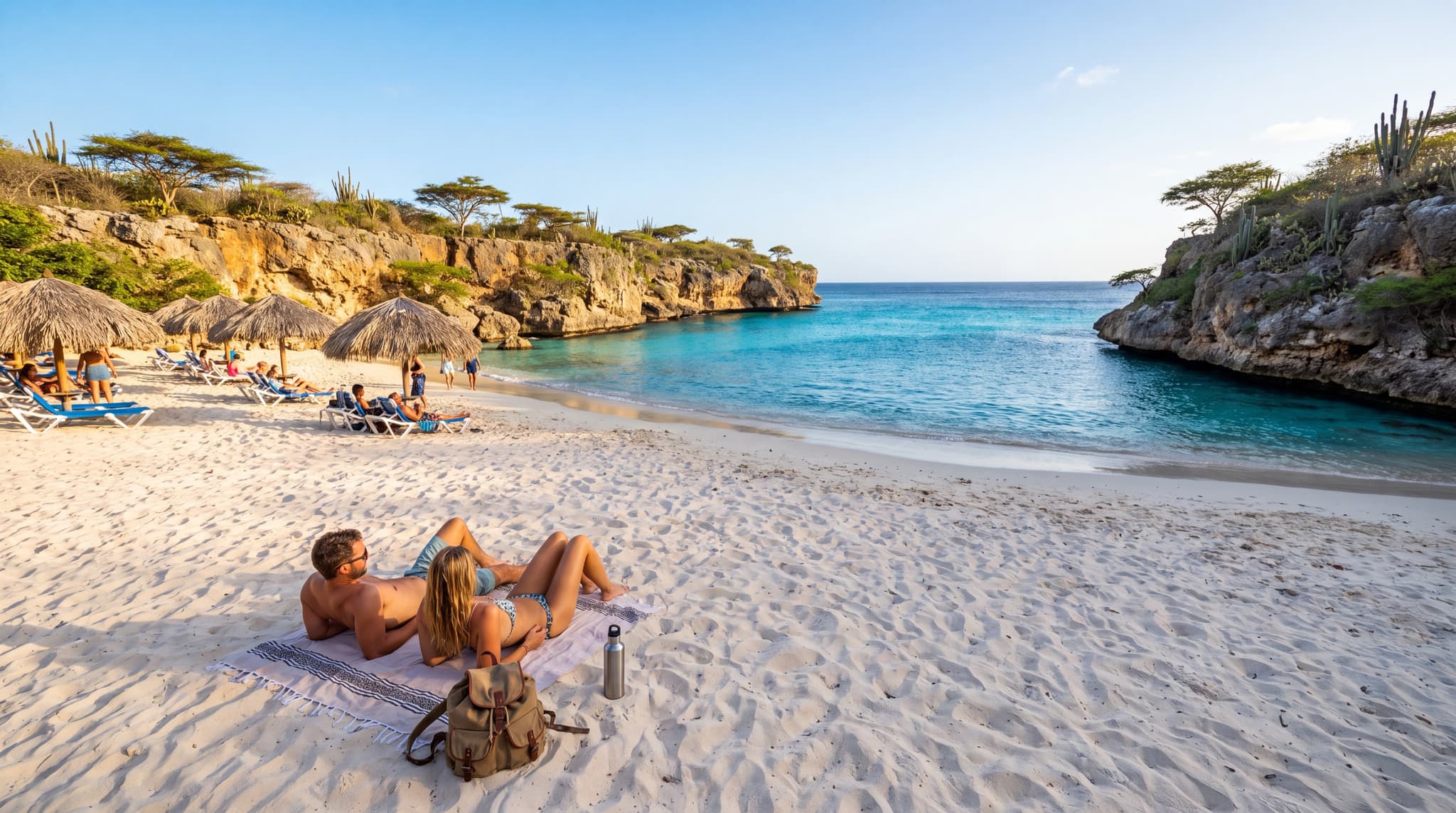
Weekends are where a long stay pays off compared with a one-week vacation. Rather than cramming every sight into a single trip, nomads based here tend to peel off one day at a time, a west-coast beach run one weekend, a west-beach-hopping day the next, Christoffel National Park on a cooler morning. Spreading the island out across a month rather than a week is, honestly, the best argument for working from Curacao instead of just vacationing here.
Find your hotel by month, beach & budget
Compare current Curacao rates across the major booking sites in one place, in USD. Most rooms are free to cancel.
Internet and workspace, honestly
Fiber internet is common in tourist-facing areas and in short-term rental units aimed at longer stays, but we are not going to publish specific speed numbers here because connection quality varies meaningfully by property, by building, and by provider, and a number that was accurate for one apartment says nothing about the next one. The honest practical rule: ask your host directly about the connection before booking if your work depends on video calls or large uploads, and test it the moment you arrive rather than assuming it matches the listing description. If it does not meet your needs, a co-working space or a hotel business center is worth locating as a backup before you need one, not after.
A related honest note on infrastructure: Curacao runs on mixed voltage, both 127V and 220V depending on the building and sometimes the room, so check outlets before plugging in higher-wattage equipment like a monitor or a printer that is not rated for both.
Budgeting a longer stay
A week-long vacation budget and a month-plus remote-work budget are different calculations. Curacao's islandwide hotel average daily rate was $305.87 in March 2026 according to CHATA data, but that figure describes short-stay hotel pricing, not the monthly apartment or villa rates a longer stay would actually run on. Curacao's accommodation mix already skews toward apartments and villas over hotels, with 44 percent of 2025 stayover visitors choosing alternative accommodation, and monthly rental pricing for that segment typically improves with length of stay in ways a nightly hotel rate does not reflect. Our Curacao vacation cost breakdown builds from the sourced hotel benchmark and is the right starting point for estimating a shorter trip; for a genuinely lean, extended stay, our budget guide covers the cost levers that matter most, food chief among them.
Daily living costs matter more on a month-long stay than they do on a week's vacation. Cooking at least some meals rather than eating out for every one is the single biggest lever nomads have, and Curacao's supermarket and local-market culture, including Plasa Bieu's food-hall model, supports that better than a resort-only trip would.
Want a local to plan the whole trip?
Our concierge builds your days around what you actually want, from $149. A small curation team, never pay-to-play.
Stay in the Curaçao loop
Curaçao news and deals, in your inbox.
Get island news, fresh activity ideas and deals when available, straight to your inbox.
Occasional emails from Curaçao Playbook. Unsubscribe anytime.
Email signup is temporarily paused. Please check back soon.
Browse the latest Curaçao storiesA program worth knowing about, cautiously
Curacao has run government initiatives aimed at attracting remote workers and longer-stay visitors under programs sometimes referred to under an "@HOME in Curacao" banner. We are deliberately not detailing specific eligibility rules, fees, or application steps here, because government program details change and we do not have a current, verified source for the specifics as of this writing. If a remote-work or extended-stay program is relevant to your plans, check the current official government or tourism board pages directly rather than relying on any third-party summary, including this one.
What actually makes or breaks a nomad trip here
The island's size works against a car-free routine more than it does on a shorter vacation. If you plan to explore beyond your base neighborhood on weekends, factor in either a rental car or regular taxi use; our without a car guide lays out what is realistic without one. Time zone is a genuine advantage for anyone working with US East Coast or European clients: Curacao sits on Atlantic Standard Time, aligned closely enough with US Eastern hours (accounting for daylight saving differences) and with a manageable gap to Central European time that a normal working day overlaps with both.
Let us plan this trip for you
A small curation team builds your days around what you want, share your dates and we'll build the rest.
The honest bottom line
Curacao's real edge for remote workers is legal, not lifestyle: the 180-day allowance for US and Kingdom-of-the-Netherlands citizens is longer than almost anywhere else in the Caribbean offers without a formal visa process. Everything else, the internet, the neighborhoods, the cost of living, is workable but requires the same on-the-ground verification any new base would. Do not book a month sight unseen assuming a fast connection or a specific monthly rate; confirm both directly with whoever is renting you the space, and build in a short trial stay before committing to something longer if your work genuinely cannot tolerate a bad week of internet.