Curacao's food scene runs on krioyo home cooking more than resort menus, and the best introduction is not a restaurant at all but Plasa Bieu, the old market hall in Punda where local cooks have served the island's everyday dishes for generations. If you eat only one meal outside your hotel, make it there, and build the rest of the week around truk'i pan trucks, batidos, and the handful of restaurants locals actually recommend to each other.
What is krioyo food, exactly?
Krioyo cooking is Curacao's everyday Creole cuisine, built on slow-cooked stews, starchy sides, and a mix of African, Latin American, and Dutch influence that reflects the island's history as a trading port. The dishes to know before you go:
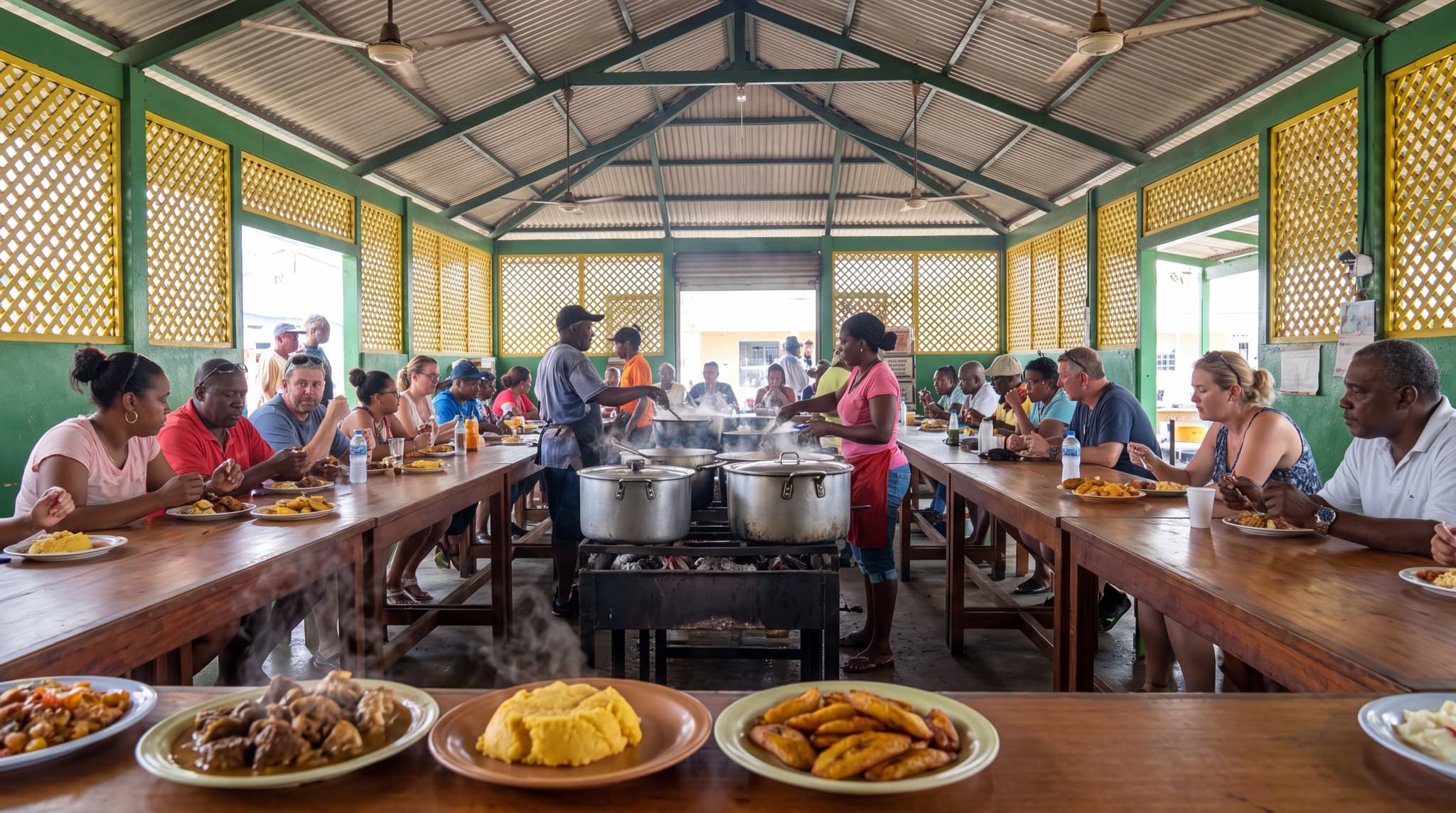
Stoba is a slow-braised stew, most often made with beef, goat, or chicken, cooked down with tomato, peppers, and local seasoning until the meat falls apart. Kabritu is goat meat specifically, often stewed or grilled, and is one of the dishes locals point to first when asked what to order. Funchi is Curacao's version of cornmeal polenta, a dense, mild side that shows up next to almost every stewed dish, there to soak up sauce rather than to stand out on its own. Keshi yena, meaning "stuffed cheese," is a whole gouda or edam rind filled with spiced meat, vegetables, and raisins, then baked, a dish with clear Dutch-colonial roots that has become entirely its own thing on the island.
None of these are precious plates built for photographs. They are working food, the kind meant to be eaten quickly and well, and that is exactly why they are worth seeking out over a resort buffet version of local cuisine.
Want a local to plan the whole trip?
Our concierge builds your days around what you actually want, from $149. A small curation team, never pay-to-play.
Where do you actually find it?
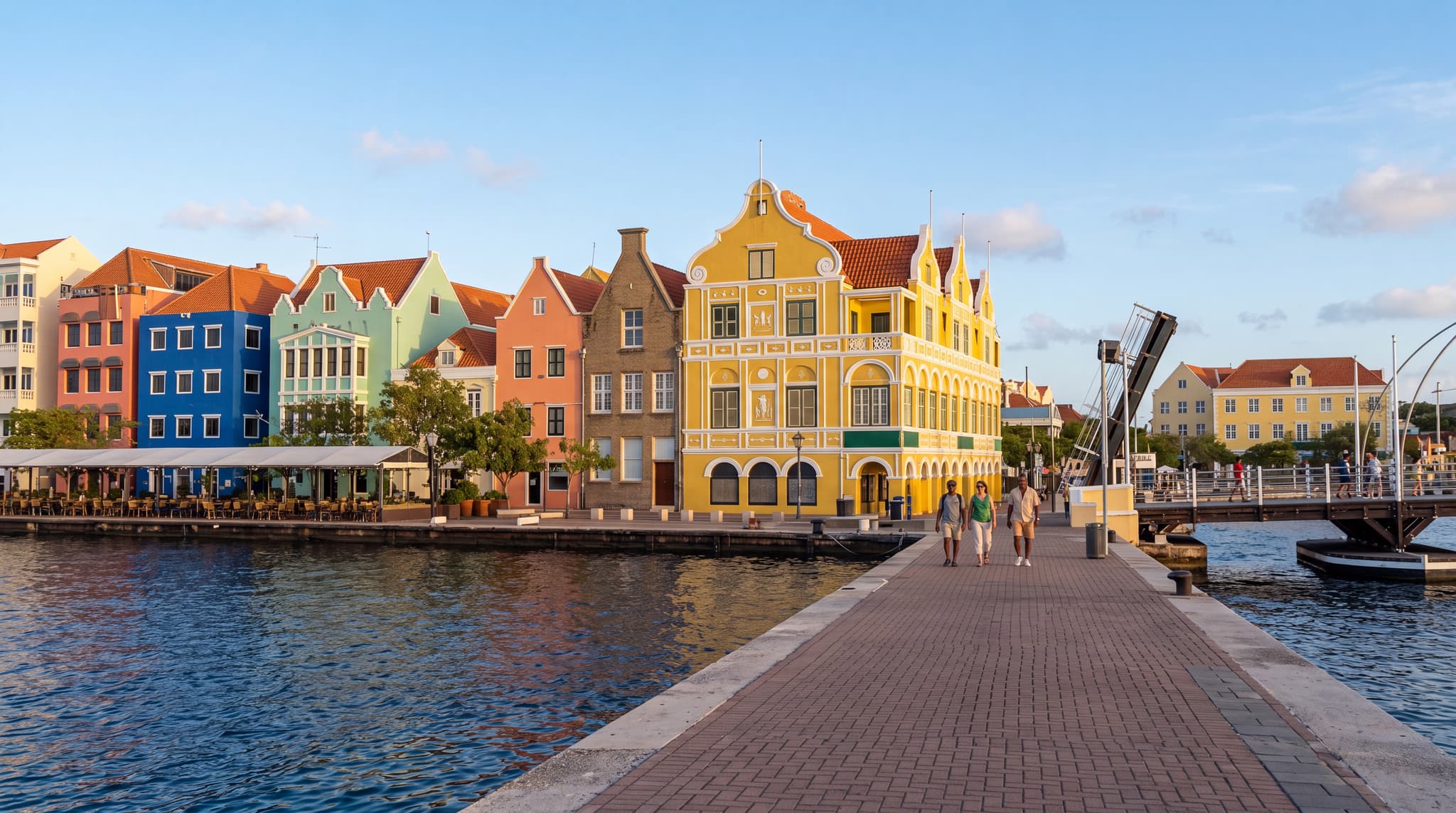
Plasa Bieu, in Punda, is the single best answer. It is a market hall of small, family-run kitchens serving krioyo dishes cafeteria-style, and it is where you will see as many locals on their lunch break as tourists. It runs primarily as a lunch spot, so plan a midday visit rather than dinner. We cover the neighborhood context around it in our first-timer's guide to Willemstad, and our experiences page lists a guided Willemstad walking tour that pairs well with a Plasa Bieu lunch stop. If you are not sure what to order on a first visit, a stoba plate with funchi and a side of rice and beans is the standard, filling introduction, and most counters will happily point you toward whatever is freshest that day if you ask.
If you would rather eat beachside, the restaurant strip along Mambo Beach delivers easy, casual options a short walk from the sand, though it leans more international than krioyo. Beyond that, our dining guide is where we keep the current, honest shortlist of restaurants actually worth booking across the island, updated as places open and close, rather than a static list that goes stale.
What is truk'i pan, and when do you eat it?
Truk'i pan are Curacao's late-night food trucks, the island's real answer to a 1 a.m. hunger pang. They set up around Willemstad and the resort areas after dark, serving quick, affordable plates and sandwiches to a crowd that is often coming from a bar rather than a dinner table. If you are out late in Pietermaai, a truk'i pan stop is the natural way to end the night, and it is as much a part of the island's food culture as any sit-down restaurant.
Let us plan this trip for you
A small curation team builds your days around what you want, share your dates and we'll build the rest.
What should you drink?
Batidos, blended milk-and-fruit drinks similar to a smoothie, are the everyday local drink worth trying, made with whatever fruit is in season, and a good way to cool off between a Plasa Bieu lunch and an afternoon back on the water. On the alcohol side, Curacao is of course home to the original blue Curacao liqueur, distilled on the island from the dried peel of the laraha orange; we tell that full story, distillery tour included, in our blue Curacao liqueur guide.
Stay in the Curaçao loop
Curaçao news and deals, in your inbox.
Get island news, fresh activity ideas and deals when available, straight to your inbox.
Occasional emails from Curaçao Playbook. Unsubscribe anytime.
Email signup is temporarily paused. Please check back soon.
Browse the latest Curaçao storiesHow does tipping and tax actually work at restaurants?
This trips up a lot of first-time visitors, so here is the straight version. Restaurant food, along with soft drinks and alcohol, carries a 9 percent OB (turnover tax) in Curacao, higher than the 6 percent general rate, per the Curacao tax authority's own omzetbelasting page, which we read directly on 29 August 2026. The 9 percent applies to food and drink consumed on the premises of a hotel, cafe or restaurant. That tax is already built into the menu price you see, not added at the register.
On top of that, many restaurants already include a service charge on the bill, commonly around 10 percent, per the Curacao Tourist Board's own guidance. Check the bill for a line labeled "service charge" before you tip again. If it is already there, an extra 5 percent for genuinely good service is a nice gesture rather than an expectation. If there is no service charge listed, 10 to 15 percent is the norm, similar to US tipping culture. Hotels run a slightly higher included service charge, commonly around 12 percent versus the roughly 10 percent typical at restaurants, per the same tourism board guidance, so do not assume the two follow identical rules if you are tallying charges across a longer stay.
Browse 25 Curacao experiences
Each one vetted operator by operator, with the honest note and the cancellation window shown per tour.
Eating well without overspending
None of this requires a resort dining plan to do properly. Plasa Bieu, truk'i pan trucks, and neighborhood spots outside the main tourist strips are consistently the best value on the island, not a downgrade from the pricier options. Our budget guide to Curacao goes deeper on stretching a food budget across a full trip without eating the same three safe restaurants every night, and our Curacao vacation cost guide shows how food fits alongside lodging and rental car costs in a full trip budget.
Villas and apartments are a bigger part of the accommodation mix here than on many Caribbean islands: 44 percent of Curacao's stayover visitors chose alternative accommodation like villas and apartments over hotels in 2025, per CHATA data. If that describes your stay, most areas have grocery stores stocking local produce and imported staples, making it easy to mix in a self-catered meal or two alongside restaurant nights.
The honest bottom line
The best food on Curacao is rarely the food closest to your hotel. Plasa Bieu, truk'i pan trucks, and the island's krioyo staples, stoba, kabritu, funchi, and keshi yena, tell you more about the place than any resort menu will, and none of it requires a special occasion or a big budget. Build one Plasa Bieu lunch and one late-night truk'i pan stop into your week, keep the 9 percent restaurant tax and typical 10 percent service charge in mind so the bill does not surprise you, and use our dining guide to fill in the rest.