Shete Boka National Park is the flip side of everything Curacao's west coast beaches promise. Where Cas Abao and Playa Kalki sit in sheltered coves with calm, swimmable water, Shete Boka runs along the island's exposed north coast, where open Caribbean swell meets raw limestone and does not stop for anyone. This is a park built for looking, not swimming, and understanding that distinction before you go is most of what makes the visit work.
What 'shete boka' actually means
Shete boka translates roughly to 'seven mouths' or 'seven inlets' in Papiamentu, a reference to the string of coves, or bokas, carved into the limestone along this stretch of coast over a very long time by wave action alone. The bokas are not evenly spaced tourist stops with matching signage; some are a short, easy walk from the entrance, others require real hiking over uneven rock, and the park rewards visitors who treat it as a walking reserve rather than a drive-by viewpoint.
The geology behind all of it is straightforward: this stretch of coast faces directly into open Caribbean swell with no barrier reef or sheltered bay to absorb the energy, unlike the leeward west coast beaches most visitors spend their other days at. Over a very long time, that constant wave pressure has worn channels and caves into the limestone rather than depositing sand, which is the entire reason Shete Boka looks and behaves nothing like a beach day.
Browse 25 Curacao experiences
Each one vetted operator by operator, with the honest note and the cancellation window shown per tour.
Boka Tabla: the park's signature stop
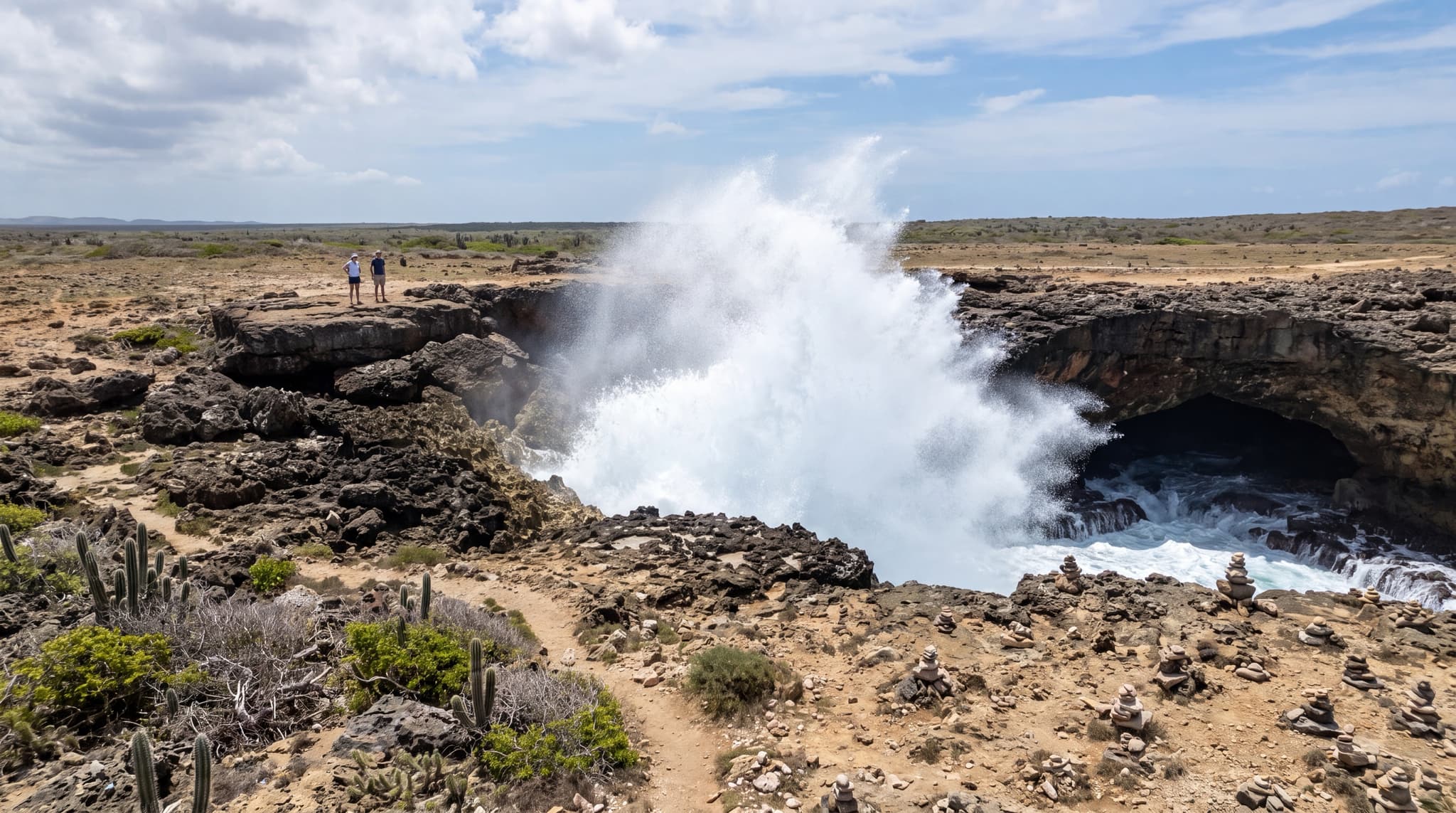
Boka Tabla is the boka most visitors come specifically to see, and it earns the attention. Wave action has carved a cave into the limestone here, and a walking platform lets you stand above it and watch, and feel, the swell push through below. On a day with real swell running, the impact is loud enough to feel through the rock under your feet, which is a different kind of coastal drama than anything on the calm west side of the island.
The honest caveat: on a calmer day, Boka Tabla is a quieter, gentler stop than the photos suggest, since it is entirely dependent on the swell that day. Neither version is a letdown, but do not expect a guaranteed dramatic show on command.
The rest of the loop
Beyond Boka Tabla, a marked trail continues along the coastline past several of the park's other bokas, each with its own character: some are narrow slots where the water surges and retreats, others open into wider, wilder coves framed by cactus and scrub. The terrain is genuinely uneven limestone and loose rock in places, not a paved boardwalk, so real hiking shoes matter more here than at most other Curacao stops, and the walk takes longer than the map distance suggests once you slow down for footing.
The park does charge an entrance fee, and we are not going to quote a specific figure here since fees change and we do not have a verified current number. Budget for it and bring cash, since a remote park entrance is not the place to assume card payment will work. A small visitor area near the entrance is a reasonable place to check current trail conditions before you set out, particularly after recent rain, when footing on the loose rock sections can change quickly.
Let us plan this trip for you
A small curation team builds your days around what you want, share your dates and we'll build the rest.
Why you should never go in the water here
This is the single most important practical note in this guide. The same wave action and undertow that carved these caves over centuries will not hesitate to pull a swimmer against rock, and there is no lifeguard presence and no sheltered bay to fall back on if conditions turn. The rock itself is sharp, uneven limestone, not sand, so even a fall short of actually entering the water can draw blood fast. Shete Boka is a look, don't touch, coastline, full stop.
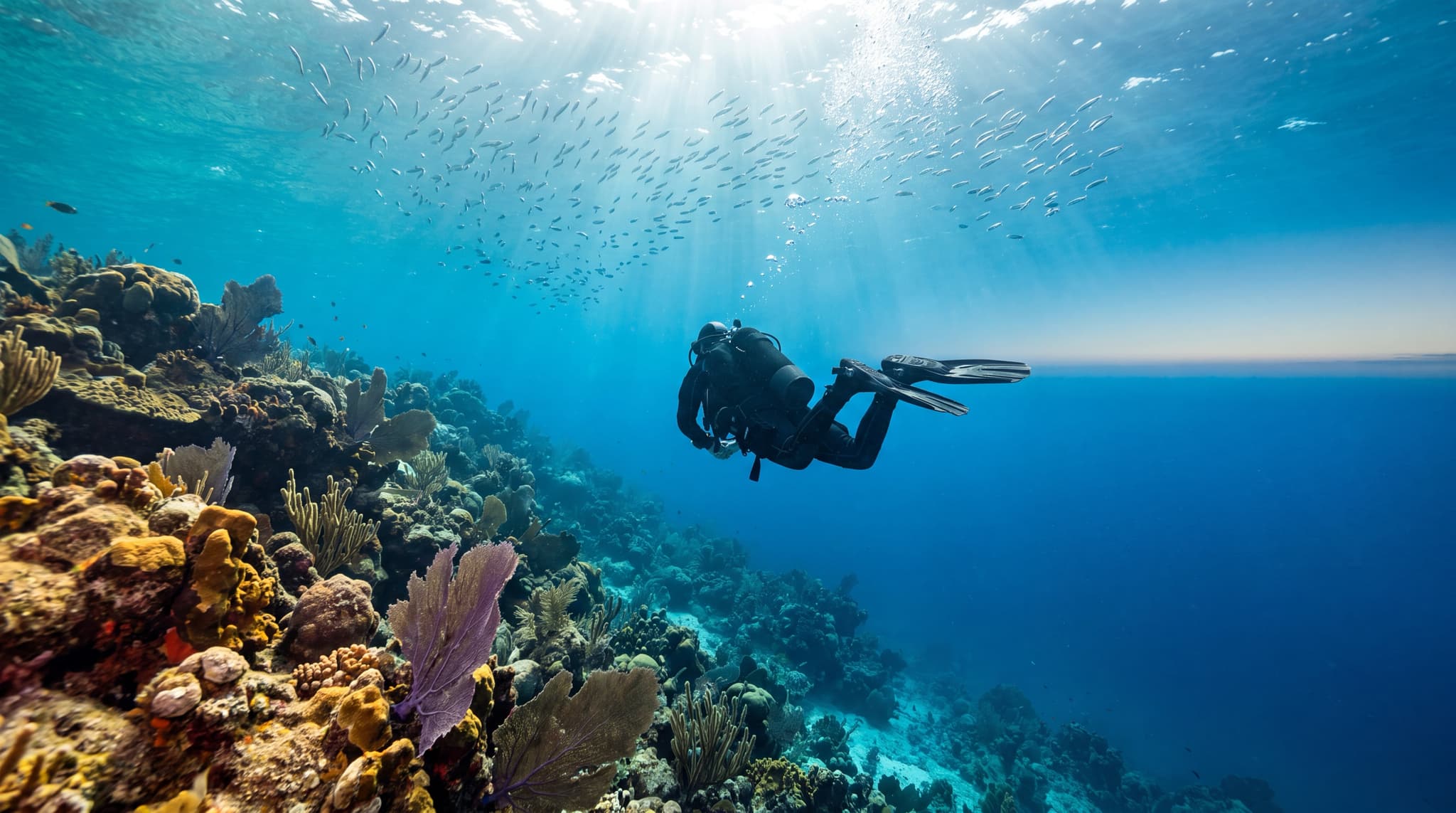
If swimming and snorkeling are what you actually want from your beach time, Curacao's calm, sheltered west coast is a short drive away and built for exactly that: Daaibooi and Playa Kalki both sit on the leeward side where the water behaves completely differently than it does here. A guided west-beach-hopping day covers several of those calmer spots in a single outing if you would rather not plan the route yourself.
Turtle nesting, framed carefully
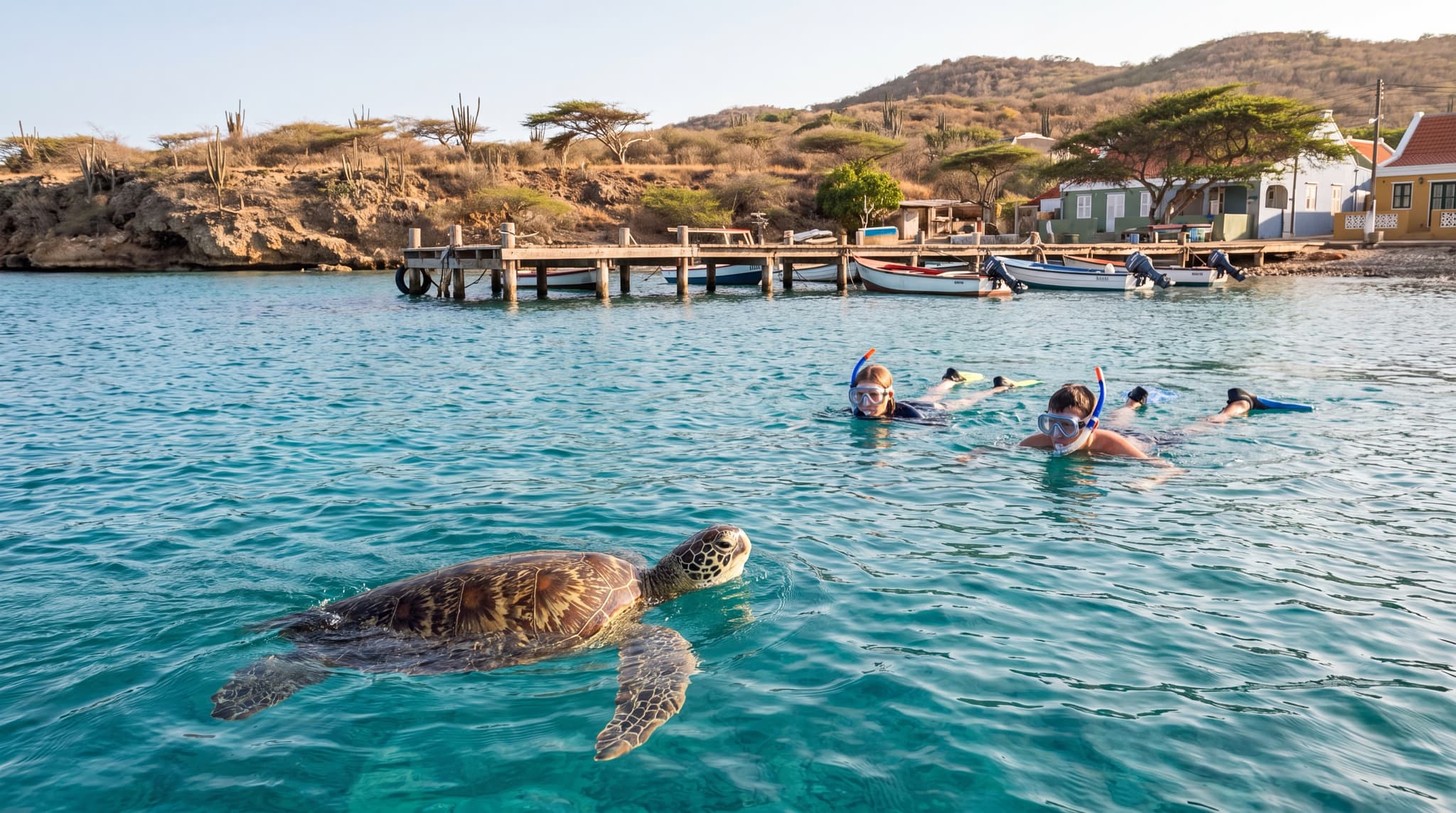
Some of Shete Boka's quieter coves see sea turtle nesting activity during parts of the year, consistent with the north coast's broader role as nesting habitat across this part of the Caribbean. There is no sourced nesting calendar specific to this park, so we are not going to hand you exact dates, and nesting turtles need distance and darkness far more than they need visitors with flashlights and cameras. If turtles are the actual draw for your trip, Playa Piskado is the honest, established place to see them in the water at a respectful distance, rather than hoping to stumble onto a nesting event here.
Find your hotel by month, beach & budget
Compare current Curacao rates across the major booking sites in one place, in USD. Most rooms are free to cancel.
Stay in the Curaçao loop
Curaçao news and deals, in your inbox.
Get island news, fresh activity ideas and deals when available, straight to your inbox.
Occasional emails from Curaçao Playbook. Unsubscribe anytime.
Email signup is temporarily paused. Please check back soon.
Browse the latest Curaçao storiesWhy the experience changes day to day
Because the entire park runs on open ocean swell rather than a sheltered reef system, the same boka can look and sound completely different from one visit to the next. A day with a strong northeast wind and a big swell running makes for a dramatic, loud, spray-soaked visit; a calmer stretch of weather produces a quieter, more contemplative walk along the same trail. Neither is the wrong day to go, but it is worth knowing that the postcard version of Boka Tabla, water exploding through the cave mouth, is weather-dependent rather than guaranteed on demand.
Pairing with Christoffel National Park
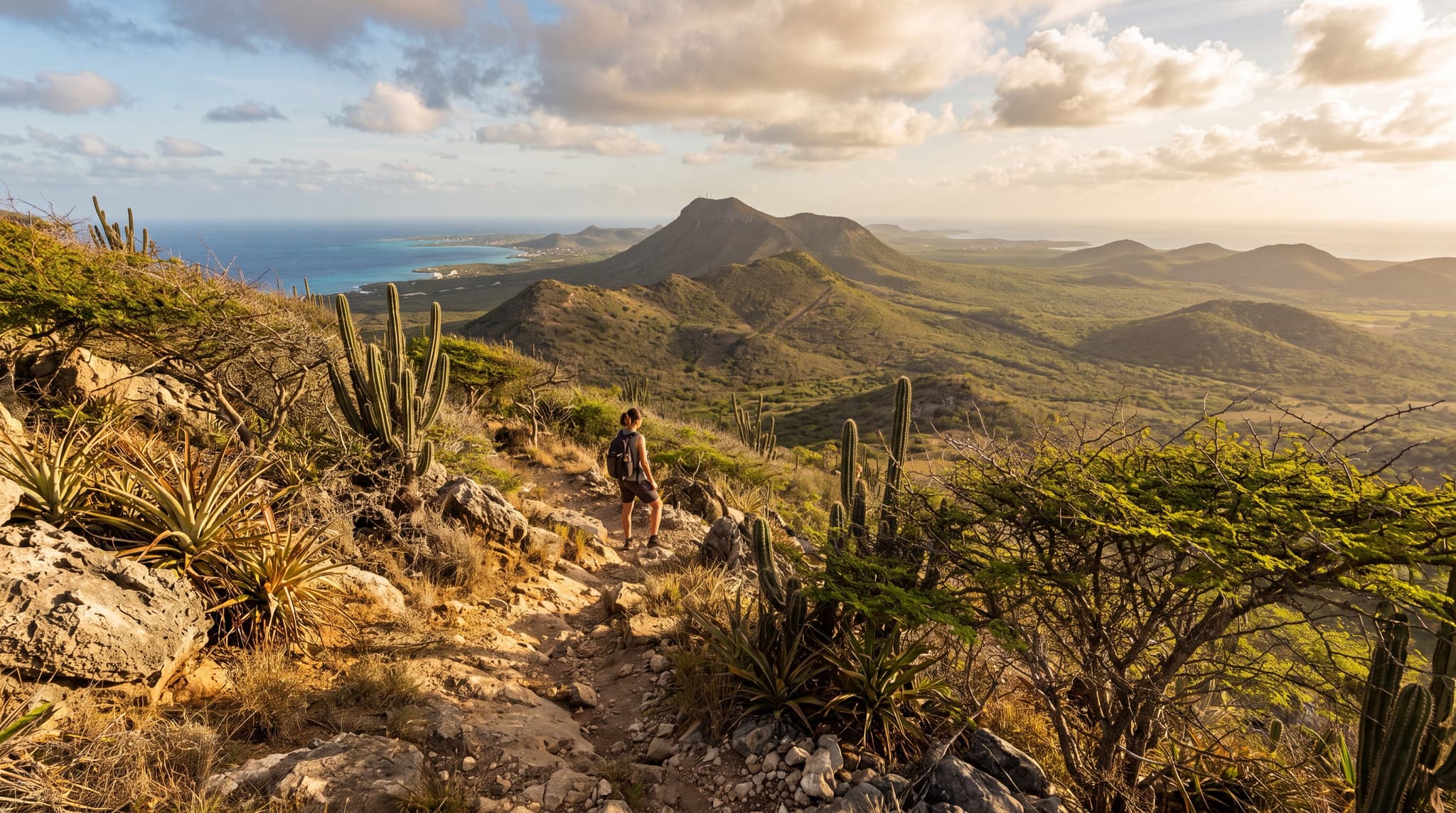
Shete Boka sits close enough to Christoffel National Park that most visitors who commit to a west-end day do both in a single trip: the Christoffel summit hike early, while temperatures are still workable, then Shete Boka's walking trail once the sun is higher and a strenuous climb is no longer the smart move anyway. Budget more time than you expect for both together; between the drive, the uneven footing at Shete Boka, and the heat, this is a genuine half-day-plus commitment, not a quick double stop. Our things to do guide has the wider list of what else earns a spot on the same kind of day.
Browse 25 Curacao experiences
Each one vetted operator by operator, with the honest note and the cancellation window shown per tour.
What not to do
Do not climb over posted barriers for a closer photo near unstable cliff edges. Do not go in the water anywhere along this coast, no matter how calm it looks on a given day. Do not leave the marked trail chasing a better angle on the rock formations. None of this is theoretical caution; the coastline here is genuinely dangerous in exactly the ways it looks dangerous, which is part of why it is worth seeing in the first place.
Practical logistics
A car is required to reach Shete Boka; there is no realistic public transport option, so sort out a rental car before you go. There is little to no shade along the trail, so sun protection and real water matter as much here as they do at Christoffel. Sturdy shoes are not optional; this is not a sandals trail.
Let us plan this trip for you
A small curation team builds your days around what you want, share your dates and we'll build the rest.
The honest bottom line
Shete Boka is one of the few places on Curacao that makes the case for the island's wilder side rather than its beaches, and it does that honestly, without needing to swim or wade to prove the point. Come to look, respect the barriers and the water, and pair it with Christoffel if you want a full west-end day that shows Curacao at its most different from the postcard version.