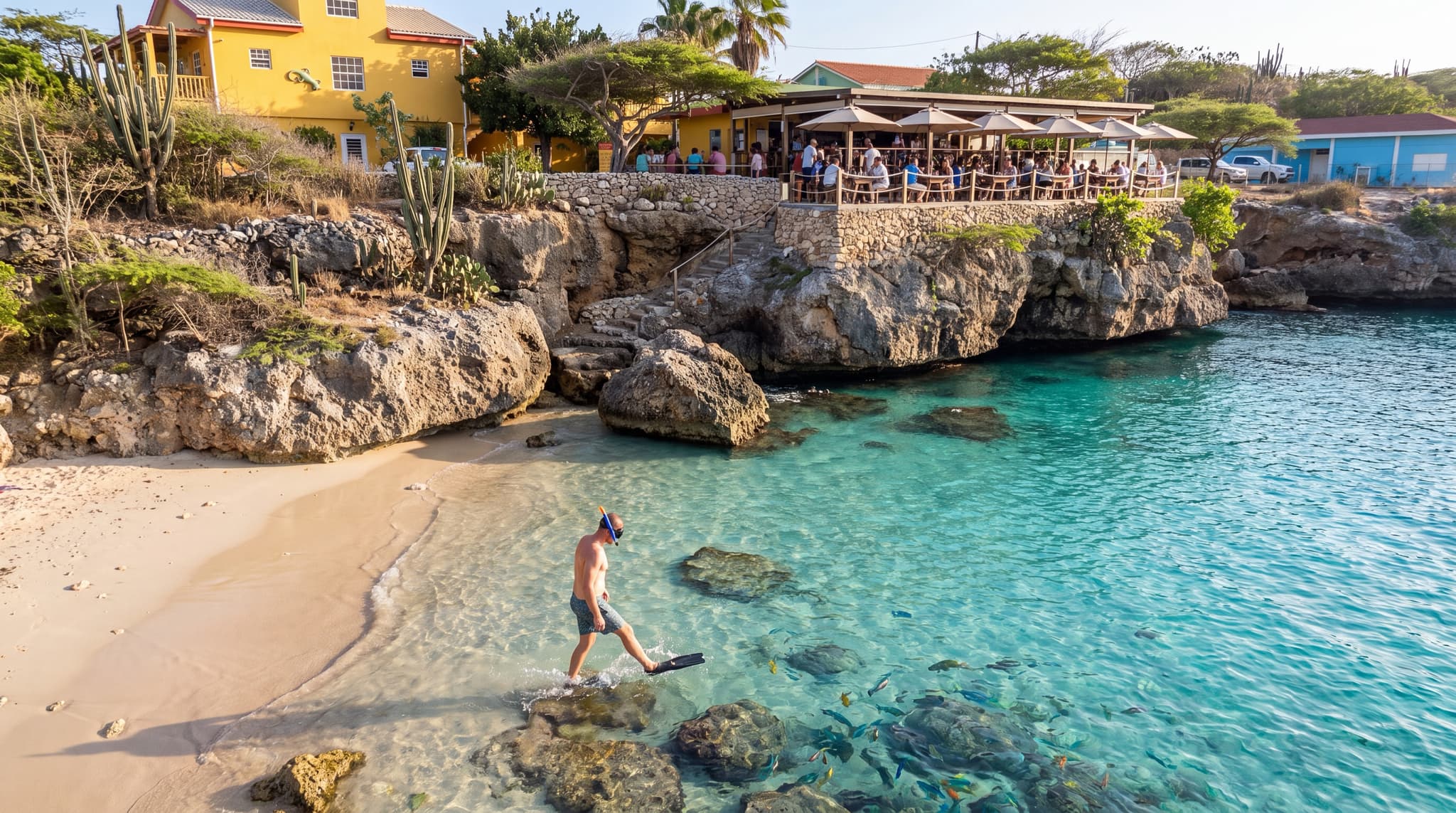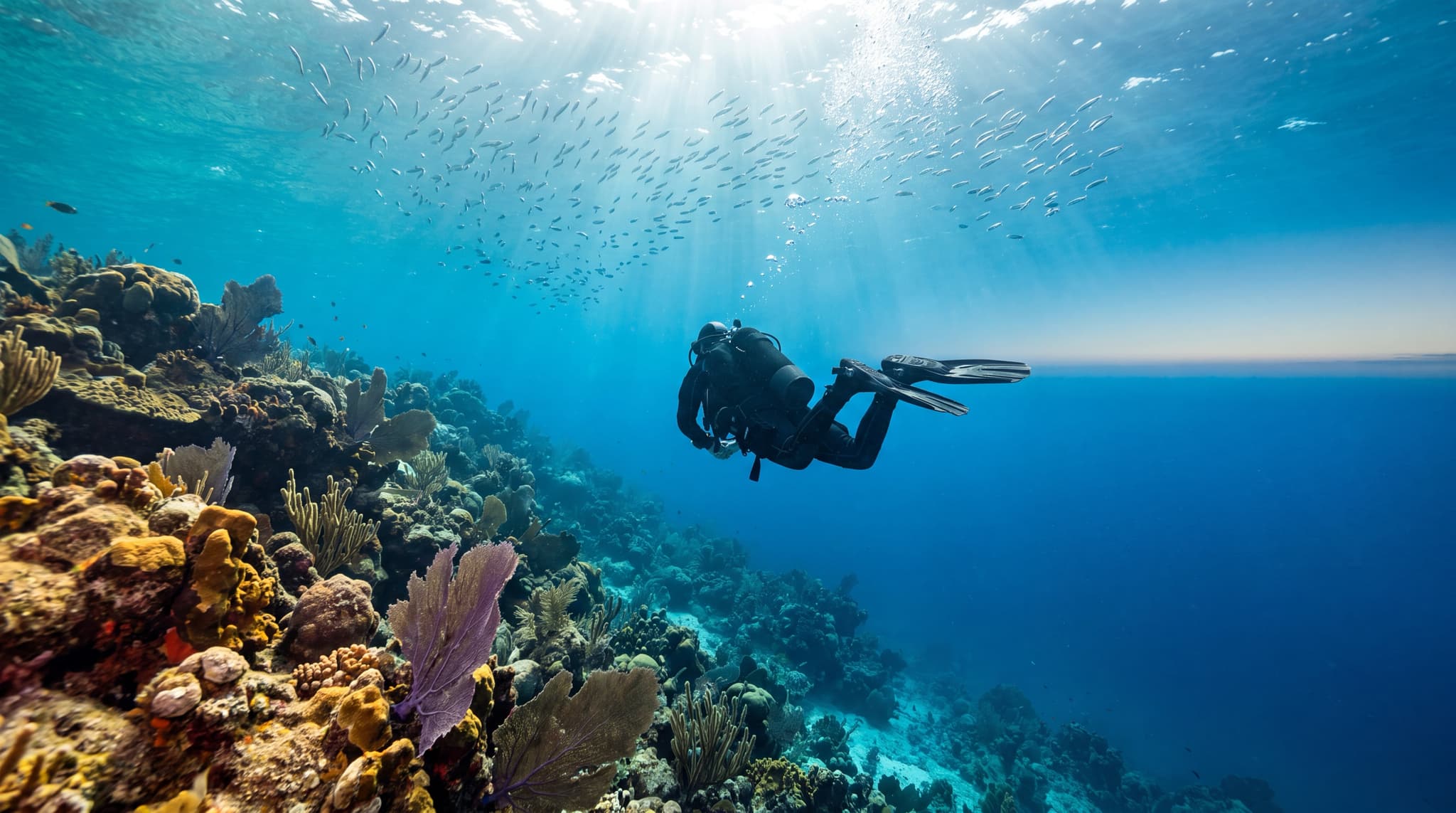
Curacao's reputation with divers comes down to one practical fact: much of it is shore diving, meaning you drive to a site, gear up on the roadside or a small dock, and walk straight into the water rather than booking a boat for every dive. The Curacao Marine Park protects more than 65 coral species and 350 fish species, spread across more than 70 named sites according to PADI and local dive operators, and a large share of them are reachable this way.
What does shore diving actually involve?
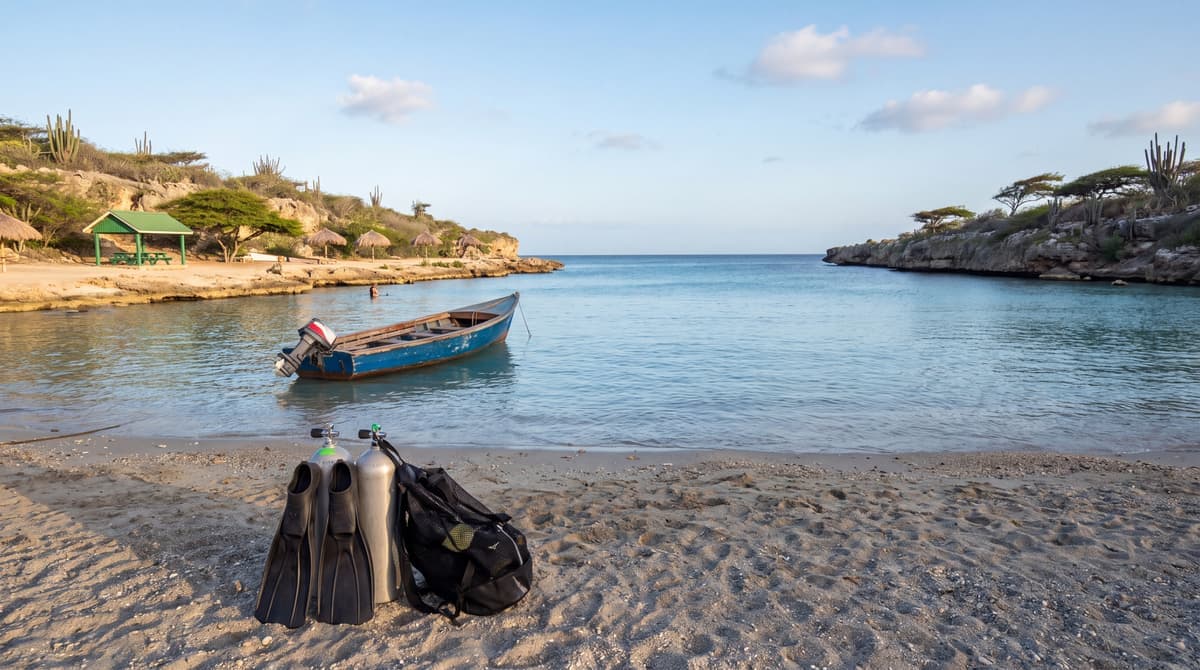
The mechanics are simpler than boat diving in some ways and more physical in others. You drive to a marked site, often with your own tank if you are renting gear from a dive shop rather than joining a guided boat trip, kit up in a parking area or on a short dock, and walk in over sand, coral rubble, or occasionally rock, depending on the site. The trade-off for the convenience is the entry itself: some sites have an easy sandy walk-in, others require careful footing over uneven ground, so ask your dive shop which category a given site falls into before you commit to it, especially with a full kit on.
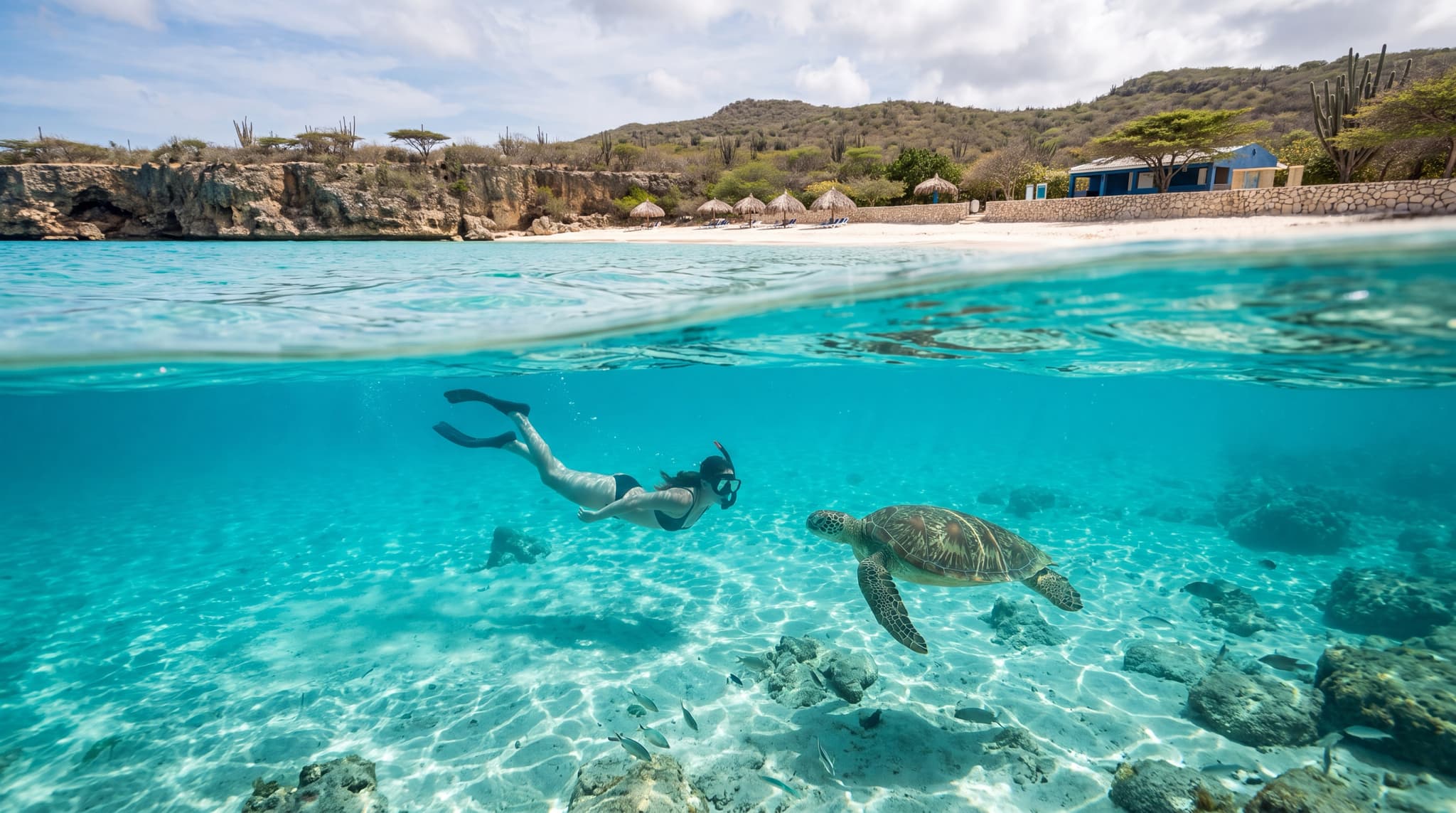
Sea Turtle Snorkel & Grote Knip Beach Escape
4.5 hours · from $107/pp. Live prices, dates, and the honest details, one page.
Finding sites without a guide
Many of Curacao's named shore sites are marked with signs along the coastal road, which is part of why independent, certified divers can realistically plan a self-guided dive day here in a way that is harder on islands where every site requires a boat and a booked guide. That said, a sign at the roadside does not tell you about current conditions on a given day, so pairing local knowledge from a dive shop with your own planning is still the safer approach, especially at sites you have not dived before.
Why does Curacao specifically get rated this highly?
The number that matters most here is the density of accessible sites along a relatively short coastline: more than 70 named dive sites, many of them a short drive from each other along the island's west and southwest coast. That density is what separates Curacao from destinations where the good diving is a boat ride away; here you can realistically work through two or three different named sites in a single day without ever getting on a boat. Playa Kalki, also known to divers as Alice in Wonderland, is the site that comes up most often as the standout combination of easy shore access and reliably good visibility, and nearby Playa Lagun offers a similarly easy walk-in for a second dive of the day. For a wider comparison of Curacao's dive scene against the region's other big diving name, see our Curacao vs Aruba comparison.
Let us plan this trip for you
A small curation team builds your days around what you want, share your dates and we'll build the rest.
Beginners: start with a discover course, not a rental
If you have never dived before, the discover scuba dive route is the honest starting point rather than trying to rent gear and figure it out. It pairs a supervised, shallow first dive with an instructor, which is a meaningfully different experience from being handed a tank and pointed at the water. Certified divers with a card in hand have the option to rent gear and dive independently at many shore sites, but a first-timer should not skip the supervised introduction. If you would rather have this slotted into a planned week instead of figuring out timing and shop logistics yourself, our booking desk can build it into your itinerary.
Stay in the Curaçao loop
Curaçao news and deals, in your inbox.
Get island news, fresh activity ideas and deals when available, straight to your inbox.
Occasional emails from Curaçao Playbook. Unsubscribe anytime.
Email signup is temporarily paused. Please check back soon.
Browse the latest Curaçao storiesRenting gear versus bringing your own
Most dive shops on the island rent full kits, tanks included, and shore diving here does not generally require you to travel with your own gear unless you have strong preferences about fit or a specific setup you dive better with. What is worth bringing regardless: your own mask, since fit varies enormously between people and a leaking rental mask ruins a dive faster than almost anything else. Certification cards and dive logs are also worth having on hand physically or digitally; some shops will ask to see recent dive history before renting to someone who has not been in the water in a while.
Picking a shop matters more on a shore-diving island than it might elsewhere, since you are relying on their local site knowledge, not a boat captain's, to tell you which entry points are manageable that day. A shop that asks about your experience level and adjusts site recommendations accordingly is a better sign than one that hands over tanks and a map with no questions.
Find your hotel by month, beach & budget
Compare current Curacao rates across the major booking sites in one place, in USD. Most rooms are free to cancel.
Snorkelers: where the crossover works
You do not need a certification to get real value out of Curacao's reef, and several shore sites work for snorkelers and divers in the same spot, Playa Kalki among them. Our best snorkeling spots guide breaks down which specific sites are shallow and calm enough for a snorkeler versus which ones, like the Mushroom Forest, are better suited to boat-based diving and deeper water. The honest line between the two groups: if a site is described primarily as a boat dive, do not expect much from it as a shore snorkel.
The rules that actually matter
Curacao's dive culture runs on a fairly strict no-touch ethic, and most local shops will tell you directly not to wear gloves, specifically because gloved hands make it easier to touch coral without thinking about it. That is a cultural norm on the island more than a written law, but it is consistently enforced socially by guides and other divers. The same logic applies to fin control near the reef: a careless kick can do more damage to coral in a second than years of natural growth can repair. If you are newer to diving, practice buoyancy over open sand before getting close to any reef structure.
The same respect-the-reef instinct matters beyond diving specifically. If turtles are part of your trip, our honest guide to Playa Piskado covers the distance and no-touch rules that apply there, which run on the same basic principle as the reef rules here.
Browse 25 Curacao experiences
Each one vetted operator by operator, with the honest note and the cancellation window shown per tour.
The honest bottom line
Curacao earns its reputation with divers less from any single spectacular site and more from the sheer density of good, shore-accessible options along one coastline, something few Caribbean islands can match. If you are certified, rent gear and work through a handful of named sites over a few days rather than picking just one. If you are not, start with a discover course rather than assuming a rental kit and a guidebook will get you there safely. Either way, book the trip knowing this island's real strength: you spend more time in the water and less time waiting on a boat.