The question comes up on almost every Curacao trip once someone looks at a map. The three Dutch Caribbean islands sit close together, so surely you can pop over to Bonaire or Aruba for a day? The short answer is yes, you can. The honest answer is that it works differently from how most people picture it, and it is not always worth doing. There is no ferry. Each island is its own immigration territory with its own entry fees. And a day trip that looks cheap on a flight-search page can quietly cost more in taxes and airport time than the day is worth. Here is how island-hopping from Curacao actually works in 2026, what it really costs, and when we think it earns its place in a trip.
There is no ferry, so you fly
Let us clear up the most common misconception first. There is no scheduled passenger ferry running between Curacao, Bonaire and Aruba. Strong open-water currents, the lack of suitable passenger-ferry ports, and the plain economics of the distances have kept one from sticking. A regional ferry has been proposed and studied more than once, with a public tender floated as recently as 2026, but nothing is carrying passengers today. Treat any ferry you hear about as a future maybe, not a booking option, and plan on flying.
That leaves two small regional airlines. One is Divi Divi Air, the workhorse of the inter-island routes. The other is Z Air, the Curacao-based carrier that flew as EZ Air until it rebranded in 2023. Both use small propeller commuter aircraft, the kind that seat somewhere between nine and about twenty passengers. That is part of the charm and part of the catch. The flights are quick and the views over the reef are wonderful, but the planes are weight-restricted, baggage allowances are tight, and a windy or rainy morning can delay or reshuffle a schedule in a way a big jet would shrug off. Fares move with the season and how early you book, and Divi Divi's prices in particular are dynamic, so check the airline directly for the live number rather than trusting an old figure. If a hop is the centrepiece of your day, take the earliest flight out and leave yourself a cushion on the way back. In high season, roughly December to April, book the seats ahead rather than assuming you will walk up.
Browse 25 Curacao experiences
Each one vetted operator by operator, with the honest note and the cancellation window shown per tour.
Bonaire is the side trip worth the effort
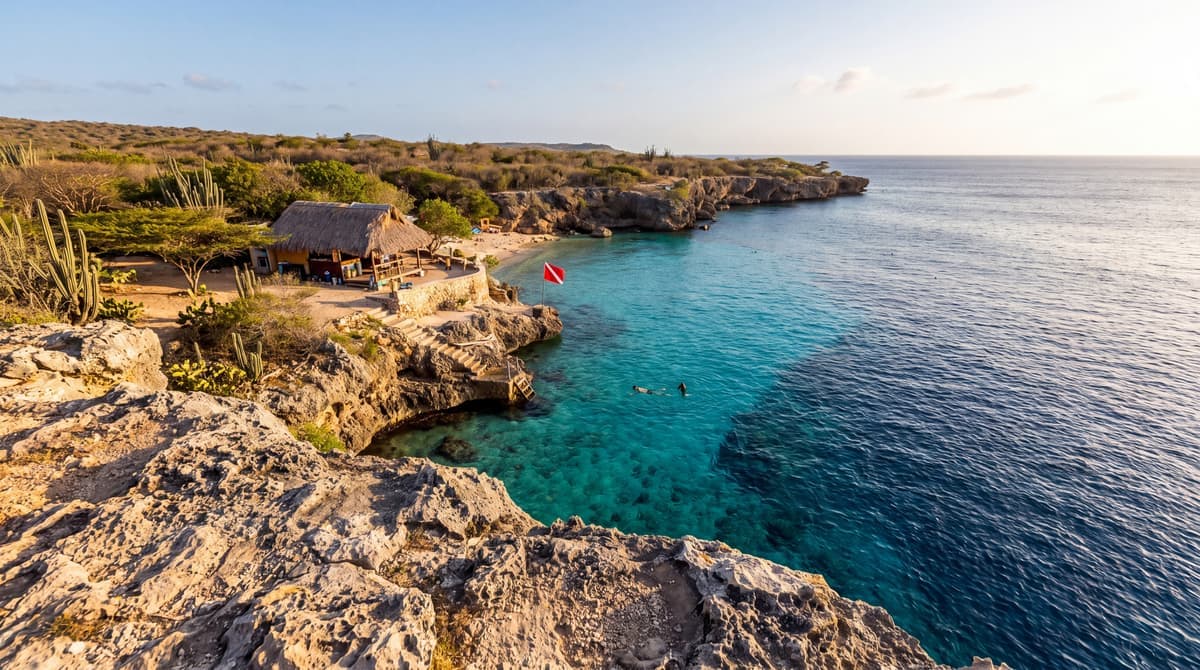
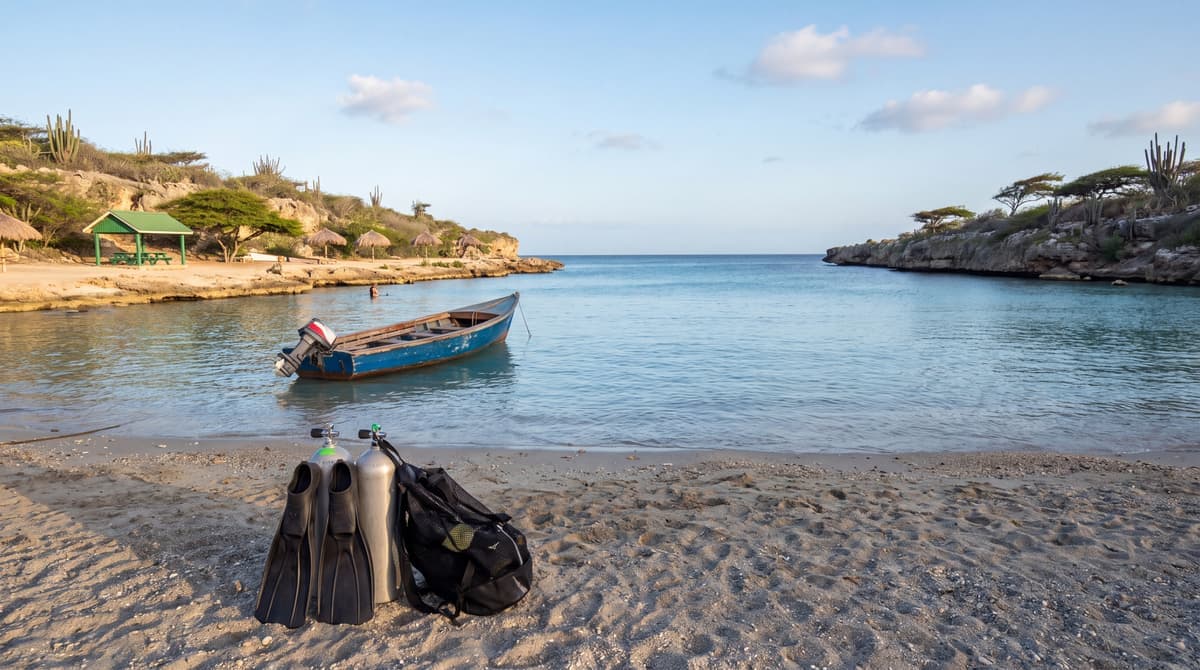
If you only do one of these, make it Bonaire. It is the closest of the three hops, about thirty minutes in the air, and the most frequent: between the two airlines there are more than a dozen short flights a day, so you are not building your whole trip around a single departure. Bonaire is also the island that feels genuinely different from Curacao rather than like a repeat of it. It is built around the water. The leeward coast is ringed with marked, drive-up shore-diving sites, the fringing reef starts feet from the shore, and the entire coastline is a protected marine park. Divers and serious snorkelers are the travelers who get the most out of the trip, and we point them to our Curacao vs Bonaire comparison and our guide to Curacao's own dive sites before they decide how to split their days.
Now the honest part, which is the money. Bonaire charges a Visitor Entry Tax of 75 US dollars per person aged 13 and over. Children under 13 pay 10 dollars, and so do residents of the former Netherlands Antilles, which includes Curacao and Aruba, with a valid sedula. You can pay it online in advance, though the official government portal only opens seven days before your arrival date, or at a counter at Flamingo Airport on arrival, where they take cards but not cash. That tax does not include the water. Going in the sea, or into a national park, means a separate STINAPA nature fee of 40 dollars per person. It is the same price whether you dive, snorkel or just wade in, it is valid for the rest of the calendar year, and it covers the marine park, Washington Slagbaai National Park, Klein Bonaire and the Lac Bay mangroves.
Add it up and one person who wants to get in the water on Bonaire is looking at 115 dollars in taxes and fees before the flight, lunch or a tank of air. That is exactly why we steer most people away from a same-day round trip. For what the day costs, one or two nights on Bonaire turns a rushed, expensive novelty into a proper little dive break, and both fees keep working the whole time you are there. Do the day trip if your dates are locked and Bonaire is the only window you have. Otherwise, sleep over.
Aruba is the most skippable of the three
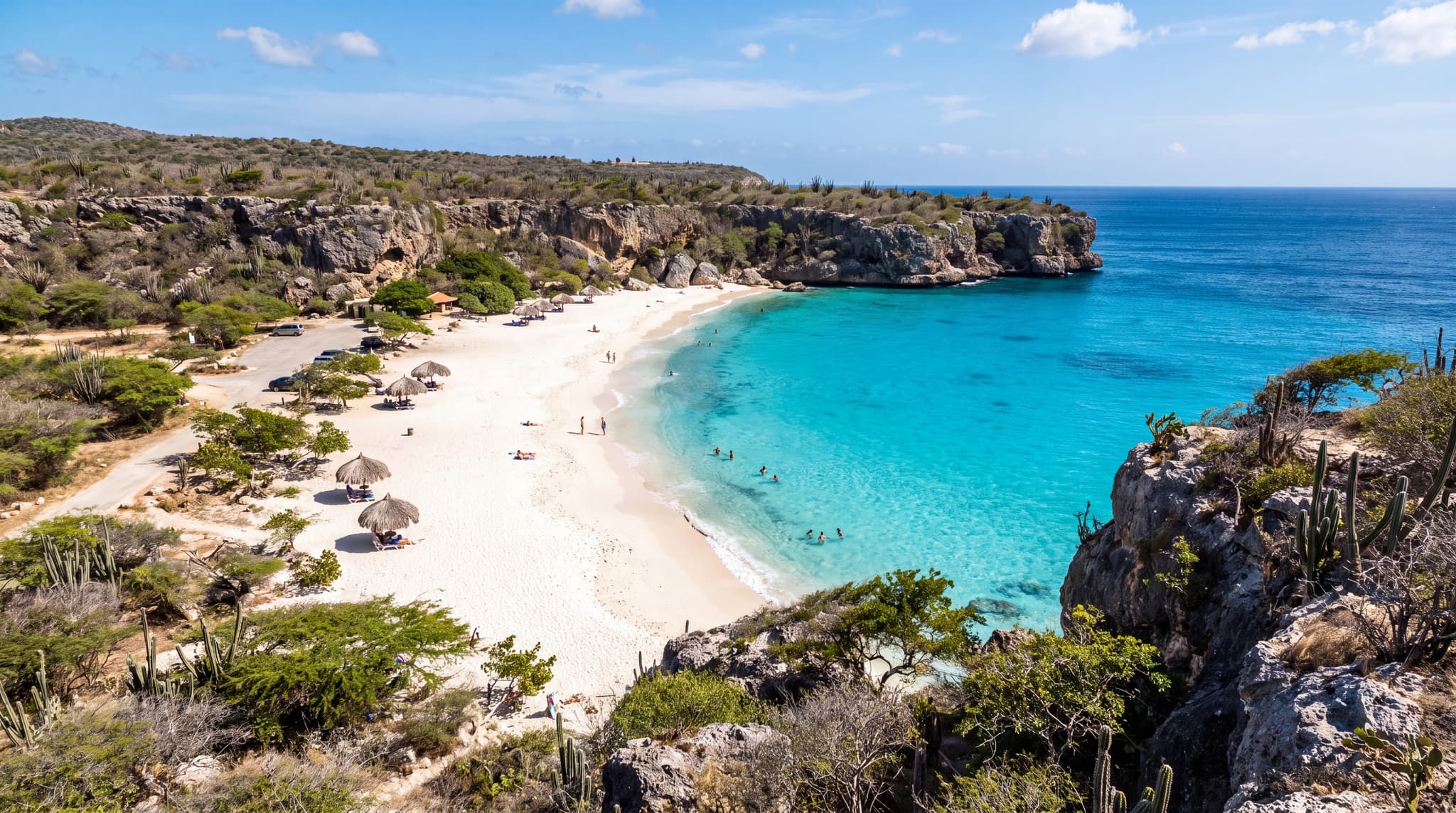
Aruba is the harder sell as a day trip, and we will say so plainly. The hop is a little longer at around forty minutes because Aruba sits farther west, and it is served less often than Bonaire, a couple of scheduled flights a day plus charters. The bigger issue is what you find when you land. Of the three ABC islands, Aruba is the one most like Curacao: similar turquoise beaches, similar resort strips, a similarly pretty Dutch-colonial capital. As a first-time trip in its own right it is lovely. As a day trip from Curacao it can feel like paying for a flight to see a familiar thing.
If you do go, Aruba's entry admin is stricter than people expect for a same-Kingdom island. Every arrival, including infants, must complete the online Embarkation and Disembarkation card, the ED card, within seven days of travel at the official Aruba government site. There is no paper version at the airport any more. The form itself is free, but travelers aged 8 and over pay a 20 dollar sustainability fee as part of it. You will need a passport valid for your stay, and immigration can ask to see an onward or return ticket. For the fuller case on choosing between the two islands, our Curacao vs Aruba comparison lays it out.
Want a local to plan the whole trip?
Our concierge builds your days around what you actually want, from $149. A small curation team, never pay-to-play.
Stay in the Curaçao loop
Curaçao news and deals, in your inbox.
Get island news, fresh activity ideas and deals when available, straight to your inbox.
Occasional emails from Curaçao Playbook. Unsubscribe anytime.
Email signup is temporarily paused. Please check back soon.
Browse the latest Curaçao storiesYou cross a real border each way
It is easy to forget, because all three islands fly the same Kingdom of the Netherlands flag, but they are separate immigration territories. You clear passport control each direction, so carry your actual passport, not just a driver's license or an ID card. US and Dutch passport holders do not need a visa for any of the three, but the paperwork still applies.
The leg people overlook is the way home. When you fly back into Curacao you arrive as a fresh international visitor, which means completing Curacao's own Digital Immigration Card again for the return, on the same seven-day-window rules as your original arrival. It is quick and it is free on the official portal, but it is one more thing to do from a departure lounge on another island, so sort it before you leave. Our Curacao DI Card guide has the step-by-step if you have not met it yet.
The island day trip that needs no airport
There is a fourth option that scratches the same itch without any of the border admin, and it is the one our local team suggests most often: Klein Curacao. It is a small, uninhabited islet off Curacao's southeast tip, reached by a full-day boat trip rather than a flight, so there is no foreign entry tax, no ED card and no second immigration line. You get a bright empty sandbar, an old lighthouse, a shipwreck on the windward shore and some of the clearest water anywhere near the island.
The honest caveat is that it is a long day and the open-water crossing can be genuinely rough and windy, especially in the breezier winter months, and the island itself has almost no shade or facilities. It is not for anyone prone to seasickness. Our full Klein Curacao guide compares the boats honestly, and you can see the current sailings on our activities page.
Let us plan this trip for you
A small curation team builds your days around what you want, share your dates and we'll build the rest.
So, is it worth it?
For most Curacao trips, here is where we land. Bonaire is worth the effort, especially if you dive or snorkel, but do it as an overnight rather than a same-day dash once you have seen the fees. Aruba is the one to skip unless you have a specific reason to go, because it is the ABC island most like the one you are already on. And Klein Curacao is the easiest extra island of all, no airport required, as long as your stomach is up for the boat.
Whichever you choose, book the small-plane seats or the boat early in high season, budget for the entry fees up front so they are not a surprise, and leave real margin around the immigration lines. When you are ready to line up the stay and the tours around it, our booking desk and activities page are the place to start, and if you are still sorting how you get to Curacao in the first place, our guide to nonstop flights covers that end.