If you are weighing Curacao against Bonaire, you have already narrowed things down well: these are two of the three ABC islands, both Dutch Caribbean, both sitting south of the main Atlantic hurricane belt, and close enough that a regional flight between them takes about 30 minutes. Our local team's focus is Curacao, but the two islands come up together constantly, especially among divers, so here is the honest comparison we would give a friend. The short version: Bonaire is the quieter, dive-obsessed island where the best scenery is underwater, and Curacao is the bigger, more varied island with a real city, more sandy beaches, and more to do when you climb out of the water.
If you are actually deciding between Curacao and Aruba instead, that is a different matchup, and we cover it in full in our Curacao vs Aruba guide. This one is about the two islands most often confused by divers and snorkelers.
The basics: same family, different size and status
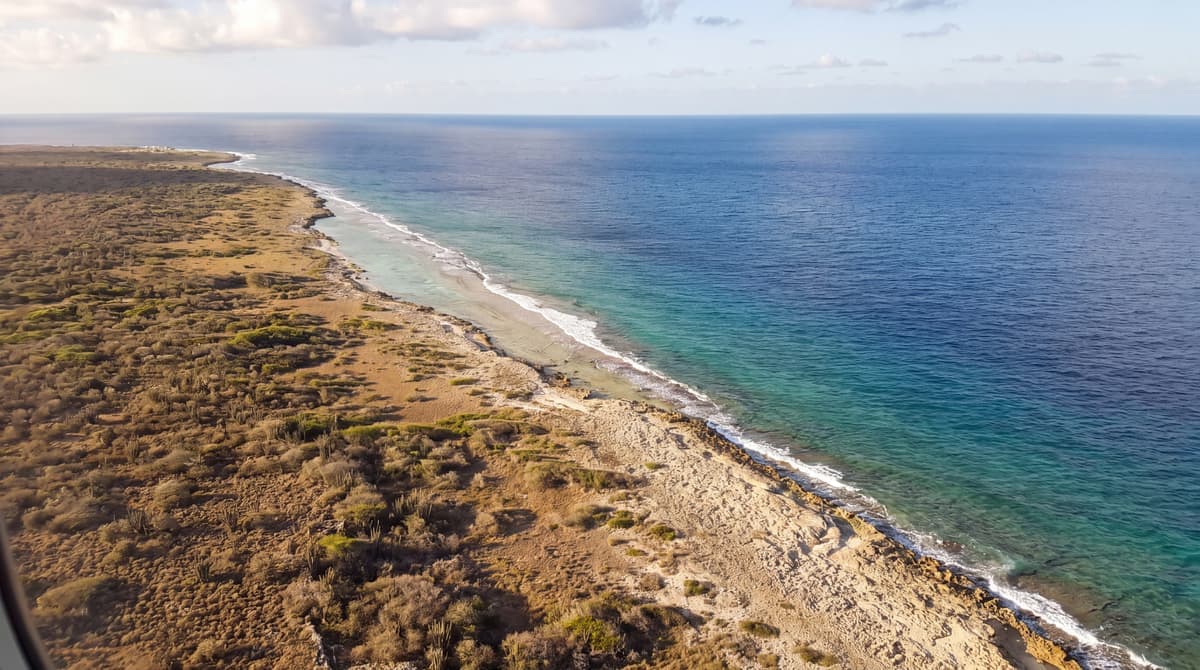
Both islands share the same arid, cactus-scrub landscape, the same steady trade winds, and the same Papiamentu-Dutch-English mix, with English spoken comfortably anywhere a visitor needs it. What differs first is scale. Curacao is the largest ABC island at 444 square kilometers with roughly 155,000 residents, while Bonaire is far smaller and emptier, about 290 square kilometers with only around 20,000 people. On the ground that gap is obvious: Curacao has the feel of a small country with a proper capital city, and Bonaire feels like one quiet town surrounded by a lot of empty coastline.
There is also a political difference that turns into a practical one at the cash register. Curacao is a constituent country within the Kingdom of the Netherlands and runs its own currency, the Caribbean guilder (XCG), pegged at USD 1 to XCG 1.79 since it replaced the old Netherlands Antillean guilder in 2025. Bonaire, by contrast, became a special municipality of the Netherlands in 2010 and switched to the US dollar outright. So on Bonaire every price is already in dollars, while on Curacao you will see XCG prices with US dollars widely accepted and change often handed back in guilders. We break the Curacao side down fully in our currency guide. Neither system is hard to navigate; it is just useful to know which island hands you dollars back.
Browse 25 Curacao experiences
Each one vetted operator by operator, with the honest note and the cancellation window shown per tour.
Diving and snorkeling: this is why most people are comparing them
Be honest with yourself about how central diving is to your trip, because it is the single biggest thing separating these two islands.
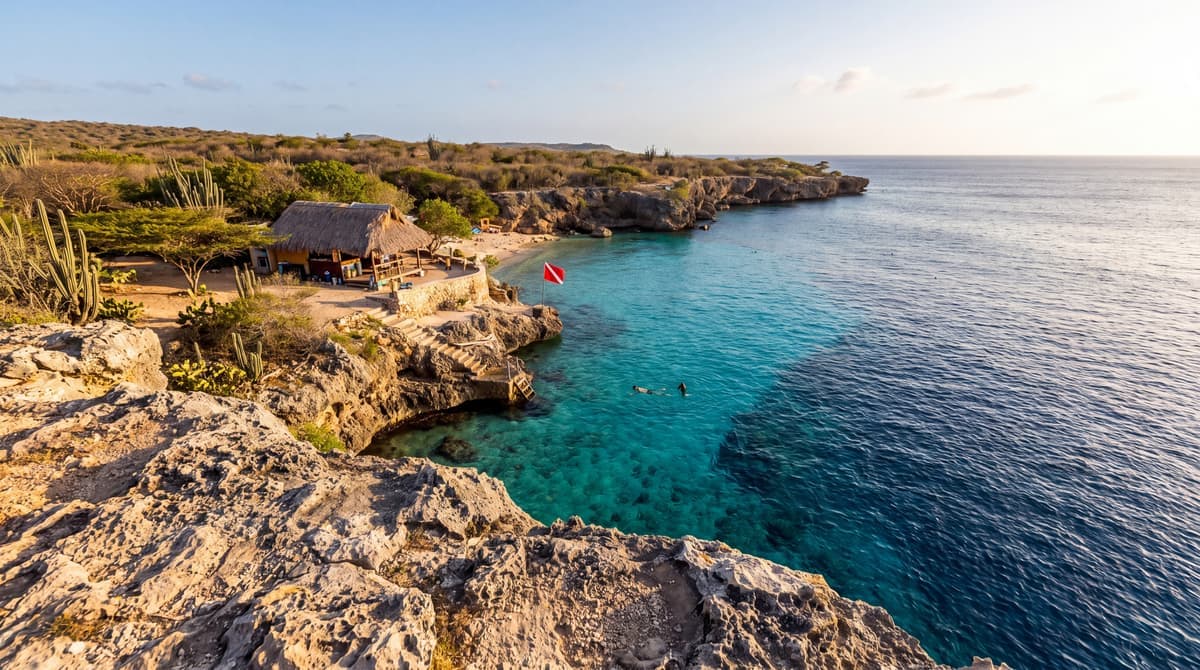
Bonaire is, plainly, the shore-diving capital of the Caribbean. Its license plates literally read "Diver's Paradise," and the island backs it up with more than 80 marked shore-dive sites, many flagged by painted yellow stones at the roadside so you can pull over, gear up, and walk straight in. The entire leeward coast is a protected marine park, the reef starts close to shore, and a huge share of visitors come specifically to dive it, often on multi-tank days from a pickup truck loaded with tanks. If your ideal trip is diving twice a day, every day, with minimal fuss, Bonaire is very hard to beat. The honest caveat is that this focus is the whole island: Bonaire is quiet, the above-water attractions are limited, and non-divers can find a week there slow.
Curacao is also a genuinely excellent shore-diving and snorkeling island, which is exactly why divers compare the two. It has strong shore access along the west coast, iconic sites like the Tugboat and the wall at Playa Kalki, and easy shore-entry snorkeling at coves like Playa Lagun. We make the full case in our shore diving guide. Where Curacao differs is variety and boat trips: it adds the popular day sail to uninhabited Klein Curacao, turtle snorkeling at Playa Piskado, and a stack of non-diving activities for the rest of the group. The honest caveat here is that Curacao's dive sites, while very good, are not as uniformly world-class or as effortlessly shore-accessible end to end as Bonaire's; committed divers often rate Bonaire a notch higher for pure diving.
Beaches above the water: advantage Curacao
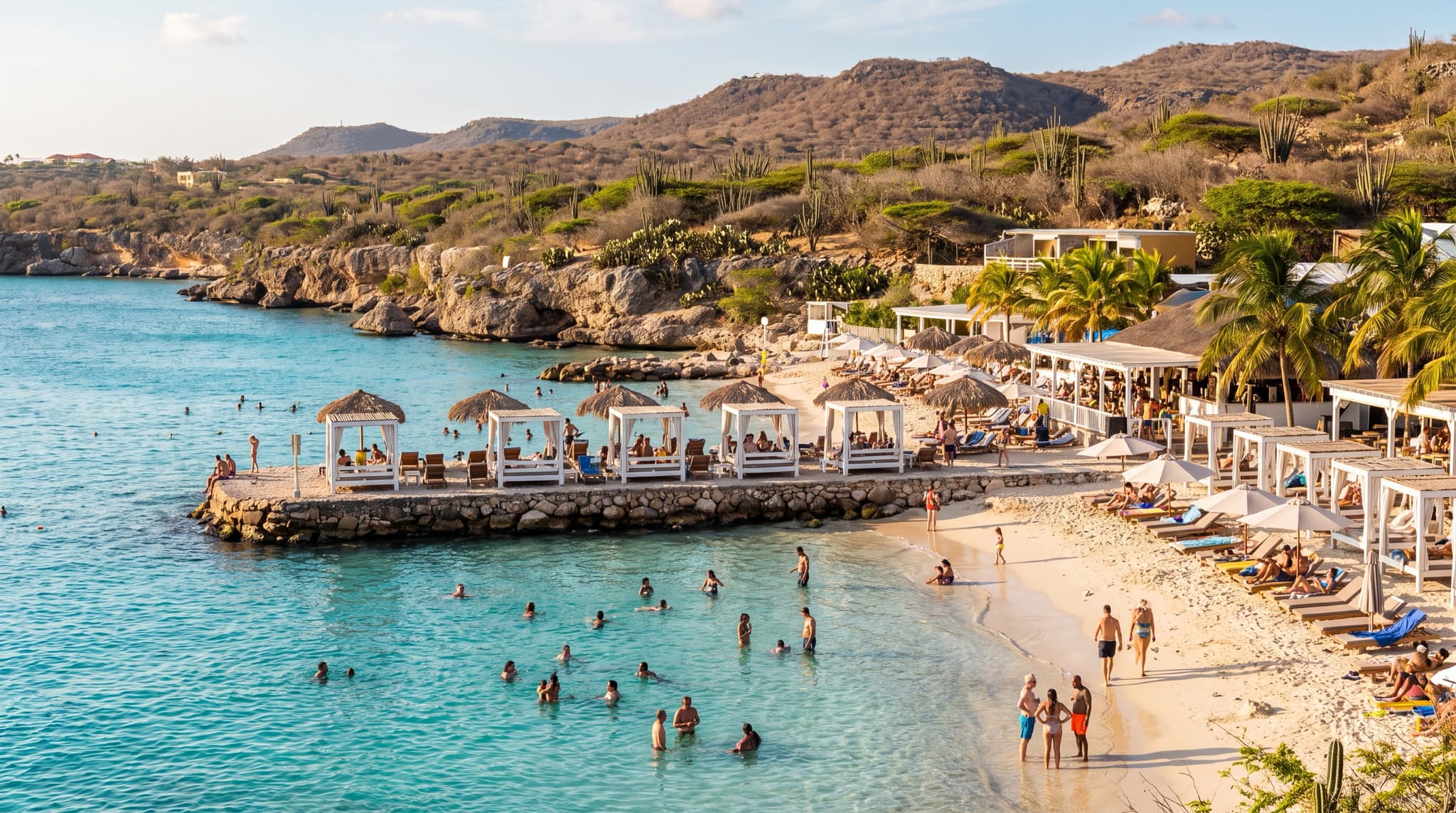
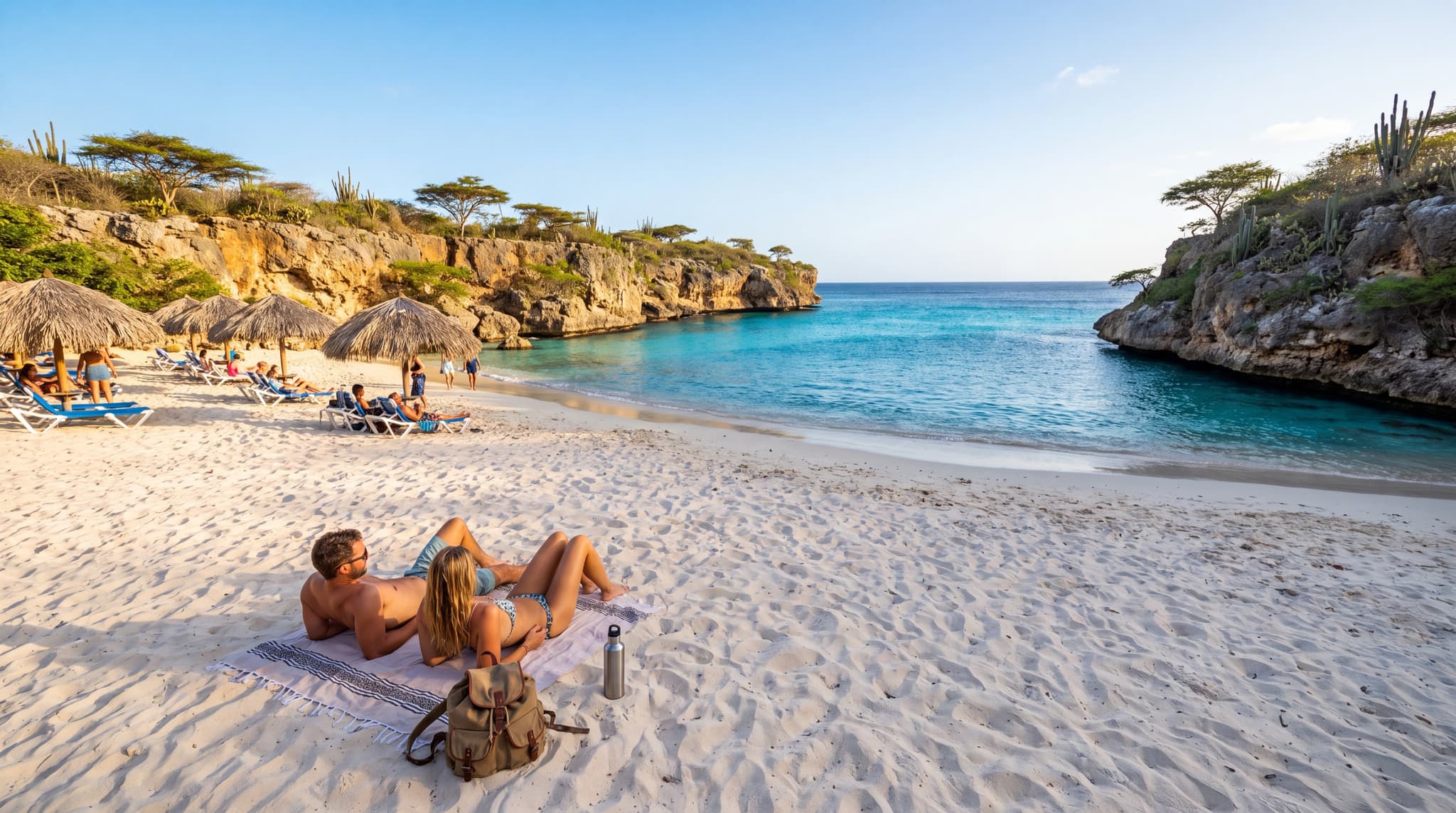
If you picture a Caribbean holiday as much sand as reef, this is where the islands split. Curacao has the stronger lineup of classic swimmable sand beaches: the cliff-backed cove at Grote Knip, the palapa-lined Cas Abao, Kleine Knip, and the calm Jan Thiel and Mambo strip on the east side. You can spend a week beach-hopping without ever putting on a mask.
Bonaire's beaches are, frankly, more about what is under the surface than on it. Much of its coastline is rocky or ironshore rather than soft sand, which is superb for wading in with fins but less inviting for a towel-and-sunbathing day. It has genuine highlights, including the white sand of nearby Klein Bonaire reached by water taxi and the shallow turquoise flats around Sorobon, but as a pure sandy-beach island Curacao clearly wins. Our beaches hub covers the Curacao side in detail.
Want a local to plan the whole trip?
Our concierge builds your days around what you actually want, from $149. A small curation team, never pay-to-play.
Towns, food, and nightlife: not really a contest
Curacao's capital, Willemstad, is a UNESCO World Heritage city with the postcard pastel Handelskade waterfront, the Queen Emma floating bridge, the restored Pietermaai nightlife district, and a deep, varied dining scene from Plasa Bieu market stalls to waterfront restaurants. There is a real evening culture here.
Bonaire's capital, Kralendijk, is a pleasant, walkable, but genuinely small town with a modest cluster of waterfront restaurants and bars and an early-to-bed rhythm. It is charming and low-key by design, and many Bonaire regulars love it precisely because nothing is loud. But if food, shopping, history, and going out matter to your trip, Curacao offers far more without a long drive. The trade-off, honestly stated, is that Curacao's greater development also means more traffic and a busier feel than Bonaire's near-total calm.
Nature beyond the reef
Both islands deliver on wild, arid nature, and both have flamingos. Bonaire's Pekelmeer, in the southern salt flats, is one of only a handful of Caribbean flamingo breeding grounds; you cannot enter the sanctuary itself, but the birds are visible from the road and nearby Pink Beach. Curacao answers with roadside flamingo-watching at the Jan Kok salt flats, covered in our flamingos guide. Bonaire has one clear edge outside diving: Lac Bay on its windward side is a world-class flat-water windsurfing spot, protected by a reef and cooled by constant trade winds. Curacao has the larger national parks for hiking and rugged coast, Christoffel and Shete Boka, if land adventure is your thing.
Let us plan this trip for you
A small curation team builds your days around what you want, share your dates and we'll build the rest.
Stay in the Curaçao loop
Curaçao news and deals, in your inbox.
Get island news, fresh activity ideas and deals when available, straight to your inbox.
Occasional emails from Curaçao Playbook. Unsubscribe anytime.
Email signup is temporarily paused. Please check back soon.
Browse the latest Curaçao storiesGetting there, and the entry costs nobody mentions
Curacao has the broader nonstop network from the US and Europe, landing at Hato International Airport (CUR); we cover arrival basics in our where-is-Curacao guide. Bonaire's air links (into Flamingo Airport, BON) are thinner and more dive-market focused, with fewer weekly US nonstops, and plenty of travelers reach it by connecting through Curacao or Aruba. Flight times from the US East Coast to either island run roughly four to four and a half hours.
The part that surprises people is the arrival math. Bonaire charges a mandatory Visitor Entry Tax of $75 per person aged 13 and over per visit ($10 for children up to and including 12), payable online before you fly, per the Bonaire government's official tax portal. On top of that, anyone entering the water pays a STINAPA nature fee of $40 per person per calendar year (children 12 and under exempt), which funds the marine park, according to Bonaire.com and STINAPA. For a diving couple that is $230 in fixed fees before a single tank. Curacao has no equivalent visitor tax or nature fee: its entry requirement is a free online digital immigration card. That difference does not decide a trip, but it is real money worth budgeting, and few comparison pieces mention it.
One shared point on both islands: you will want a rental car. Sights and dive sites are spread out, and public transport is limited on each. Our Curacao car rental guide covers the Curacao side.
When to go, and the hurricane question
Here the two islands are essentially the same, and it is good news. Both sit at roughly 12 degrees north latitude, south of the main Atlantic hurricane development zone, so direct strikes are rare on either, even during the June to November season that puts much of the Caribbean on alert. Both stay hot, dry, and windy year-round, with the wettest stretch late in the year. That shared position is a big reason travelers pick the ABC islands for storm-season trips; we go deeper on the specifics in our hurricane risk guide, and the month-by-month picture in our best time to visit guide applies closely to Bonaire too.
Find your hotel by month, beach & budget
Compare current Curacao rates across the major booking sites in one place, in USD. Most rooms are free to cancel.
So which island should you pick?
Choose Bonaire if diving is the reason for the trip and you want to do a lot of it with minimal logistics, if you value quiet and near-empty coastline over restaurants and nightlife, and if a rocky shoreline that is brilliant underwater beats a sandy one for sunbathing. It rewards the traveler whose whole day is built around the water.
Choose Curacao if you want excellent diving and snorkeling but also a real city, better sandy beaches, a proper food and nightlife scene, and more variety for a mixed group where not everyone dives. It suits couples, families, and first-timers who want the water plus everything else. If your group is split between hardcore divers and everyone else, Curacao is usually the safer single choice, and its west coast still keeps the divers very happy. Our 7-day Curacao itinerary and activities page show how the non-diving days fill out.
The honest bottom line
There is no wrong answer between Curacao and Bonaire; there is only a right answer for your specific trip. Bonaire is the purist's dive island, smaller, quieter, and unbeatable below the surface, with real entry fees to factor in. Curacao is the more complete all-rounder, with strong diving of its own plus a city, beaches, food, and nightlife that Bonaire deliberately does not try to match. Decide how many of your days will actually be spent underwater, and the island picks itself. And because the two sit just a 30-minute flight apart, the most committed travelers sometimes do both in one trip.