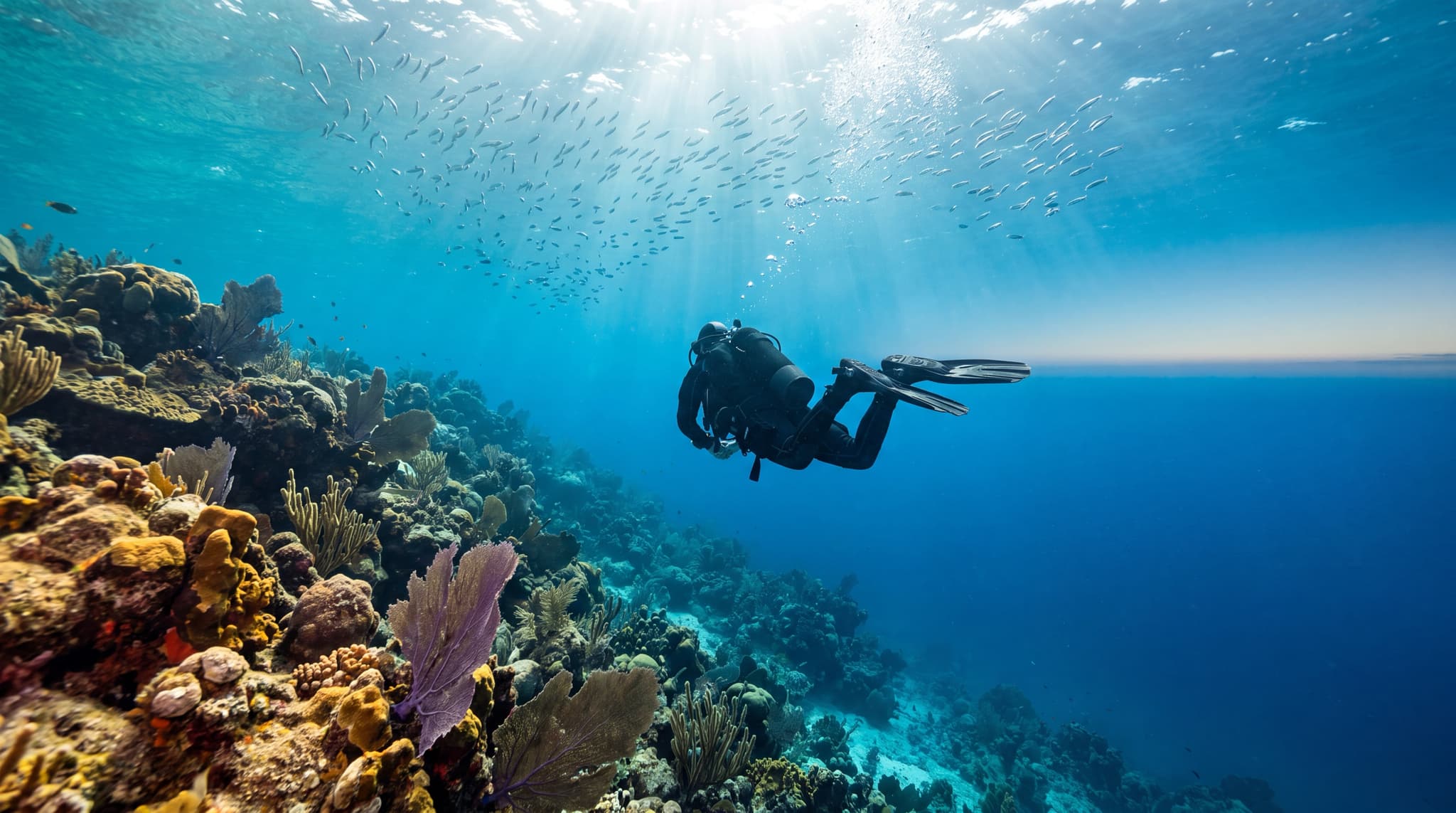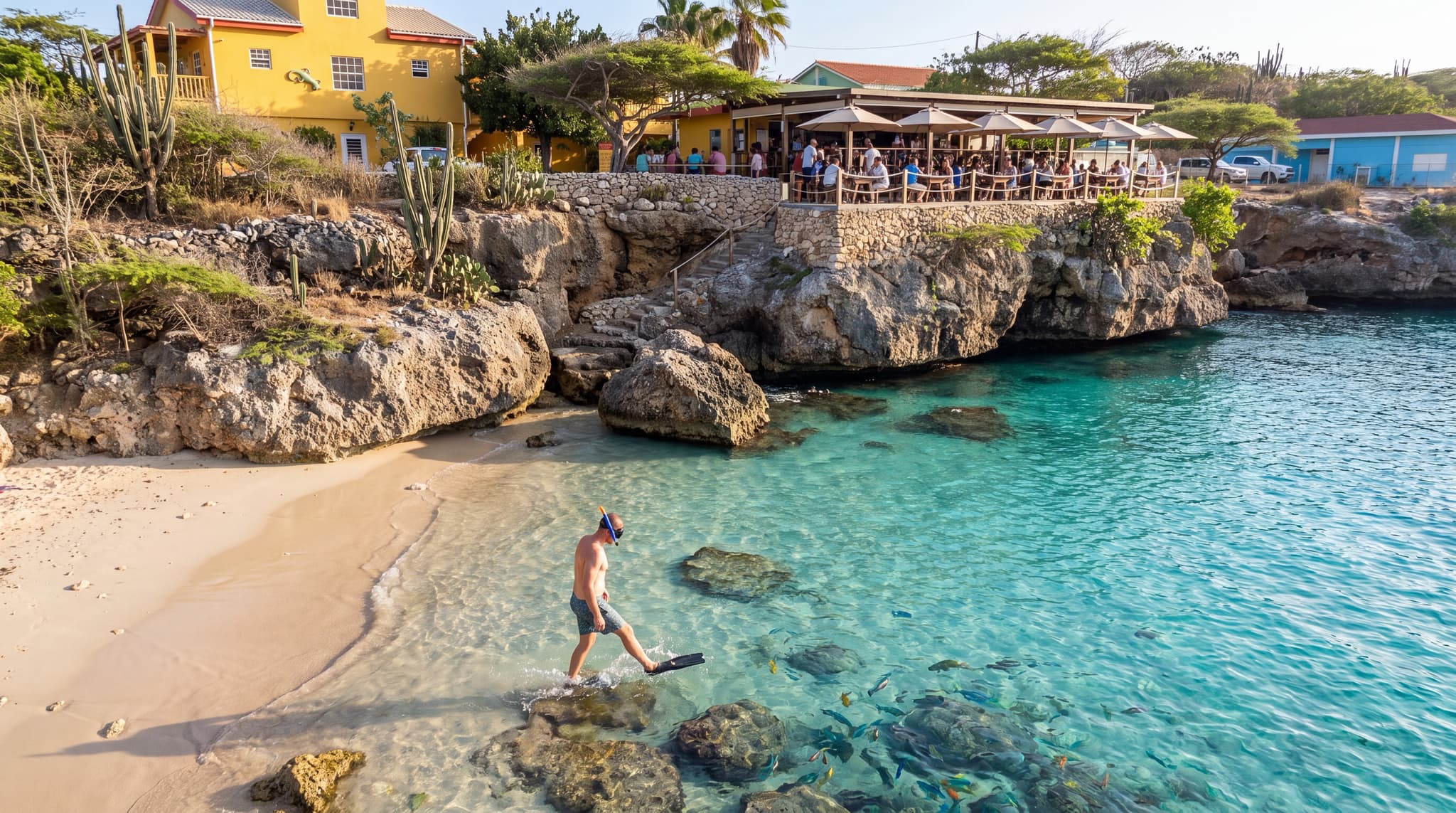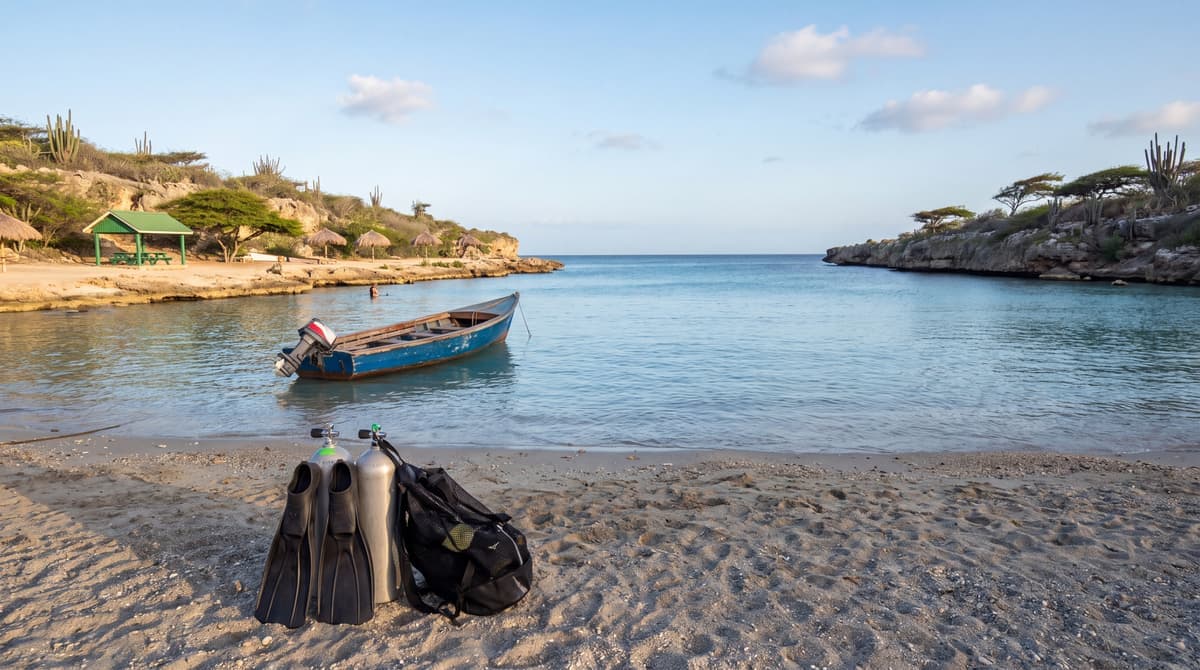
Curacao is one of the few Caribbean islands where you can drive to a world-class dive, walk in from the sand, and be over a reef within a few minutes. That is the island's real draw, and it is also the trap. With more than 70 named sites strung along the coast, first-time visitors lose days on the wrong ones, book a boat they did not need, or turn up at an advanced wreck without the certification to dive it. This is the honest, site-by-site shortlist: which dives are worth your limited days, which need a boat or a car, and which need an advanced card.
Curacao's reefs sit inside the Curacao Marine Park, which protects more than 65 coral species and more than 350 fish species across more than 70 named dive sites, according to PADI. We do not run the boats. What we do is curate the island's operators and cross-check their weekly dive schedules against the marine park's own site list, so the sites below are the ones local dive centres actually run most often, each with its honest trade-off. For how shore diving works in practice, and the rules that matter once you are in the water, start with our shore diving guide.
What makes Curacao's diving different
Two things set this island apart. The first is shore access: a large share of the best reef sits within swimming distance of a beach or a roadside entry, so you are not tied to a boat and a fixed departure the way you are on many islands. The second is water clarity. Because Curacao is semi-arid, gets little rain and has no rivers washing silt into the sea, visibility usually runs in the 75 to 100 foot range (roughly 23 to 30 metres), and more than 100 feet is not unusual. The water stays warm all year, roughly 25 to 29 C (77 to 84 F), a touch cooler around February and March and warmest from September into October. A 3 mm wetsuit is plenty in winter, and many divers wear a shorty or just a skin in summer.
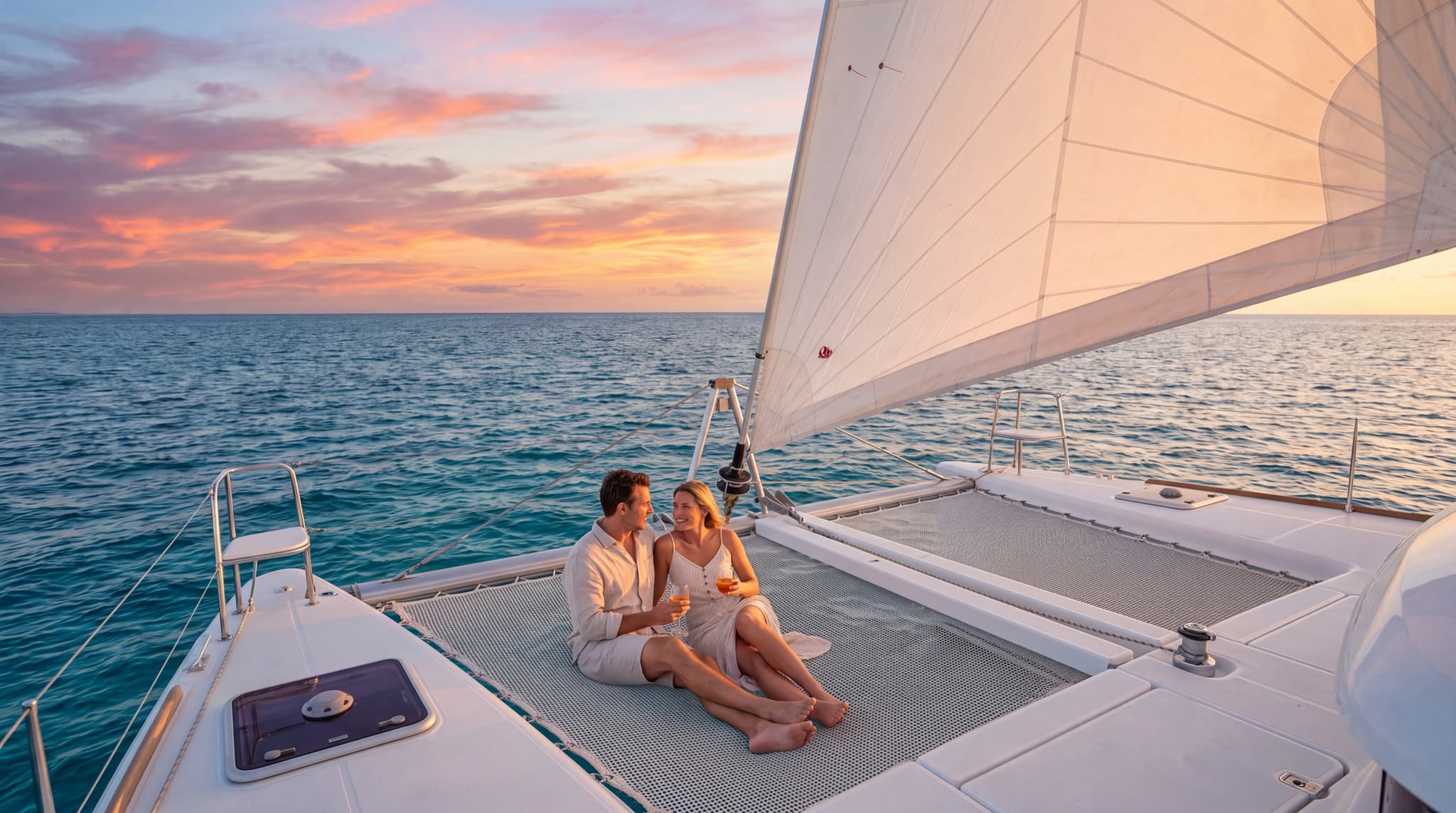
Happy Hour Sunset Cruise
2.5 hours · from $75/pp. Live prices, dates, and the honest details, one page.
The shallow icon: the Tugboat at Caracas Bay
If you do one easy dive on Curacao, make it the Tugboat. This small tug wreck sits in about 5 metres (15 feet) of water off Tugboat Beach at Caracas Bay on the south coast, shallow enough that snorkellers see it clearly from the surface and open-water divers can spend a long, relaxed dive on it. Decades underwater have crusted the hull in coral and sponges, and the reef wall just behind it holds seahorses, octopus and spiny lobster. It works as a shore entry or a short boat hop.
The honest caveat: it is Curacao's most famous shallow site, so it can get busy, and it is a gentle, pretty dive rather than a big-adventure one. That is exactly why it suits nervous or rusty divers and mixed groups that include snorkellers.
Turn this guide into your trip
Add all 3 to My Trip, then bend them around your dates.
The advanced wreck: the Superior Producer
The Superior Producer is the island's signature wreck dive and its clearest not-for-beginners site. She was a 165-foot cargo ship that sank in 1977 and now rests in about 30 metres (100 feet) of water off Otrobanda, just west of the cruise mega-pier near Willemstad. Nearly five decades on she is a full artificial reef, often circled by tarpon, barracuda and jacks, with visibility that regularly tops 100 feet. Because she sits deep and close to the harbour entrance, currents can pick up, and most operators run her as a boat dive with a controlled descent.
The honest caveat: this is an Advanced Open Water dive, full stop. The depth eats into your no-decompression time quickly and the current can be real. If you are freshly certified, build up on shallower sites first, or save this one for a future trip.
Let us plan this trip for you
A small curation team builds your days around what you want, share your dates and we'll build the rest.
The west-coast pair: Mushroom Forest and the Blue Room
On the west coast, two sites usually come as a single boat morning. The Mushroom Forest is a field of hard-coral heads that have grown and eroded into mushroom shapes, in roughly 12 to 18 metres (40 to 60 feet) of water, gentle enough for newer divers and rich with turtles and porcupinefish. Right beside it is the Blue Room, a small sea cave in the cliff that you enter through a low opening at the waterline. Inside, sunlight refracting through the water lights the chamber an electric blue, with clouds of silversides and the occasional resting nurse shark.
The honest caveats: both are boat sites, or a long swim, so you are on an operator's schedule, and the Blue Room's entrance is a low, narrow gap that you time with the swell. It can close on rougher days and is not for anyone who dislikes tight spaces. Many operators run the pair from Playa Santa Cruz, where a local boat also takes snorkellers and kayakers out.
Easy, rewarding, often overlooked: Director's Bay and Small Wall
Back at Caracas Bay, Director's Bay and the neighbouring Small Wall are two of the best sites on the island for a relaxed dive with a camera. Director's Bay drops from a shallow shelf down a wall to around 15 metres (50 feet), suits all levels including snorkellers, and rewards macro hunters with seahorses, frogfish, moray eels and coral-restoration structures that pull in life.
The honest caveat: this stretch sits near a former oil terminal and cruise moorings, so access and parking can change with whatever is operating that week. A local operator will know the current situation before you drive out.
Find your hotel by month, beach & budget
Compare current Curacao rates across the major booking sites in one place, in USD. Most rooms are free to cancel.
Shore dives on your own schedule: Playa Kalki and Playa Lagun
For divers who want to set their own hours, the west end delivers. Playa Kalki, known underwater as Alice in Wonderland, has a reef slope that begins close to shore, reached down a set of steps and a small lift from the parking area, and it doubles as one of the island's better shore snorkels. Playa Lagun is a small, protected cove between rock walls with the island's best odds of an easy turtle sighting.
The honest caveats: Kalki's entry is over rock and steps and gets choppier at the exposed northwest tip on windy days, and Lagun is small and popular, so go at opening. Both are covered from the snorkeller's side in our shore-entry snorkelling guide, and nearby Porto Mari adds a genuine double reef with an on-site dive shop.
Worth a full boat day: Klein Curacao
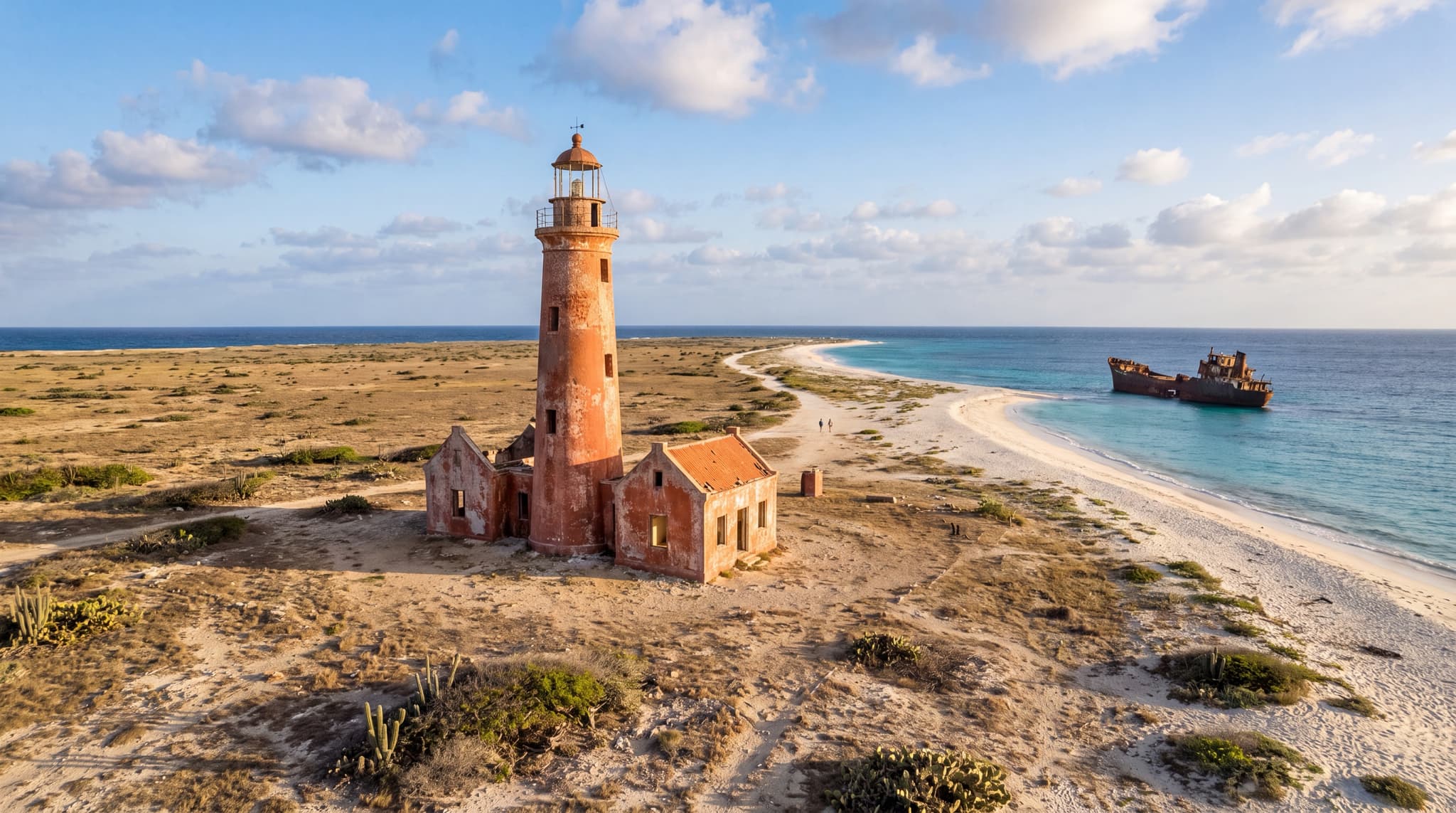
The uninhabited islet of Klein Curacao, off the east end, has steep walls where turtle sightings are close to routine, alongside triggerfish and big grouper. It is a boat dive tacked onto a long day trip rather than a quick outing, so it earns its place if you already want the beach-and-shipwreck day, not as a dive-only mission. We lay out the boats and the trade-offs in our Klein Curacao guide.
Browse 25 Curacao experiences
Each one vetted operator by operator, with the honest note and the cancellation window shown per tour.
When to dive, and what actually cancels a dive
Curacao's diving is unusually consistent. The water is warm and clear all year, so there is no bad season underwater. The dry, calmer stretch tends to bring the flattest seas and the sharpest visibility, while the wettest weeks late in the year can stir things up. The key thing to understand is that rain almost never cancels a dive here. Sea state does. When the wind and swell come up, it is the boat trips and the exposed shore entries that get called off, not the sheltered ones.
So plan the boat-based dives, the Superior Producer, the Mushroom Forest and Blue Room morning, and Klein Curacao, early in your trip, where you still have flexible days to move them to if the sea is up. Keep sheltered shore dives like the Tugboat and Director's Bay as your all-weather backup. Our best-time-to-visit guide has the month-by-month weather picture.
How to actually do this
A few practicalities decide whether the trip works. You will want a rental car: the west-coast sites and Caracas Bay are spread across the island and there is no dive-shuttle network, so a car is close to essential for reaching them on your own schedule. Our car rental guide covers the island's roads. If you are not yet certified, start with a discover scuba session in shallow, protected water before committing to anything deeper. If you are certified but new to the island, a guided two-tank shore dive is the fastest way to learn the local entries safely.
Snorkellers are not shut out of any of this. The Tugboat, Playa Kalki, Playa Lagun and the Blue Room all work from the surface, so a mixed group can share a site rather than splitting up. If diving is central to your whole trip, the island's dive-focused new resorts are worth a look in our 2026 openings guide, and divers weighing Curacao against its quieter neighbour should read our Curacao versus Bonaire comparison.
Let us plan this trip for you
A small curation team builds your days around what you want, share your dates and we'll build the rest.
The honest bottom line
Curacao rewards divers who match the site to their level and their week. Start shallow at the Tugboat, add Director's Bay and a west-end shore dive on your own clock, save the Superior Producer for the advanced-certified and the calm days, and treat the Mushroom Forest, Blue Room and Klein Curacao as boat mornings to slot in early. Do that, and few Caribbean islands give you more reef for less hassle. Browse the guided options on our experiences page when you are ready to build the dive days into the trip.