Curacao is having a genuine moment. The island logged a record 788,427 stayover visitors in 2025, up 13 percent year over year, with the United States its fastest-growing market and brand-new nonstops feeding in from cities like Chicago. That means a lot of people are landing at Hato for the very first time, and the stretch nobody plans for is the one between the plane door and the moment you finally have a cold drink at your hotel. This is our honest, local rundown of exactly that: what to do before you fly, what arrival at Hato is actually like, and the real options for getting from the terminal to wherever you are staying.
Do this before you fly: the digital immigration card
The single most important thing on this page is not something you do at the airport. It is something you must do before you leave home. Every visitor to Curacao, regardless of nationality, has to complete an online digital immigration card, sometimes called the ED card or DI card, before arrival. It replaces the old paper form you used to fill out on the plane, and immigration officers expect to see that it is done.
Three things matter here. First, it is free on the official government portal; completing it costs nothing. Second, you should fill it in within seven days of your departure to Curacao, using your passport details, and you will get a PDF confirmation by email. Third, and this is the trap, a cluster of look-alike websites market themselves as the entry portal and charge a fee for a form that is genuinely free. Use only the official portal, and if a site is asking for a service charge, you are on the wrong one. Our travel tips page points to the official card along with the other pre-trip essentials.
Want a local to plan the whole trip?
Our concierge builds your days around what you actually want, from $149. A small curation team, never pay-to-play.
Entry requirements, in plain terms
Curacao is a country within the Kingdom of the Netherlands, not a US territory, so you clear immigration on arrival as if entering a separate country. For most of our readers the requirements are straightforward: US, EU, UK, and Canadian citizens can visit visa-free for tourism for up to 90 days. You need a passport that stays valid for your entire stay, and officers can ask for proof of onward or return travel and where you are staying, so have your return flight and first hotel booking handy. If you are still fuzzy on where Curacao even sits, our where-is-Curacao guide covers the basics.
What arrival at Hato is actually like
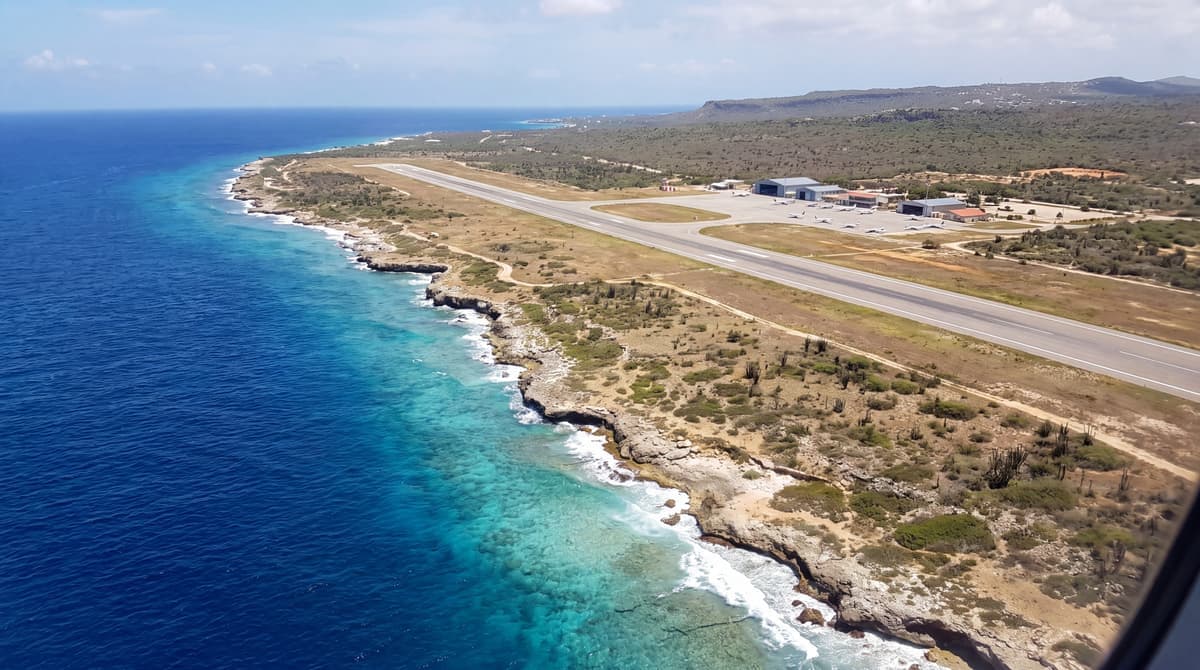
Everything lands at Hato International Airport (CUR), the island's single commercial airport, on the arid north-central coast a short drive from the capital. It is a compact, easy terminal on two levels, with arrivals downstairs. The sequence is the standard one: off the plane to immigration, then down to baggage claim, then through the customs channel, and out into the public arrivals hall.
The honest caveat is timing. Immigration is usually quick, but Hato takes a concentrated bank of North American and European flights around midday, and when several wide-bodies land together the immigration hall can back up to 30 to 45 minutes. There is not much you can do about it beyond having your digital immigration card sorted and your passport out, but it helps to know it is normal and not a sign anything is wrong. Outside that midday crunch, most people are through in minutes.
The arrivals hall itself has what you need on day one: ATMs and a currency exchange, mobile-phone kiosks, car-rental desks, a Penha duty-free shop, and free airport Wi-Fi. It is not a sprawling mega-terminal, which is a good thing when you are tired and just want to find your ride.
Let us plan this trip for you
A small curation team builds your days around what you want, share your dates and we'll build the rest.
Getting from the airport to your hotel
Hato sits roughly 12 kilometers, about 7.5 miles, from Willemstad, which is a 20 to 30 minute drive depending on traffic and exactly where you are staying. The resort strips just east of the city, like Piscadera and the Mambo Beach area, are in the same broad range; Jan Thiel in the southeast runs a little longer; and if you have booked out at the western end near Westpunt, plan on closer to a 45 minute to one hour drive. Here are the real options.
Rent a car (what most visitors should do)
We will say this plainly: on Curacao a rental car matters more than on smaller neighbor islands. The best beaches, the dive sites, the national parks, and the good local restaurants are scattered along a long coastline, well beyond walking distance of any single hotel zone, and public transport does not realistically connect them. Several rental companies keep desks right in the arrivals terminal, so collecting a car on landing is the smoothest way to start. The honest trade-off is that you take on the driving, and the island funnels a lot of traffic onto one main artery around Willemstad at rush hour. We walk through pickup, insurance, and the quirks of driving here in our Curacao car rental guide.
Take a taxi
If you would rather not drive on arrival day, licensed taxis wait just outside the arrivals hall, at the stand to your left as you exit. There is no need to pre-book; you join the queue and take the car at the front. The critical thing to understand is that Curacao taxis do not use meters. Fares are set by fixed government zones based on where you are going, and rates run higher late at night, so the rule is simple: confirm the price with the driver before you get in and before your bags go in the trunk. That one habit prevents nearly every taxi misunderstanding on the island. A taxi is a fine choice for a first night if you plan to pick up a rental car later or are staying somewhere central.
Pre-booked private transfer
Many hotels and independent operators offer a private transfer arranged in advance for a set price, with a driver meeting you in the arrivals hall. It costs more than joining the taxi queue, but for a late-night landing, a big family with luggage, or anyone who just wants zero decisions after a long flight, the certainty can be worth it. Book it directly through your hotel or a reputable operator rather than a stranger offering a ride inside the terminal.
The public bus
Curacao does have public buses, and there is a route between the airport area and Willemstad. It is by far the cheapest way in, but it is also slow, runs infrequently, and is not designed for arriving travelers wrestling suitcases. We would not plan an arrival around it. It is a genuine option for a budget traveler traveling light with time to spare, and a poor one for almost everyone else.
Stay in the Curaçao loop
Curaçao news and deals, in your inbox.
Get island news, fresh activity ideas and deals when available, straight to your inbox.
Occasional emails from Curaçao Playbook. Unsubscribe anytime.
Email signup is temporarily paused. Please check back soon.
Browse the latest Curaçao storiesMoney at the airport
You do not need to scramble for local cash the moment you land. US dollars are accepted almost everywhere on Curacao, and the airport ATMs dispense US dollars, euros, and the local Caribbean guilder (XCG), which replaced the old Netherlands Antillean guilder and is pegged at USD 1 to XCG 1.79. Cards are widely accepted too. In practice many visitors get by on dollars and cards and only pick up a little guilder for small local purchases; when you pay in dollars, your change often comes back in guilders. Our currency guide explains how change, cards, and the peg work so you are not caught out.
Browse 25 Curacao experiences
Each one vetted operator by operator, with the honest note and the cancellation window shown per tour.
Getting a SIM or staying connected
If you want a local number, both of Curacao's mobile operators, Flow and Digicel, run kiosks in the arrivals area where you can pick up a prepaid tourist SIM. Alternatively, an eSIM bought before you fly is often the least-hassle route, since it activates the moment you land without a kiosk stop; we cover that option on our travel tips page. And because the airport has free Wi-Fi, you can always sort connectivity from a bench before heading out.
A smoother first day
One practical planning note: because taxi cost and drive time both key off which zone your hotel sits in, where you choose to base yourself shapes your whole arrival. Staying central near Willemstad keeps that first transfer short; basing out west buys you quiet beaches at the cost of a longer initial drive. Our west side versus east side guide and where to stay guide walk through that trade-off. If a first easy stop near the airport appeals while you shake off the flight, Hato Caves is minutes away. And if safety is on your mind before you go, we answer that honestly in our is Curacao safe guide.
Find your hotel by month, beach & budget
Compare current Curacao rates across the major booking sites in one place, in USD. Most rooms are free to cancel.
The honest bottom line
Arriving in Curacao is genuinely easy, with two catches worth internalizing. Sort your free digital immigration card before you fly, and use only the official portal to do it. Then, at Hato, expect a compact, friendly terminal with a possible midday immigration wait, and choose your ride with eyes open: a rental car is the move for most visitors on a spread-out island, a fixed-zone taxi works if you agree the fare first, a private transfer buys certainty, and the public bus is for budget travelers with time and light bags. Have dollars or a card, grab a little guilder if you like, and you will be at your hotel with that cold drink before you know it. When you are ready to line up the rest of the trip, our 7-day itinerary and activities page are where we would start.