One of the most common questions we get from first-time visitors is not about beaches or tours at all. It is some version of: what do I actually need to bring? Curacao is having a genuine moment, with record visitor numbers and new nonstop flights feeding in from North America, which means a lot of people are packing for this island for the very first time. The good news is that Curacao is an easy place to pack for, as long as you understand the three things that make it a little different from a generic Caribbean trip: the sun and wind are stronger than you expect, some of the best beaches have rocky or coral entries rather than soft sand, and the island's power and water setup surprises people. Here is the honest, local packing list we would hand a friend, organized so you can pack in an afternoon and leave the guesswork at home.
Start with the weather you are actually packing for
Curacao's climate barely changes across the year, which makes packing simpler than for most places. The island sits roughly 12 degrees north of the equator and stays hot, dry, and noticeably windy almost every day, with daytime highs generally in the mid to high 80s Fahrenheit (around 28 to 31 Celsius) and steady trade winds that take the edge off the heat. Two things follow from that. First, the sun is intense at this latitude, more than a lot of North American and European visitors are used to, so sun protection is not optional. Second, that constant wind is lovely on the sand, but it will send an unsecured hat or a loose beach wrap flying, so pack accordingly.
The one seasonal wrinkle is rain. Curacao's wetter stretch runs roughly from October into December, with a little more cloud and the occasional shower from September onward, but even then the rain is usually brief and often falls at night rather than washing out your day. If you are traveling in that window, a packable light rain layer is worth tucking in, but you do not need serious wet-weather gear. Our best time to visit guide breaks the months down if you are still choosing dates.
Want a local to plan the whole trip?
Our concierge builds your days around what you actually want, from $149. A small curation team, never pay-to-play.
Clothing: pack light, pack breathable
Keep it light, breathable, and casual. Natural fabrics like cotton and linen, plus quick-drying synthetics, handle the heat and humidity far better than anything heavy. For a week you genuinely need less than you think: a rotation of shorts, T-shirts, tank tops, and a few sundresses or light shirts covers most days, and everything dries fast if you rinse it. Pack a light layer or two for the evenings, not for cold, because there is none, but for the breeze and for the mosquitoes that come out around dusk.
Two clothing notes people miss. Curacao is not just a beach; Willemstad is a real city with a UNESCO-listed old town and a proper dining and nightlife scene in districts like Pietermaai. Restaurants are relaxed and smart-casual rather than formal, so you do not need a jacket and tie or a cocktail gown, but you will want one or two dressier-casual outfits for an evening out, a button-down shirt or a nice top and a sundress rather than a swimsuit and cover-up. The honest caveat in the other direction: do not overpack formal wear, because you will almost certainly never use it. The second note is simple respect: when you leave the beach to walk around town, shops, or churches, throw a cover-up or shirt over your swimwear, since wandering the city in just a bikini reads as rude here.
The beach and water kit
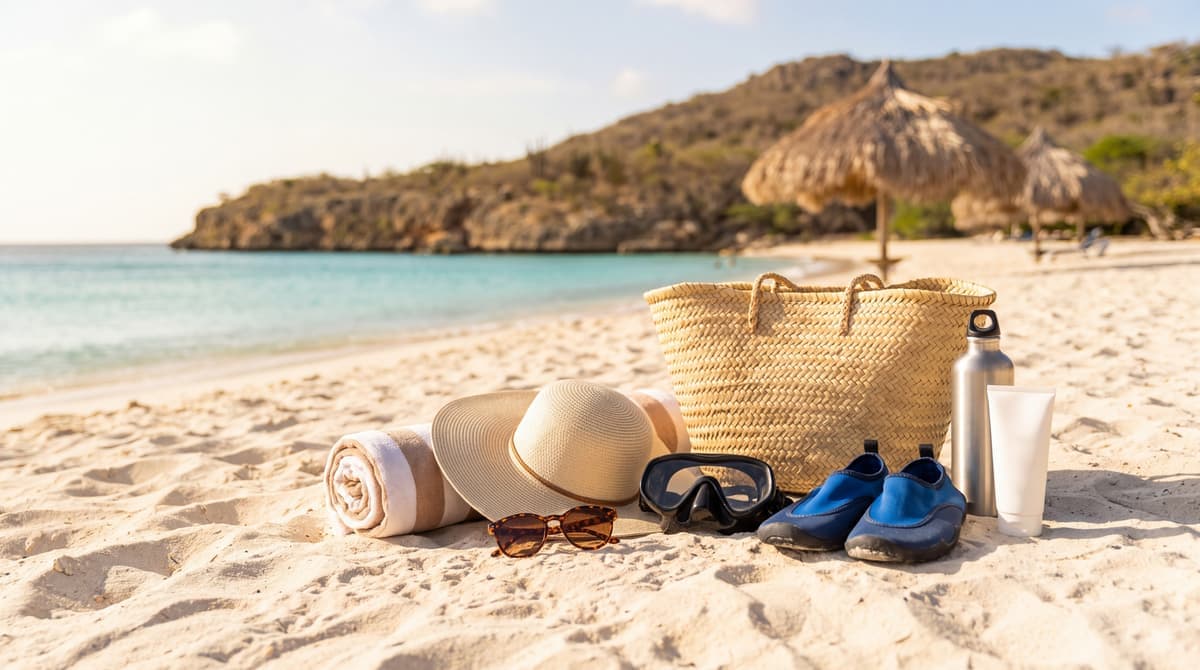
This is where a Curacao list differs from a generic one. Bring at least two swimsuits so you always have a dry one, and consider a rash guard or swim shirt: it doubles as sun protection during long snorkel sessions and saves your back and shoulders from the strongest sun.
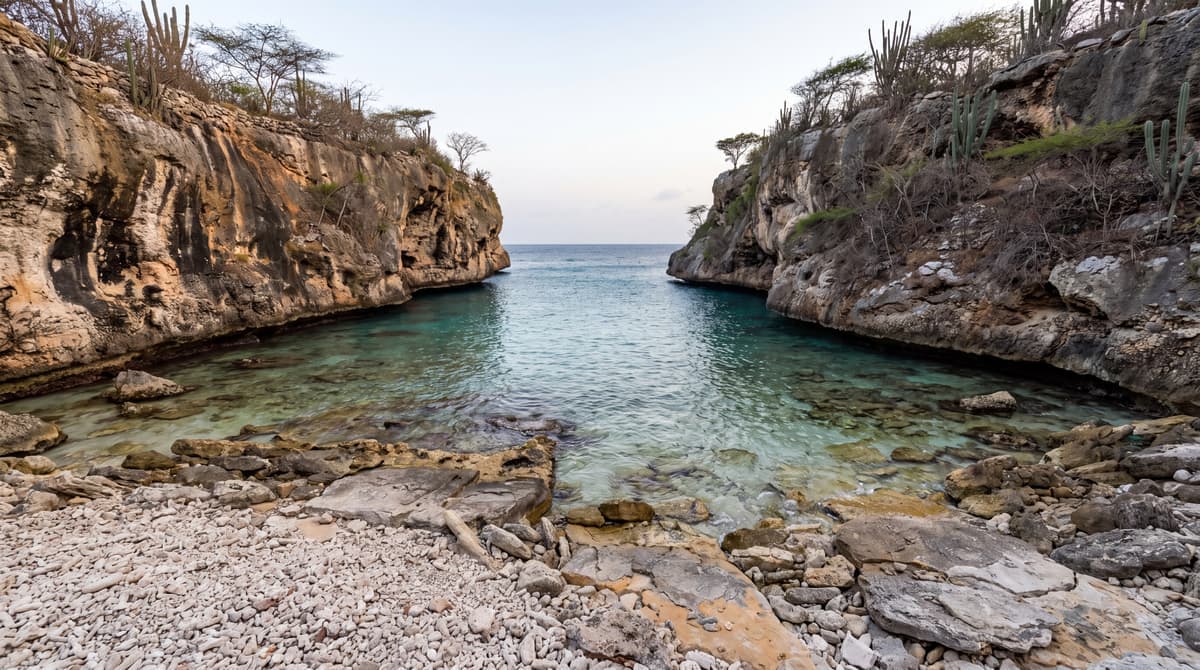
The item most first-timers forget, and the one our local team pushes hardest, is a pair of water shoes. Curacao's signature snorkeling and shore-diving beaches are often rocky, pebbly, or fronted by shallow coral rather than soft sand, and spots like Playa Lagun and the west-end dive entries covered in our snorkeling guide are far more comfortable with something on your feet. The honest caveat: you will not need them at the classic soft-sand beaches like Grote Knip or Cas Abao, so if your trip is purely sunbathing you can skip them, but for anyone planning to get in the water regularly they earn their space. Our beaches hub flags which coves are sandy and which are rocky.
If you love snorkeling, a decent mask and snorkel of your own is a nice-to-have, since the shore snorkeling here is a genuine highlight and rentals add up over a week. The trade-off is bulk, plus the fact that gear is easy to rent at beach dive shops, so bring your own only if you will use it most days. And pack a dry bag or a simple waterproof phone pouch. Boat trips, especially the popular full-day sail to uninhabited Klein Curacao, get wet and bumpy, and an open-water crossing that can run rough is exactly when you want your phone and documents sealed. On that note, if you are prone to seasickness, throw motion-sickness tablets in your bag before that trip; the Klein Curacao crossing is beautiful, but the open sea between the islands is not always calm.
Let us plan this trip for you
A small curation team builds your days around what you want, share your dates and we'll build the rest.
Sun protection, and why we pack reef-safe here
Bring more sun protection than you think you need, and buy it before you arrive, because it is pricier and less varied in island shops. A broad-spectrum sunscreen of at least SPF 30, reapplied every couple of hours and after every swim, a lip balm with SPF, sunglasses, and that wind-proof hat are the core kit. Aloe or an after-sun for the evening is smart insurance; the sun here catches people out on day one.
One Curacao-specific point is worth understanding. We would ask you to make it reef-safe sunscreen, meaning a mineral formula free of oxybenzone and octinoxate, the chemicals shown to harm coral. Unlike neighboring Bonaire, which has legally banned the sale and use of those sunscreens since January 1, 2021 to protect its marine park, Curacao does not currently require reef-safe sunscreen by law. But the reefs here are just as alive and just as fragile, the shore snorkeling is a big reason people come, and choosing a reef-safe formula is an easy, no-cost way to help keep it that way. The honest caveat: genuinely reef-safe options can be harder to find and more expensive locally, which is exactly why we say buy it at home and pack it.
The plug situation, split by where you are flying from
Curacao's electricity setup trips up more visitors than almost anything else on this list, and it splits neatly by where you are coming from. The island's standard is 127 volts at 50 hertz, and the most common outlets take the same flat-pin Type A and Type B plugs used across the United States and Canada. So if you are flying in from North America, your chargers and cables will usually plug straight in with no adapter at all.
Travelers from Europe, the UK, Australia, and most of the rest of the world do need a plug adapter, because your plug shape will not fit those Type A and B sockets. Here is the honest complication that catches people, and it is why we tell everyone to pack a universal adapter as cheap insurance: Curacao is not perfectly uniform. Because of the island's Dutch ties, some buildings, and even some individual hotel rooms, also have 220-volt outlets and European-style round-pin Type F sockets mixed in. Most modern phones, laptops, and camera chargers are dual voltage and handle either without a thought, but a single-voltage, high-wattage device like a hair dryer or a hair straightener can underperform or be damaged by the wrong voltage, so check the outlet and your device's rating before you plug one in. We keep the short version of this on our travel tips page.
Browse 25 Curacao experiences
Each one vetted operator by operator, with the honest note and the cancellation window shown per tour.
Stay in the Curaçao loop
Curaçao news and deals, in your inbox.
Get island news, fresh activity ideas and deals when available, straight to your inbox.
Occasional emails from Curaçao Playbook. Unsubscribe anytime.
Email signup is temporarily paused. Please check back soon.
Browse the latest Curaçao storiesWater, bugs, and a small health kit
Two pieces of good news here. First, Curacao's tap water is safe to drink. It is produced by seawater desalination using reverse osmosis, it is well regulated, and it is regularly rated among the cleanest tap water in the Caribbean. That means you can skip buying cases of bottled water and simply pack a refillable bottle, which is better for your wallet and for the island. The only minor caveat is taste: the desalinated water is very soft and low in mineral content, so some visitors find it tastes slightly different, and in an older building a quick flush of the tap is a reasonable habit.
Second, there are no exotic must-have vaccinations or malaria pills for a standard Curacao trip, but mosquitoes are present and most active around dawn and dusk, so pack an insect repellent and use it in the evenings, especially near gardens and standing water. Round out a small kit with any personal medications in their original packaging, a basic first-aid handful (plasters, pain relief, anything you rely on), and those motion-sickness tablets if boats are on your agenda.
Money and documents
You do not need a thick wad of local cash. US dollars are accepted almost everywhere on Curacao, and cards are widely taken, so most visitors run on cards plus a modest amount of cash. The local currency is the Caribbean guilder (XCG), pegged at USD 1 to XCG 1.79, and when you pay in dollars your change often comes back in guilder, so it helps to carry small US bills and keep a little guilder for market stalls, small local eateries, and tips. Our currency guide covers exactly how the peg, cards, and change work.
For documents, bring a passport valid for your whole stay, and do the one free administrative task before you fly: complete Curacao's online digital immigration card, which every visitor must fill out within seven days of departure. It is free on the official portal, and you should ignore the copycat sites that charge a fee for it. Have your return flight and first hotel booking reachable too, since immigration can ask. Our airport arrival guide walks through the whole landing process.
Find your hotel by month, beach & budget
Compare current Curacao rates across the major booking sites in one place, in USD. Most rooms are free to cancel.
What you can leave at home
Packing light is easier when you know what you can skip. North American travelers can leave the plug adapter at home for their own devices. Everyone can leave formal wear behind, since even the nicest restaurants here are smart-casual. You do not need to haul bottled water or a water filter given the safe tap water, you do not need heavy hiking boots for the island's short, hot trails (sturdy trainers are plenty for Christoffel or Shete Boka), and you do not need a warm jacket for an island that never gets cold. And because a rental car is close to essential for reaching the best beaches and dive sites, you are packing a trunk rather than carrying everything on your back, which takes some pressure off. Our things to do page and our west side versus east side guide help you plan around that.
The honest bottom line
Curacao is a forgiving island to pack for. Bring light, breathable clothes and plenty of sun protection, add water shoes and reef-safe sunscreen for its rocky, reef-fringed water, sort the plug situation based on where you are flying from, and lean on the safe tap water with a refillable bottle. Do the free digital immigration card before you leave, carry US dollars and a card with a little guilder for color, and keep one dressier-casual outfit for a night out in Willemstad. Get those few island-specific details right and everything else is just a normal warm-weather holiday. When you are ready to turn the packed bag into a plan, our 7-day itinerary and activities page are where we would start.