Somewhere between booking the flights and packing the bag, most first-time visitors ask us the same quiet question: will there be a language barrier? It is a fair worry, and the honest answer is reassuring. You will not be stuck in Curacao. English is spoken fluently in the places a traveler spends time, and most people you meet will switch into it the moment they hear you reaching for anything else. But there is a second, better answer underneath the first. You do not need Papiamentu to get by, and learning a little of it will still change your trip, because a sincere 'bon dia' lands differently than a hopeful 'hello.' This is the short, honest phrasebook our local team actually uses, and the handful of words worth the five minutes.
First, the reassurance: you will not hit a language barrier
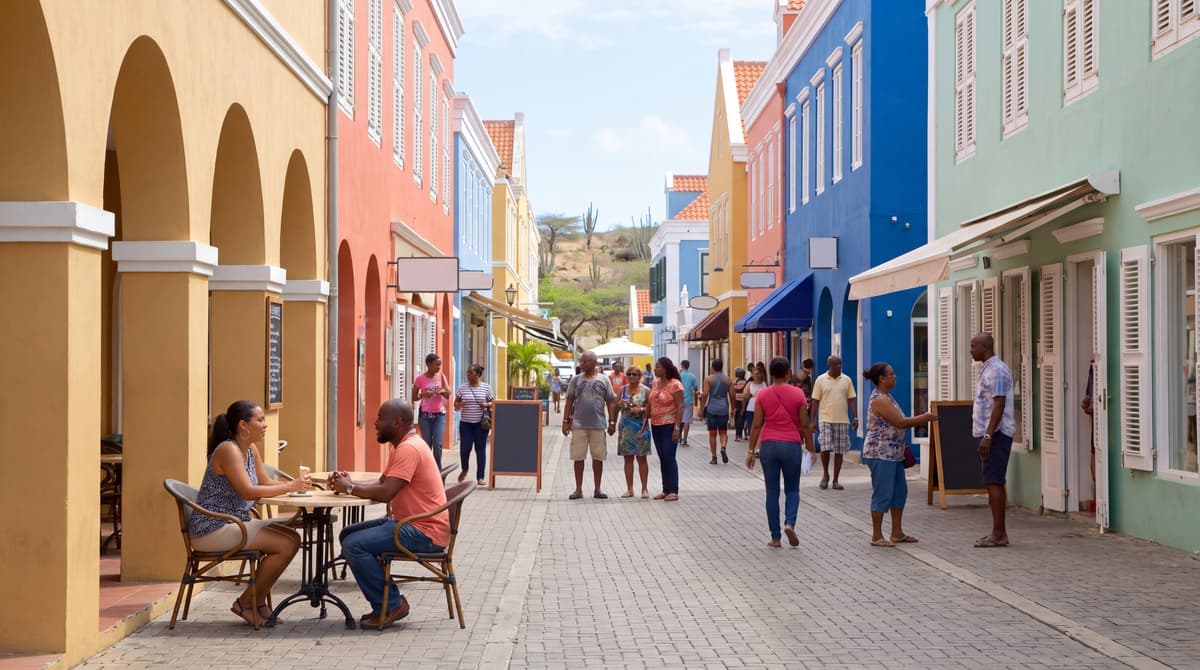
Curacaoans are, as a rule, comfortably multilingual. Many move between Papiamentu, Dutch, English and Spanish across a single conversation without seeming to think about it, a reflection of the island's history and its position just off the Venezuelan coast. For you, the practical effect is simple: hotels, restaurants, tour desks, car-rental counters and shops will all deal with you in English, and usually very good English. You can plan an entire trip, from the airport to the far west coast, without a word of the local language. So treat everything below as a courtesy worth extending, not a hurdle you have to clear.
Want a local to plan the whole trip?
Our concierge builds your days around what you actually want, from $149. A small curation team, never pay-to-play.
What Papiamentu actually is
Papiamentu is not a dialect of Spanish or Dutch, and it is not broken anything. It is a creole language in its own right, one of the genuinely distinctive things about the ABC islands. Linguists describe it as Portuguese-based, built on Portuguese as it was spoken in the 15th and 16th centuries, then shaped heavily by Spanish and Dutch, with threads of West African languages and a little of the Indigenous Arawak woven in. By one common estimate, roughly 80 percent of its everyday vocabulary traces to Iberian roots, meaning Portuguese and Spanish, and about 20 percent to Dutch. It is spoken across Aruba, Bonaire and Curacao, with a large community in the Netherlands as well, by something on the order of 350,000 people. On Curacao it is an official language alongside Dutch, made official across the former Netherlands Antilles on 7 March 2007 and carried forward since. In other words, it is a real, living, legally recognized language, not a tourist novelty, and that is part of why a little effort with it is appreciated.
If you want the wider context on where the island sits and how its languages fit together, our where is Curacao guide covers the geography and the Kingdom of the Netherlands relationship that shaped all of this.
Why the spelling changes between islands: Papiamentu or Papiamento
Here is the detail that trips people up before they even arrive, and the honest explanation. You will see the language written two ways, and both are correct. Curacao and Bonaire spell it 'Papiamentu,' ending in a u, using a phonetic system where words are written much as they sound. Aruba spells it 'Papiamento,' ending in an o, using a more etymological system that keeps spellings closer to the Spanish and Portuguese origins. The same split runs through individual words: 'house' is 'kas' on Curacao and 'cas' on Aruba. Neither is wrong; they are two standards for one language. Because this is a Curacao guide, we use the Curacao spelling throughout, but if your searches turn up 'Papiamento' with an o, you have not found a different language. That is the Aruba convention, and we compare the two islands in more depth in our Curacao versus Aruba guide.
Let us plan this trip for you
A small curation team builds your days around what you want, share your dates and we'll build the rest.
The short list that actually matters
If you learn nothing else, learn how to greet people and how to say thank you. On Curacao, greetings are tied to the time of day, and using the right one is the single easiest way to open an exchange warmly.
- Bon bini (BOHN BEE-nee): welcome. You will see and hear it the moment you land; it is how the island says hello to arrivals.
- Bon dia (BOHN DEE-ah): good morning.
- Bon tardi (BOHN TAR-dee): good afternoon.
- Bon nochi (BOHN NO-chee): good evening or good night.
- Danki (DAHN-kee): thank you.
- Masha danki (MAH-shah DAHN-kee): thank you very much. 'Masha' means very, so this is the warmer, more emphatic version.
- Por fabor (pohr fah-BOHR): please.
That is genuinely enough for most of a trip. A 'bon dia' as you walk into a bakery and a 'masha danki' as you leave will carry you a long way.
Stay in the Curaçao loop
Curaçao news and deals, in your inbox.
Get island news, fresh activity ideas and deals when available, straight to your inbox.
Occasional emails from Curaçao Playbook. Unsubscribe anytime.
Email signup is temporarily paused. Please check back soon.
Browse the latest Curaçao storiesDushi: the one word you will hear everywhere
If a single word sums up Curacao, it is dushi (DOO-shee). It started as 'sweet' or 'tasty,' the thing you say about good food, and it has grown into a catch-all for anything lovely. A plate can be dushi, a beach day can be dushi, a person can be your dushi the way an English speaker might say 'sweetheart,' and the island itself gets called dushi with real affection. You do not need to deploy it, but you will hear it constantly, and knowing what it means lets you in on the warmth behind it. You will also meet it on menus and in the island's food culture, which we unpack in our Curacao food guide alongside the local dishes worth ordering.
Browse 25 Curacao experiences
Each one vetted operator by operator, with the honest note and the cancellation window shown per tour.
A few more for the table, the taxi and the trail
Once the greetings are second nature, these round things out:
- Kon ta bai? (kohn tah BYE): how are you? The easy reply is 'Bon, danki' (BOHN, DAHN-kee), meaning fine, thanks.
- Di nada (dee NAH-dah): you are welcome.
- Despensa (des-PEN-sah): excuse me, or sorry.
- Ayo (ah-YOH): bye.
- Te aworo (teh ah-WOH-roh): see you later.
- Pasa un bon dia (PAH-sah oon BOHN DEE-ah): have a good day.
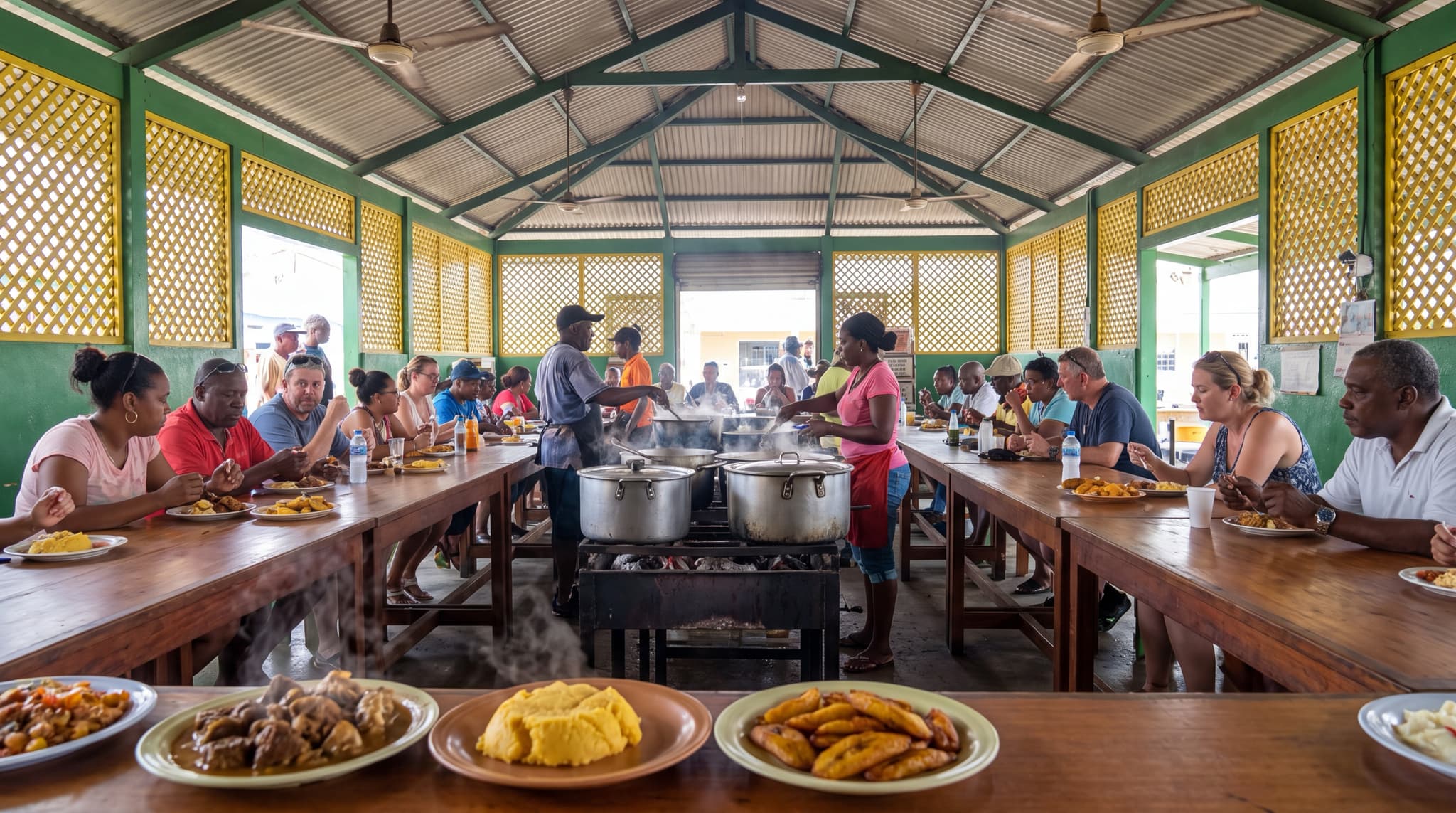
And a couple for mealtimes, since food is where a lot of the island's character lives: kuminda (koo-MEEN-dah) is food, and 'mi tin hamber' (mee teen AHM-ber) is 'I am hungry.' Two words you will meet on the street are truk'i pan, the island's late-night 'bread trucks' serving hot sandwiches, and pastechi, the fried, filled pastry that is a standard breakfast and snack; both show up in our food guide.
How to use a little Papiamentu without overdoing it
Here is the honest caveat, because there is a wrong way to do this. Do not try to hold a conversation you cannot finish, and do not turn every exchange into a language lesson. Locals will, kindly and quickly, switch to English the moment it is easier for everyone, and pushing past that reads as performance rather than respect. The sweet spot is small and sincere: open with the right time-of-day greeting, say danki or masha danki when someone helps you, and let the rest of the conversation go wherever it naturally goes. Pronunciation does not have to be perfect, either. The effort is the point, and it is almost always met with a smile and, often, a gentle correction offered in good humor. If you want the broader etiquette of traveling here well, our first-timer mistakes guide and our on-island tips cover the rest.
Find your hotel by month, beach & budget
Compare current Curacao rates across the major booking sites in one place, in USD. Most rooms are free to cancel.
The honest bottom line
You can have a wonderful week on Curacao without a syllable of Papiamentu, and nobody will think less of you for it, because English genuinely is everywhere a visitor needs it. But a few words of the island's own language are one of the cheapest upgrades to a trip there is. Learn to greet people by the time of day, learn to say thank you like you mean it, and understand what dushi means when you hear it, and you will find doors open a little wider and conversations run a little warmer. Start with 'bon bini,' which the island will say to you first anyway, and when you are ready to plan the days around it, our first-time Willemstad guide and the experiences page are good next steps.