The tipping question on Curacao is not really about generosity. It is about not paying twice. A large share of restaurant and hotel bills here already carry a service charge, that charge is not a tip, and the two get confused constantly, usually by visitors arriving with a 20 percent American habit or a strictly rounded Dutch one. Neither instinct is quite right here.
So here is the plain version, drawn from the Curacao Tourist Board's own guidance and from what Curacao's Consumer Union has said publicly, with the parts we could not verify flagged as such.
The one habit that solves most of it: read the bill first
Before you add anything, look for a line that says service charge, servicekosten or something similar. The Curacao Tourist Board's own guidance is blunt about how common this is: service charge is normally around 10 percent in restaurants and 12 percent in hotels.
If that line is on the bill, the decision changes completely. You have already paid a service charge, and anything you add on top is a genuine extra. If the line is not there, you are in normal tipping territory.
Want a local to plan the whole trip?
Our concierge builds your days around what you actually want, from $149. A small curation team, never pay-to-play.
A service charge is not a tip, and it may not reach your server
This is the part that trips people up. A service charge is a business charge. It appears on the bill, it goes to the establishment, and how much of it reaches the individual member of staff who looked after you is between that business and its team, not something you can see from the table.
A tip is different. It is a voluntary payment from you to a person. If your goal is to reward the specific server, bartender or housekeeper who made your evening, a service charge does not do that job on your behalf.
Is a service charge actually mandatory?
Not automatically. Curacao's Consumer Union has set out the position clearly: service charges in the hospitality sector are not mandatory if they are not listed on the menu, and tips are always voluntary. The Union has also said that as a consumer you are not obliged to pay these charges if they are not clearly visible on the menu or price list, and that the charge, when applied, is typically a fixed amount of roughly 10 to 15 percent of the total.
The practical reading: if the service charge was disclosed on the menu or in your booking, it is part of the agreed price and you pay it. If it appears on the bill and was nowhere on the menu, you are within your rights to ask about it. We would ask politely and quietly rather than make a scene, because a genuine mistake is far more likely than a scam, but knowing where you stand is worth something.
Want a local to plan the whole trip?
Our concierge builds your days around what you actually want, from $149. A small curation team, never pay-to-play.
The official numbers, when there is no service charge
The Curacao Tourist Board publishes actual figures rather than vague encouragement, which is unusually helpful. Its guidance says taxi drivers are usually tipped 10 percent of the fare, porters 1 Caribbean guilder per bag, and waiters can be tipped between 5 and 10 percent of your bill. It also says, in as many words, that tipping is left to your own discretion at all times.
Read those percentages against American norms and they look low. That is not an error in the guidance, it is the local baseline. Curacao's biggest source market by a wide margin is the Netherlands, at 24,443 visitors in January 2026 and 23,460 in February 2026 in the tourist board's own figures, and Dutch tipping habits are considerably lighter than American ones. Staff here are used to the full range and nobody is counting.
Where there is no official guidance at all is tour and dive guides. The customary range visitors use, and the one our own travel tips page carries, is roughly 5 to 10 US dollars per person for a guide who genuinely made the day. Nothing at all is also a legitimate choice, and no operator will treat you differently for it.
Housekeeping, bartenders and the people you never meet
There is no official guidance on housekeeping at all, and we are not going to invent a number to fill the gap. What we can say is the structural point: a 12 percent hotel service charge is a charge levied by the hotel, and it does not follow the person who made your bed. If you want to recognise housekeeping, that is a separate, voluntary act, and cash left with a short note so it is unmistakably a tip rather than forgotten change is the way people here do it.
The same logic covers a beach bar over a long afternoon, a dive guide who talked a nervous swimmer into the water, and the driver who waited an extra twenty minutes at the airport. None of it is expected. All of it lands.
Let us plan this trip for you
A small curation team builds your days around what you want, share your dates and we'll build the rest.
Rounding up is a real answer, not a cop-out
Because the Netherlands is Curacao's largest source market by a wide margin, a great deal of the tipping that actually happens on this island is Dutch-style: rounding the bill up to a clean number, or leaving the coins. That is a normal, unremarkable thing to do here, and it will not read as stingy the way it might in Miami.
It also solves the awkward middle case. If a service charge is on the bill and the service was genuinely good, rounding up is a proportionate response. You are not paying a second full gratuity on top of a charge you already paid, and you are not walking out having left nothing.
Stay in the Curaçao loop
Curaçao news and deals, in your inbox.
Get island news, fresh activity ideas and deals when available, straight to your inbox.
Occasional emails from Curaçao Playbook. Unsubscribe anytime.
Email signup is temporarily paused. Please check back soon.
Browse the latest Curaçao storiesWhat a week actually looks like
Concretely, for a typical seven-night trip: a handful of restaurant meals where the bill already carries a service charge and you round up, one or two where it does not and you leave 10 percent, an agreed taxi fare or two with roughly 10 percent added, a guilder or a dollar a bag when someone carries luggage, and something for a guide on the one big excursion day. That is the whole of it. It is a smaller running total than most American visitors expect and a slightly larger one than most Dutch visitors expect, which is roughly where a Caribbean island inside the Kingdom of the Netherlands ought to land.
Browse 25 Curacao experiences
Each one vetted operator by operator, with the honest note and the cancellation window shown per tour.
Dollars or guilders?
Either. Curacao's currency is the Caribbean guilder (XCG), which replaced the Netherlands Antillean guilder and is pegged at 1 US dollar to 1.79 XCG. US dollars are accepted almost everywhere, and if you pay in dollars your change frequently comes back in guilders, which is how most visitors end up with local coins without ever visiting a bank.
For tipping specifically, that peg matters for one line in the official guidance: 1 Caribbean guilder per bag for a porter is roughly 56 US cents, so a dollar a bag is generous rather than stingy. Our currency guide explains the peg, the change quirk and how cards behave.
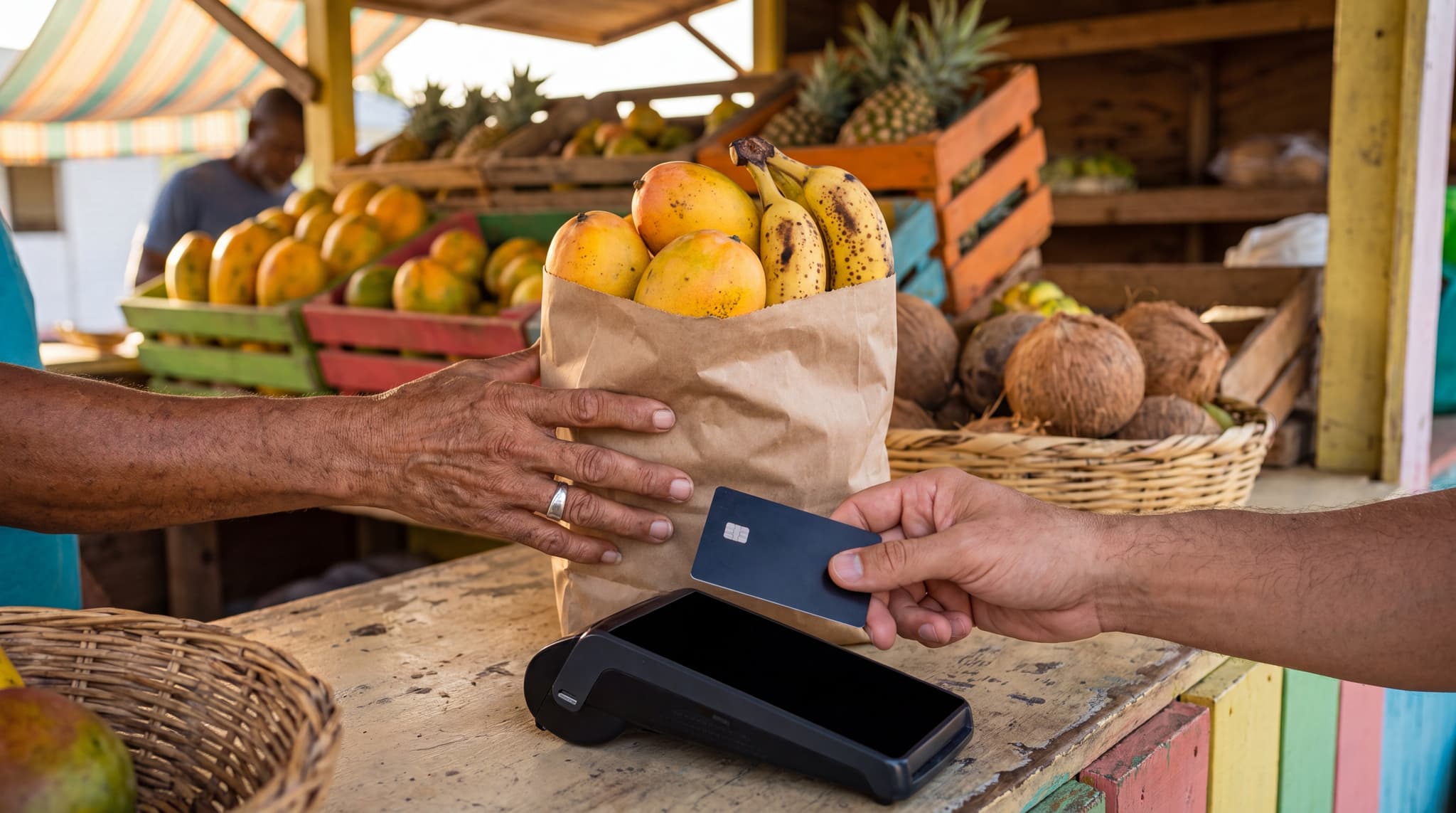
Cash is the surer route if you want a tip to reach a specific person, simply because a line added to a bill is a payment to the business. We could not verify how commonly card terminals on Curacao offer a tip prompt, so we would not build a plan around it. Carrying a few small notes covers it.
The tax that is already in the price
Curacao charges a turnover tax, omzetbelasting or OB, and it is built into displayed prices rather than added at the till. The Curacao Tourist Board's own tax FAQ states it plainly: a turnover tax of 6 percent applies, or 7 percent for accommodation, on every transaction.
Restaurant food and drink carry a higher rate. The Curacao tax authority's own omzetbelasting page, which we read directly on 29 August 2026, sets a high tariff of 9 percent on the provision of food, soft drinks and alcoholic drinks for consumption on the premises of a hotel, cafe, restaurant or related business. The same 9 percent list also covers diving and excursions in which a vehicle or a boat is an essential part, and car and boat rental. We checked the government page ourselves because this figure gets repeated across travel sites without anyone citing a source. What matters for your wallet either way: the tax is already inside the posted price, so there is no separate surprise line, and it is not a tip. Our vacation cost breakdown puts the tax and service charge into the full picture of what a week actually costs.
Find your hotel by month, beach & budget
Compare current Curacao rates across the major booking sites in one place, in USD. Most rooms are free to cancel.
Taxis: the fare is the thing to settle, not the tip
Curacao taxis do not use meters. Fares are set by fixed government zones based on where you are going, and rates run higher late at night. The single habit that prevents almost every taxi misunderstanding on this island is to confirm the price with the driver before your bags go in the boot, not after. The 10 percent the tourist board suggests is calculated on that agreed fare.
If you are landing and heading straight to a hotel, our airport transfers guide covers the zone system, the taxi rank and the pre-booked alternatives in detail.
All-inclusive resorts
There is no island-wide rule here, and we would not invent one. Gratuity policy at the all-inclusives varies by brand: some fold gratuities into the rate and say so, some leave it open. The reliable move is to read your own resort's published FAQ before you travel rather than trust a general Caribbean rule of thumb. Our all-inclusive guide covers what each of the island's all-inclusives actually includes.
Want a local to plan the whole trip?
Our concierge builds your days around what you actually want, from $149. A small curation team, never pay-to-play.
A short version you can carry
Check the bill. If a service charge is on it, roughly 10 percent in a restaurant or 12 percent at a hotel is already paid, and anything you add is a bonus rather than a duty. If it is not on the bill, 5 to 10 percent is the local norm for a waiter. Agree taxi fares before you set off and add about 10 percent. A guilder or a dollar a bag covers a porter. Carry small notes so a tip can reach a person rather than a line item.
And if you get it slightly wrong in either direction, nothing happens. Tipping here is genuinely discretionary, the official guidance says so, and no one on this island is keeping score. Where to spend the money instead is a more interesting question, and our food guide and dining pages are where we would point you.
Reading in Dutch? Our Dutch-language companion to this guide, written natively rather than translated, is at Fooi geven op Curacao.