The Blue Room is the Curacao photo that looks faked: a low sea cave lit from below in a blue so even and electric it reads like someone dropped a lamp in the water. The honest reaction, and the one we hear most, is some mix of 'is that real' and 'how on earth do you get in there.' It is real, the glow is physics rather than a filter, and getting in is simpler than the pictures suggest and far more weather-dependent than almost anyone tells you. Here is the straight version from our local team: what the Blue Room actually is, the three ways in, the one condition that decides whether you go at all, and who should give it a miss.
What the Blue Room actually is
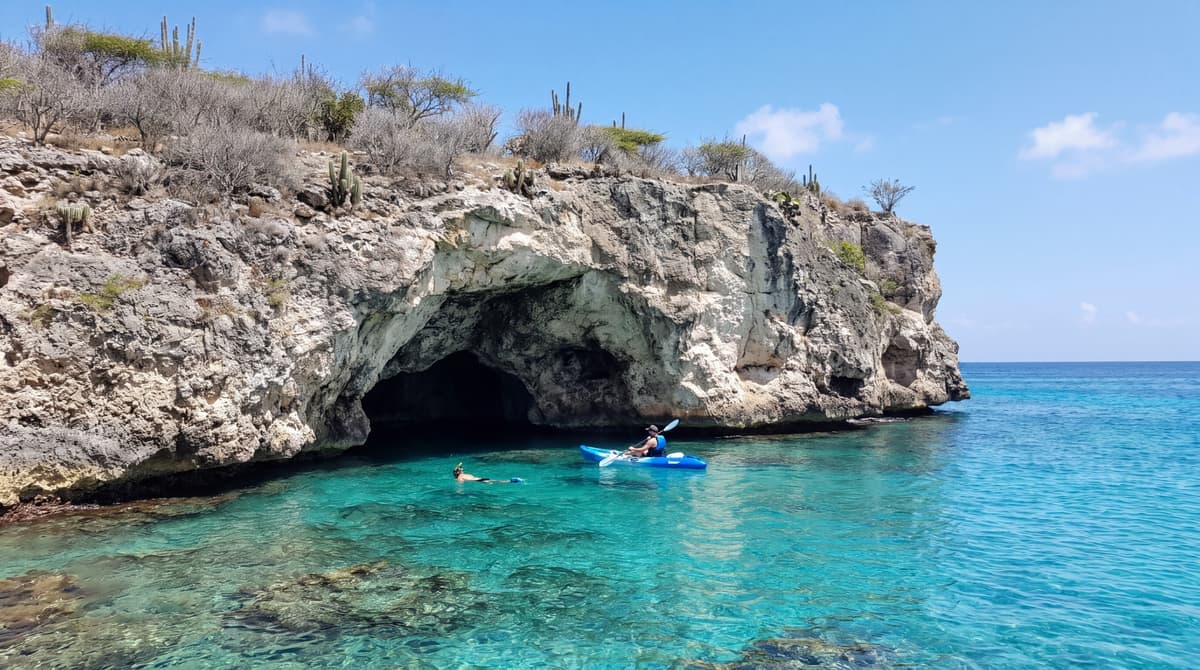
The Blue Room, written in Dutch as the Blauwe Kamer, is a partially submerged sea cave on Curacao's rugged west coast, in the Banda Abou end of the island just below Playa Santa Cruz. It is roughly an hour's drive west of Willemstad, out past the string of west-coast beaches, and there is no road to it and no beach entrance. The cave opens at the waterline under a limestone headland, so the only way in is across the water. The mouth is low, low enough that you dip under the rock lip to pass through, and then it opens into a chamber where the floor drops away several metres below you into clear water.
Why it glows, and when the blue is best
The colour is not lighting and it is not the filter it looks like. Sunlight travels through the water outside and enters the cave from below the surface, and the water strips out the warmer colours and throws back a deep, saturated blue that fills the chamber and lights the rock from underneath. Because it depends on the sun getting into the water at a high angle, the blue is strongest in the brighter part of the day, roughly late morning to early afternoon, around midday. Go at the right hour on a clear day and the effect is genuinely startling. Go late in the afternoon and you get a sea cave without the show.
Turn this guide into your trip
Add all 2 to My Trip, then bend them around your dates.
The one thing that decides your day: the sea
This is the honest heart of it, and the part the glossy write-ups skip. The Blue Room is governed by the sea state, not the weather forecast. The entrance is a low gap on an exposed stretch of coast, and in any real swell the water surges through it, which turns a simple duck-under into something genuinely dangerous. In calm conditions it is straightforward; on a choppy day it is a hard no, and no boat captain or guide worth trusting will take you in. So the day you can do the Blue Room is the day the sea is calm, which is not the same as the day it is sunny. Plan it as a flexible slot rather than a fixed appointment, keep it near the front of your trip so you can move it if the swell is up, and understand that a cancellation here is the sea protecting you, not bad luck. It is the same logic that governs the island's boat days generally; our rainy-day guide explains how sea state, not rain, is what actually cancels things here.
Our pick
Let us plan this trip for you
A small curation team builds your days around what you want, share your dates and we'll build the rest.
How to actually get there: the three ways in
By boat, the easy and safe option
Most people see the Blue Room from a boat, and for most visitors it is the right call. West-coast snorkel trips and small local boats run out to the cave, often paired with a stop at the Mushroom Forest dive site nearby, and the crew handle the thing that matters: they read the swell, hold the boat off the mouth, and put you in the water only when the passage is safe. A guided west-coast boat trip is the no-stress way to do it, and you can line up snorkel and boat options from our activities page. If you are not a confident swimmer, this is the version to choose.
By kayak from Playa Santa Cruz
The cheapest do-it-yourself route is to rent a kayak or paddleboard at Playa Santa Cruz and paddle along the cliff line to the cave, a short trip of roughly twenty minutes each way in calm water. It is a lovely paddle when the sea cooperates, and it puts you on your own schedule. The caveats are real: you are responsible for reading the conditions yourself, there is nowhere to rest once you are in the passage, and you need to be comfortable getting in and out of a kayak in open water. If the sea is anything but calm, leave the kayak on the sand.
Swimming in
The third option is to reach the cave in the water from Santa Cruz and swim the final stretch inside. We will be blunt: this is only for strong, confident open-water swimmers, and only in genuinely calm conditions. The approach is longer and rougher than the short distance on a map implies, there is no easy exit from the passage if conditions shift, and it is not the route for children, nervous swimmers, or anyone on their own. If that description gives you any pause at all, take the boat.
Stay in the Curaçao loop
Curaçao news and deals, in your inbox.
Get island news, fresh activity ideas and deals when available, straight to your inbox.
Occasional emails from Curaçao Playbook. Unsubscribe anytime.
Email signup is temporarily paused. Please check back soon.
Browse the latest Curaçao storiesWhat it is like in the water
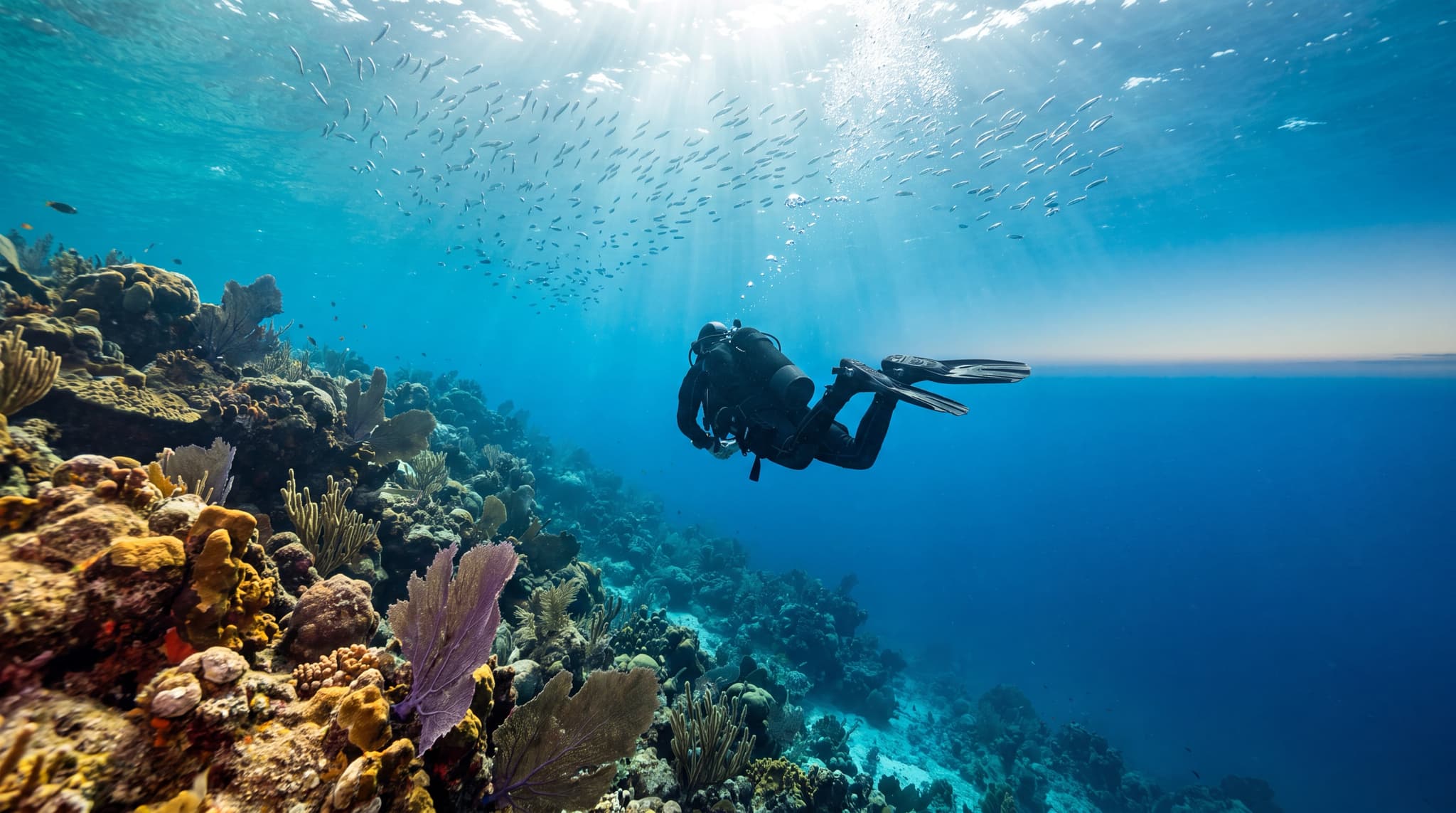
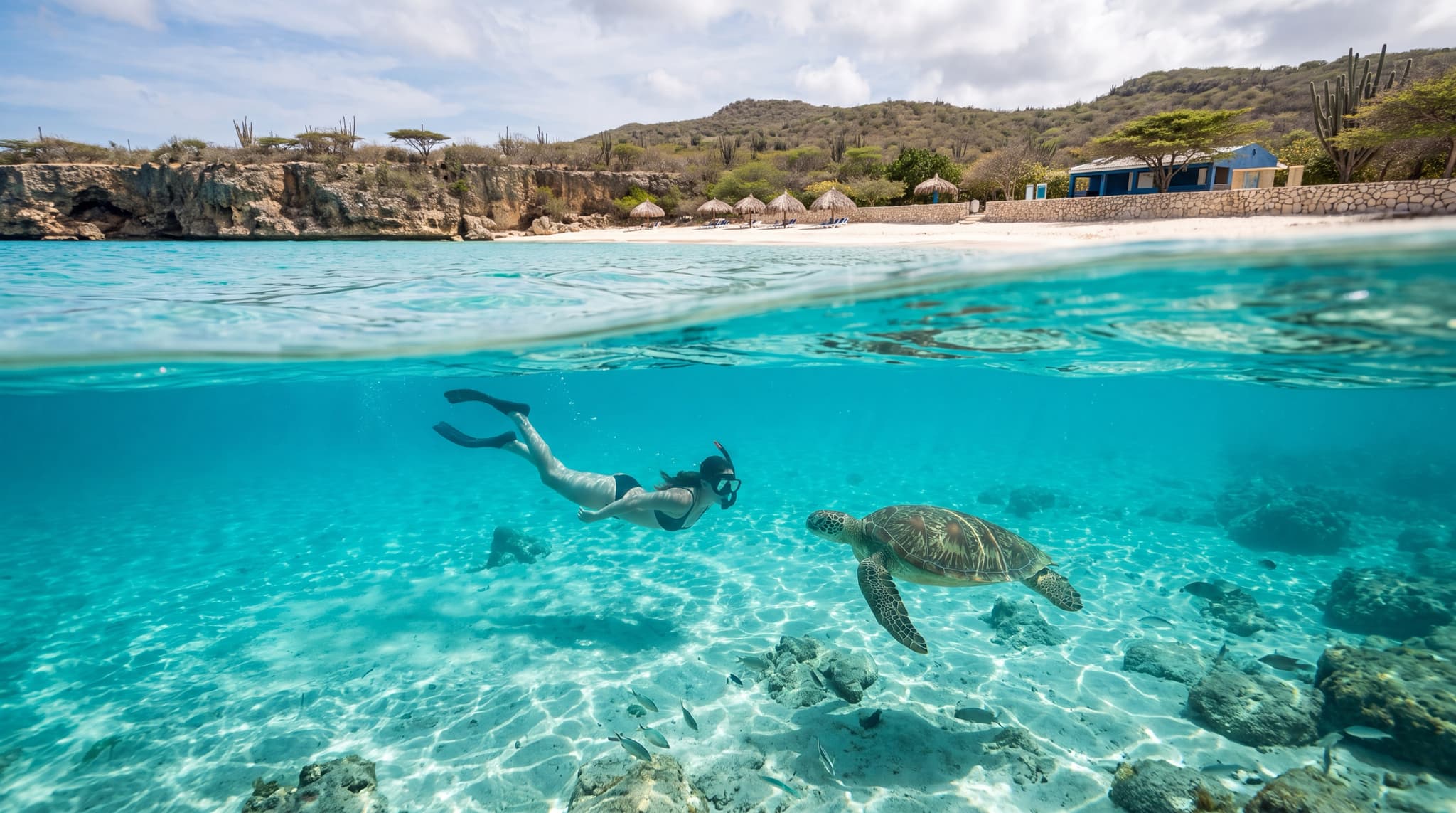
Inside, the Blue Room is a snorkeler's cave as much as a diver's. Snorkelers stay at the surface and free-dive the entrance to drop through the colour and watch it deepen, which is where the best of it is. The chamber is clear and deep, and the resident cast includes clouds of silversides, the odd lobster tucked into the rock, and reef fish working the entrance. Bring your own mask, snorkel and fins; there is nothing to rent at the cave itself. A couple of honest manners: do not touch or stand on anything, give the walls and any divers room, and keep track of the surface above you at all times, because the roof is low. There is no ticket or entrance fee for the cave itself, since it is a natural feature reached by water. You only pay for a boat seat or a kayak if you use one.
Our pick
Find your hotel by month, beach & budget
Compare current Curacao rates across the major booking sites in one place, in USD. Most rooms are free to cancel.
Who should go, and who should skip it
Go if you are a reasonably comfortable swimmer who can free-dive a metre or two and you can stay flexible about the day. Take the boat version if you want the glow without the risk calculus, if you have teenagers or a mixed-ability group, or if you would simply rather someone else read the sea for you. Skip the swim-in route, and arguably the cave altogether on that trip, if you are travelling with young children, if you are not a confident open-water swimmer, or if your dates are rigid and the sea refuses to settle. It is a spectacular hour when it lines up, and it is not worth forcing when it does not.
Build it into a west-coast day
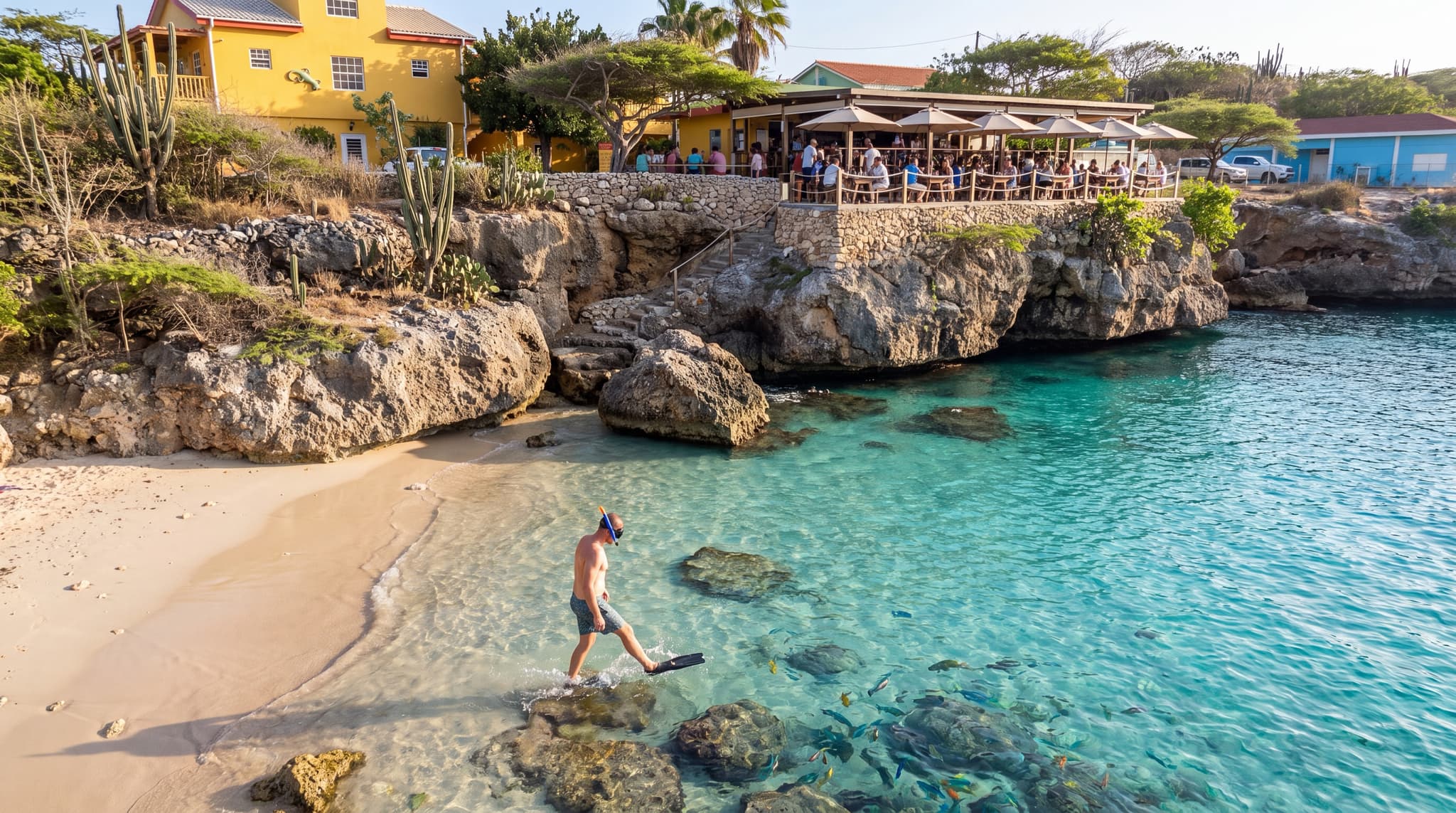
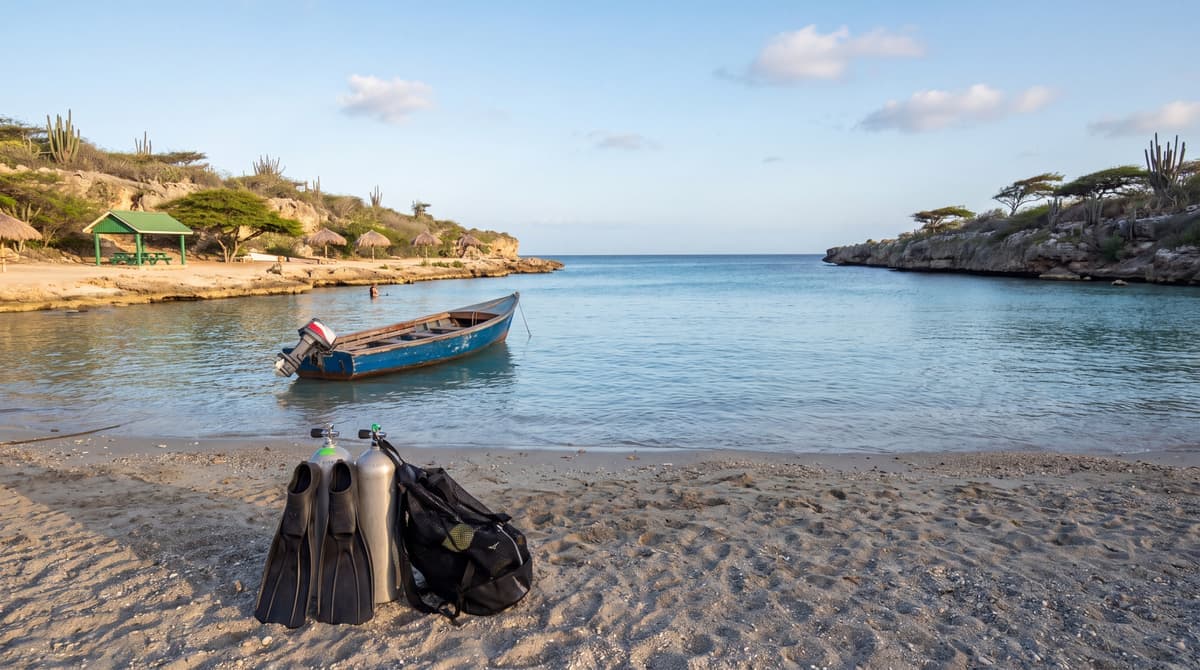
The Blue Room sits in the best stretch of the island for shore snorkelling, so pair it rather than driving an hour for a single cave. Playa Lagun a little to the north is one of the easiest shore-snorkel coves on Curacao, Kleine Knip is a postcard swimming beach nearby, and the whole run is covered in our west-coast beaches and snorkelling spots guides. If diving is your thing, the same coast carries the island's signature shore diving and the sites in our best dive sites guide. You will want a car for all of this; the west end is not somewhere you reach on a whim, as our car rental guide explains, and our car-free guide is honest about what you give up if you skip it.
On timing, the calm, clear water the cave needs tends to line up with the island's drier, high-season stretch from around December into spring, though Curacao is calm enough in patches year-round that there is no single right month; our best time to visit guide has the fuller picture.
Our pick
Browse 25 Curacao experiences
Each one vetted operator by operator, with the honest note and the cancellation window shown per tour.
The honest bottom line
The Blue Room earns the photos when the sea lets you in, and it is one of the genuinely memorable hours on Curacao: a short duck under the rock and you are floating in a chamber lit an impossible blue from below. The trick is to treat it as a calm-sea opportunity rather than a fixed plan, to let a boat crew make the safety call if you have any doubt, and to build it into a west-coast day of beaches and snorkelling rather than a long drive for one stop. When the conditions line up, few things here beat it. When they do not, the west coast has plenty more water worth being in.