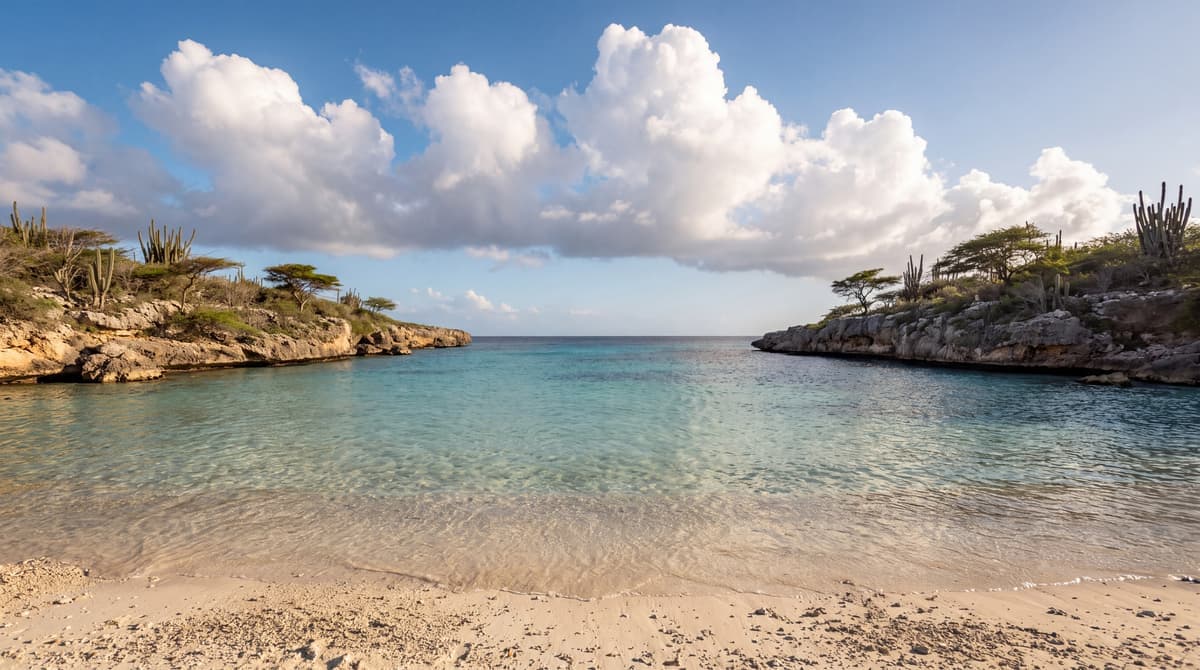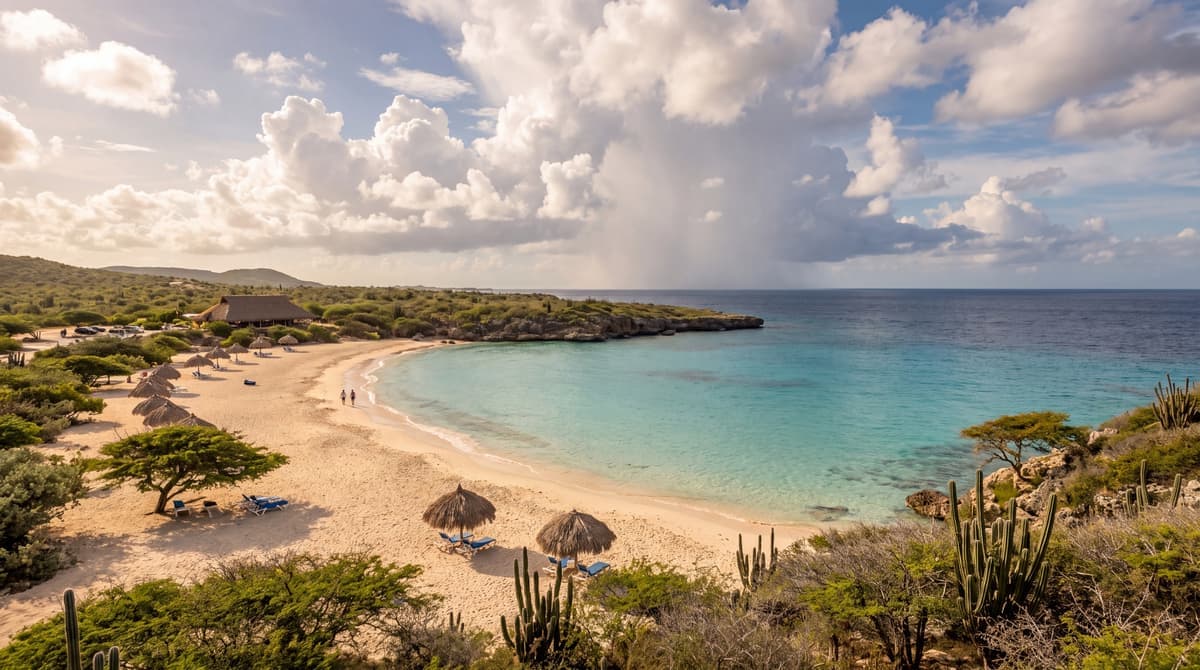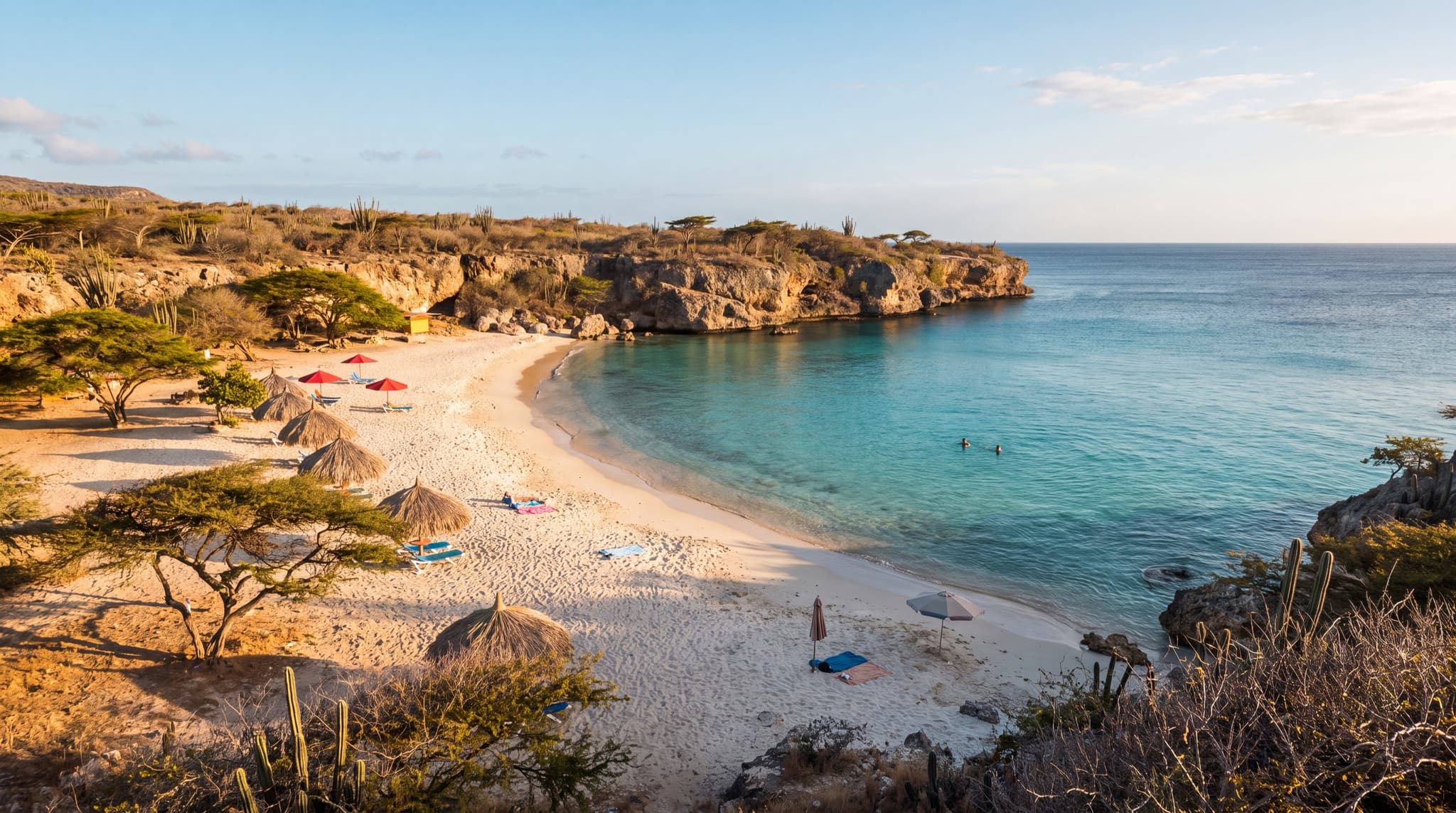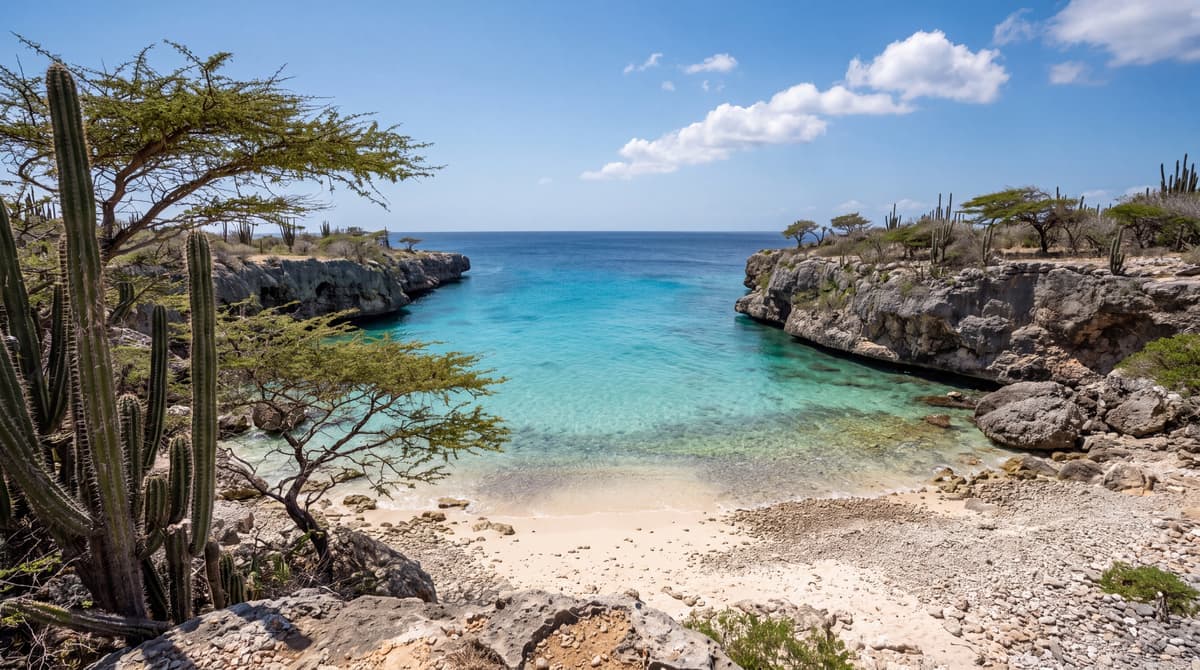
Open almost any Caribbean calendar and September gets a single word: avoid. It is the statistical peak of the Atlantic hurricane season and it sits at the front of the region's wet run, so the reflex is to skip it. On Curacao that reflex costs you the island's quietest, cheapest and, in some ways, easiest month. September here is genuinely warm, still one of the drier months on the island's own record, and it has the warmest sea of the year. Here is what September is actually like, using Curacao's own climate normals and arrival figures rather than a regional cliche, along with the honest trade-offs. For the full twelve-month view our best time to visit guide runs every month, and the neighbouring months have their own honest write-ups in our October guide, November guide and December guide.
The September numbers, and the honest caveat about them
| September averages (1991 to 2020) | Figure |
|---|---|
| Average high | about 33 C (around 91 F) |
| Average low | about 26 to 27 C (around 80 F) |
| Rainfall | roughly 50 mm |
| Rain days (1 mm or more) | about 5 |
| Sea temperature | about 28 C, the year's warmest |
| Wind | at its annual lull |
Two things about that table need saying plainly. First, September is one of the hotter months on Curacao, a touch warmer than October, so the heat is the real headline here, not the rain. Second, the roughly 50 mm rainfall figure comes from the 1991 to 2020 normals and independent datasets vary a little around it, so treat it as an order of magnitude rather than a precise number. What is not in dispute is where September sits in the year, and for that the Meteorological Department Curacao's own normals are clear: November, not September, is the wettest month at 141.0 millimetres, and the whole year totals only 570 millimetres. That is a semi-arid figure. Curacao sits in the Southern Caribbean Dry Zone, which is why the landscape is cactus and thorn scrub rather than rainforest, and why September, for all that the calendar files it under wet season, is still one of the drier months before the real rain arrives in October, November and December.
Browse 25 Curacao experiences
Each one vetted operator by operator, with the honest note and the cancellation window shown per tour.
Why September stays mostly dry
The same two facts that make October workable make September easier still. The Meteorological Department explains that Curacao's rainfall runs opposite to the usual tropical pattern: because of the sea and land breeze effect, most rain is suppressed during the day and tends to fall late at night or in the early morning. A September rain day on this island is very often a rain night, a wet road at dawn that is dry by mid-morning, rather than a lost beach afternoon. When rain does come in daylight it usually arrives as a short, heavy shower that passes, not the grey all-day drizzle the phrase rainy season conjures. You should pack for the odd downpour, and our packing list has the specifics, but in September you are not packing for a washout.
The heat, the wind and the warm sea
September's real trade-off is not rain, it is heat. Highs around 33 C put it among the warmest months, and the trade wind that keeps Curacao feeling fresh is at its annual low in September and October (the island is windiest from May to July). Less wind on a hot island means September can feel hotter and stickier on land than a breezy January day at the same reading, so shade, water and an early start matter more this month than in high season.
The flip side of that same coin is the water. The Meteorological Department gives the sea its warmest of the year in September and October, about 28.2 C, against a February-to-March low near 25.9 C. That is a genuine gift on an island whose identity is shore diving and easy shore-entry snorkelling: bathwater-warm entries and long, comfortable time under the surface. For calm conditions stay on the sheltered leeward side, where the south and east beach clubs at Jan Thiel and the Mambo strip are reliable and the west-coast coves such as Cas Abao, Porto Mari and Grote Knip are usually flat and, this month, close to empty. The wild north coast at Shete Boka takes the swell on purpose and is for watching, not swimming. Our beaches hub covers the shelter question beach by beach. If a boat day like Klein Curacao is on your list, book it early in your stay, because sea state, not rain, is what cancels those, and an early booking leaves room to move it.
Want a local to plan the whole trip?
Our concierge builds your days around what you actually want, from $149. A small curation team, never pay-to-play.
Hurricanes: the honest version at the season's peak
This is the question September travellers actually worry about, so here is the precise answer. The Atlantic hurricane season runs from 1 June to 30 November, and its climatological peak falls around the second week of September, so a September trip is, by the calendar, in the most active stretch of the whole season. What matters is where Curacao sits. The island is at roughly 12 degrees north, outside the main hurricane belt, and the Meteorological Department's record covering 1605 through 2024 counts 37 or more tropical cyclones passing within 100 nautical miles of Curacao, roughly once every 11 years, with no hurricane or tropical storm ever making direct landfall. That is not the same as never a drop of weather: Tropical Storm Bonnie passed close in June 2022 and brought warnings, school closures and 3 to 5 inches of rain. The accurate phrase is outside the main belt, not hurricane-proof. It is a large part of why the ABC islands draw storm-season travellers in the first place, and our hurricane risk page lays out the full record.
Stay in the Curaçao loop
Curaçao news and deals, in your inbox.
Get island news, fresh activity ideas and deals when available, straight to your inbox.
Occasional emails from Curaçao Playbook. Unsubscribe anytime.
Email signup is temporarily paused. Please check back soon.
Browse the latest Curaçao storiesThe quietest, best-value month of the year
September is not a shoulder month on Curacao, it is the trough, and that is the whole case for going. The Curacao Tourist Board recorded 53,671 stayover visitors in September 2025, up 8 percent on the year before but still the lowest month of that year, below even August's 60,690 and comfortably under the December 2025 record of 80,891. Fewer visitors means calmer beaches, easier tables and more room to negotiate on a car than at any other time, though we will not tell you rates halve, because no one publishes a verifiable month-by-month rate table. The one dated island-wide figure we can point to for context is the March 2026 hotel average of USD 305.87 a night, per the Curacao Hospitality and Tourism Association, a peak-month number to hold your own September quote against.
Part of why September stays this quiet is a calendar quirk worth knowing if you are weighing it against October. The Netherlands is Curacao's largest market by far, and the Dutch autumn school break, herfstvakantie, falls in the second half of October, not in September. So unlike October, September has no European school holiday filling the family resorts, which keeps it soft right through the month. On money generally, Curacao runs on the Caribbean guilder (XCG), pegged at USD 1 to XCG 1.79 since it replaced the old Netherlands Antillean guilder in 2025, with US dollars widely accepted. Our currency guide has the details and our vacation cost breakdown has the budget tiers.
Want a local to plan the whole trip?
Our concierge builds your days around what you actually want, from $149. A small curation team, never pay-to-play.
The one loud exception: North Sea Jazz
There is a single week when September is anything but quiet. The Curacao North Sea Jazz Festival, the island's marquee concert weekend, runs on 3, 4 and 5 September in 2026 at the World Trade Center at Piscadera Bay, with a free pre-show on 1 September. It draws big international names and fills Willemstad's hotels for that stretch, so if your dates touch the first week of September, book accommodation early and expect the capital to be busy, and if you would rather have the island to yourself, aim for the middle or end of the month instead. Later on, Curacao Pride's 14th edition runs 27 September to 3 October 2026 per the organiser, so its opening days land in the last week of the month in and around Willemstad. Beyond those two, September is everyday island life: Pietermaai's nightlife ticks along, the roadside flamingos are at Jan Kok as ever, and the west coast is yours with almost nobody in it.
Getting around, and where to base yourself
None of the weather changes the one rule that governs every Curacao trip: you will want a rental car. The best beaches, both national parks and the quiet coves are spread along a long coastline, well beyond walking distance of any single hotel zone, and September's empty roads make the driving even easier. Our car rental guide covers pickup and insurance. Where you base yourself shapes how much you drive: our west side versus east side guide and where to stay guide walk through the choice, and our 7-day itinerary and 5-day itinerary show how the days fit together. When you are ready to line up the pieces, /book and the activities page are where to start.
Let us plan this trip for you
A small curation team builds your days around what you want, share your dates and we'll build the rest.
So, is September a good time to visit Curacao?
Yes, with two honest caveats. It is one of the hotter months, and with the trade wind at its annual lull the heat can feel heavier than a breezy winter day, so plan shade and early starts. And it carries a small chance of a passing shower, around five rain days on the long-term average, most of it arriving overnight. What you get in return is the emptiest beaches and softest rates of the year, the warmest sea for snorkelling and diving, and the reassurance of an island that sits outside the main hurricane belt and has never taken a direct hit, even at the season's statistical peak. Pack for sun with a light layer for the odd downpour, aim away from the North Sea Jazz weekend if you want it quiet, and if seaweed is on your mind, that is a separate question with its own answer in our sargassum guide.