The strange thing about March on Curacao is that it is probably the best all-round weather month of the year, and that is exactly why it is one of the most expensive. This is the island at its driest and most reliably sunny, in the middle of the December to April high season, with the entire Atlantic hurricane calendar still months away in both directions. You pay for that certainty in crowds and rates. Here is what March is actually like, using the island's own climate normals and arrival figures rather than a regional cliche, along with the honest trade-offs. For the full twelve-month view our best time to visit guide runs every month, and the neighbouring high-season months have their own honest write-ups in our January and February guide and December guide.
The March numbers, and the one honest caveat
| March averages | Figure |
|---|---|
| Average high | 30.8 C (87.4 F) |
| Average low | 24.9 C (76.8 F) |
| Rainfall | about 15 to 30 mm, the driest month of the year |
| Rain days | only a handful |
| Sea temperature | about 26 C, the year's coolest |
| Trade wind | steady and fresh, one of the breezier months |
Two of those lines matter most. The first is the rainfall: March is the driest month on Curacao, the low point of a year that only totals 570 millimetres in the first place. The second is the sea, and it is the one genuine caveat of a March trip, so we put it in the table rather than bury it. The water in March is at its yearly coolest, around 26 C, which is still bath-warm by any temperate standard but is the one stretch of the year the sea is off its late-summer peak. Everything else about March points the same way: hot but not the hottest, dry, sunny and breezy.
Browse 25 Curacao experiences
Each one vetted operator by operator, with the honest note and the cancellation window shown per tour.
Why March is the island's driest month
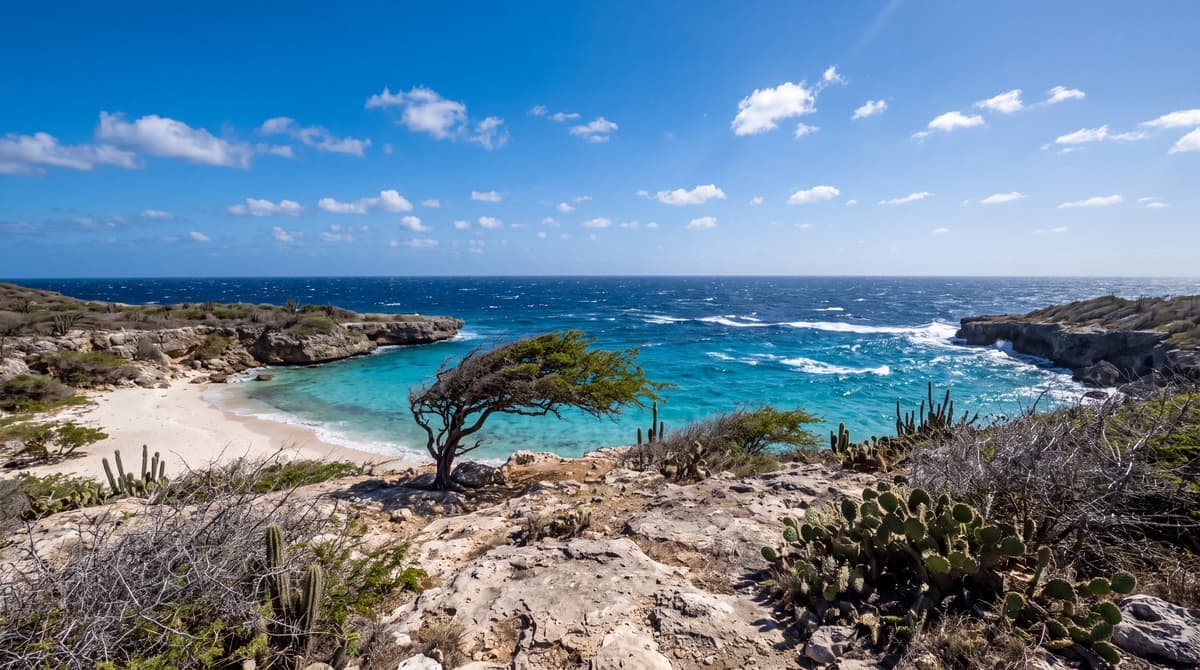
Curacao sits in the Southern Caribbean Dry Zone and is classified semi-arid, which is why the landscape is cactus and thorn scrub rather than rainforest. The Meteorological Department Curacao's own climate summary puts the dry season from February through May, and March sits right in the heart of it. The whole year averages just 570 millimetres of rain, with November the single wettest month at 141.0 millimetres, so a Caribbean calendar that files March under wet season has simply never looked at the numbers.
How dry is March exactly? Here the datasets disagree a little, so we will not pretend to a precision nobody has. One widely used climate record puts March at around 15 millimetres across only a couple of days; another reads it closer to 28 millimetres over about seven; the Meteorological Department's own March 2024 summary logged a month that fell nearly half below its long-term norm. Take the honest version: somewhere in the 15 to 30 millimetre range, unambiguously the least rain of the year, and far below the wet-season months. When rain does come it follows the island's usual rule, which the department explains plainly: because of the sea and land breeze effect most precipitation is suppressed during the day and tends to fall late at night or early in the morning, usually as a short, heavy shower that passes rather than the grey all-day drizzle the phrase rainy season conjures. In March you are barely packing for it at all. Our packing list has the specifics.
The sea and the wind: March's trade-off, flipped
March inverts the trade-off that defines the quiet autumn months. Where September and November are hot and calm, so the air feels heavy and sticky, March is hot and breezy, and the breeze is the point. The Meteorological Department's records have the trade wind fresh and steady through the February-to-August stretch, and on a 30 C island a constant easterly is a gift: it takes the edge off the heat, keeps the nights sleepable and dries a wet road by breakfast. It is a large part of why March feels so comfortable despite highs that are only two or three degrees below the September peak.
The sea is the counterweight. The department gives an annual average sea temperature of about 27 C, coldest around February and March at roughly 25.9 C and warmest in September and October at about 28.2 C. So a March swim is a couple of degrees cooler than an autumn one. In practice nobody on this island hesitates over two degrees, and the dry-season air brings a bonus underwater: some of the clearest visibility of the year, on an island whose identity is shore diving and easy shore-entry snorkelling. The same fresh wind that keeps the land comfortable is the one thing to plan around at sea, which brings us to the beaches.
Want a local to plan the whole trip?
Our concierge builds your days around what you actually want, from $149. A small curation team, never pay-to-play.
Which beaches stay calm, and is the sea rough?
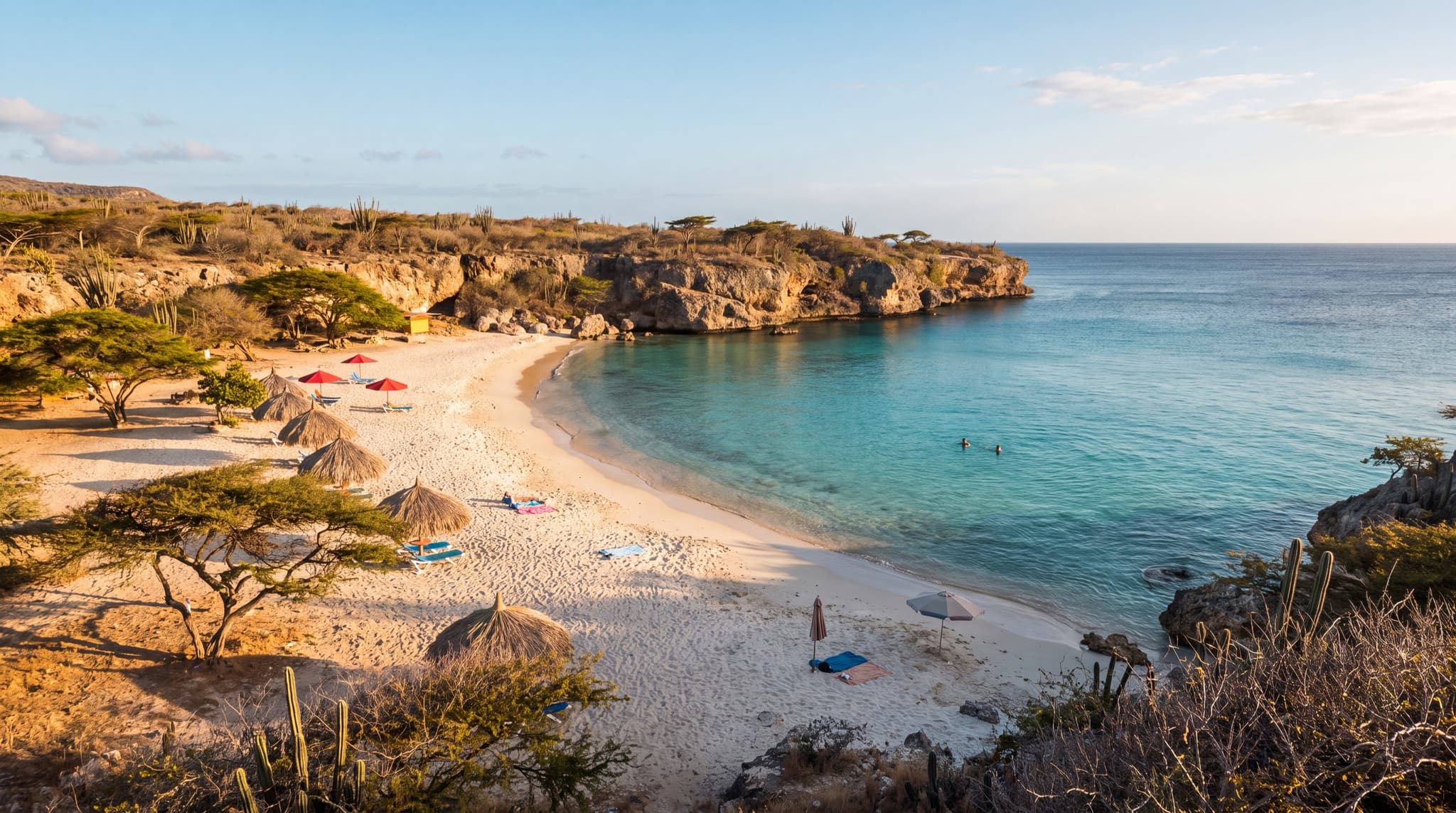
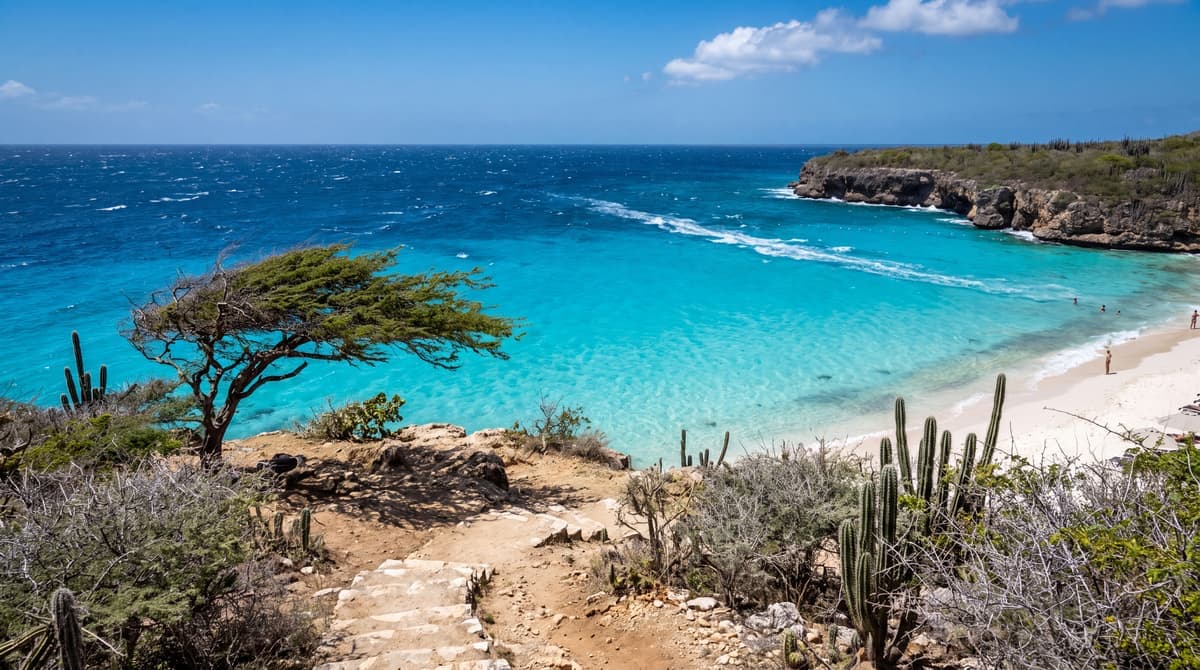
Curacao's leeward south and southwest coast is the sheltered side year-round, and the Meteorological Department's marine guidance puts the highest waves and swell along the northern and western shores, a structural fact of the island's geography rather than a seasonal one. In a breezy March that geography matters a little more than usual. The beach clubs on the south and east side, Jan Thiel and the Mambo strip, are the reliable calm-water option in any conditions. The west-coast coves such as Cas Abao, Porto Mari and Grote Knip are still on the sheltered side and are usually fine, but a windy March afternoon can put more chop and the odd whitecap into them than a still autumn day would, so mornings are the calmer bet there. The wild north coast at Shete Boka takes the swell on purpose and is for watching, never swimming. Our beaches hub covers the shelter question beach by beach. If a boat day such as Klein Curacao is on your list, book it early in your stay, because sea state, not rain, is what cancels those in a breezy month, and an early booking leaves room to move it.
Hurricanes: the month with the easiest answer of all
Of all twelve months, March has the cleanest hurricane answer. The Atlantic hurricane season runs from 1 June to 30 November and peaks from August to October, so a March trip is not merely at the edge of the season, it sits months clear of it in both directions. Even that understates Curacao's position. The island is at roughly 12 degrees north, outside the main hurricane belt, and the Meteorological Department's record covering 1605 through 2024 counts 37 or more tropical cyclones passing within 100 nautical miles of Curacao, roughly once every 11 years, with no hurricane or tropical storm ever making direct landfall. That is not the same as never a drop of weather: Tropical Storm Bonnie passed close in June 2022 and brought warnings, school closures and 3 to 5 inches of rain. The accurate phrase is outside the main belt, not hurricane-proof, and in March the calendar removes even the small seasonal question. Our hurricane risk page lays out the full record.
Want a local to plan the whole trip?
Our concierge builds your days around what you actually want, from $149. A small curation team, never pay-to-play.
Stay in the Curaçao loop
Curaçao news and deals, in your inbox.
Get island news, fresh activity ideas and deals when available, straight to your inbox.
Occasional emails from Curaçao Playbook. Unsubscribe anytime.
Email signup is temporarily paused. Please check back soon.
Browse the latest Curaçao storiesPeak season: the crowds, the prices, and why you book in September
Here is the honest counterweight to all that good weather. March is peak season, and the numbers are blunt about it. The Curacao Tourist Board recorded 72,474 stayover visitors in March 2025, up from 63,556 in March 2024, with the United States sending 22,002 (up 17 percent, the first time a March topped twenty thousand American visitors, staying an average of 5.8 nights) and the Netherlands 22,485 (up 17 percent, staying an average of 11.4 nights). March is not the single busiest month of the year, that record belongs to December, which hit an all-time high of 80,891 in December 2025, but it is firmly inside the December to April high season, and it draws two demand waves at once: the US spring-break and snowbird window and a Dutch market that stays nearly a fortnight and books early.
That early-booking behaviour is the practical takeaway, and it is why we are writing this in September. The best-value properties and the rental cars for March go months ahead, so if you are reading this in the northern autumn, March is a trip to lock in now rather than closer to the date. On money, no one publishes a verifiable month-by-month rate table, so compare live quotes for your own dates. The one dated island-wide anchor we can point to is a March figure itself: a hotel average of USD 305.87 a night in March 2026, per the Curacao Hospitality and Tourism Association, which is a peak-season number to measure your quote against. Curacao runs on the Caribbean guilder (XCG), pegged at USD 1 to XCG 1.79 since it replaced the old Netherlands Antillean guilder in 2025, with US dollars widely accepted; our currency guide has the details and our vacation cost breakdown has the budget tiers.
Carnival is already over by March
One assumption trips up first-time planners: that spring on a Caribbean island means Carnival. On Curacao it does not, or not in March. Carnival here is tied to Lent and peaks in the run-up to Ash Wednesday, which in 2027 falls on 10 February, so the big Gran Marcha street parades run in early February 2027 and the season has closed well before March begins. We deliberately do not publish the specific 2027 parade dates that the organisers have not confirmed; our carnival guide explains exactly what is and is not known. If Carnival is the reason you want to come, aim for late January into early February, not March.
Let us plan this trip for you
A small curation team builds your days around what you want, share your dates and we'll build the rest.
What else is on in March
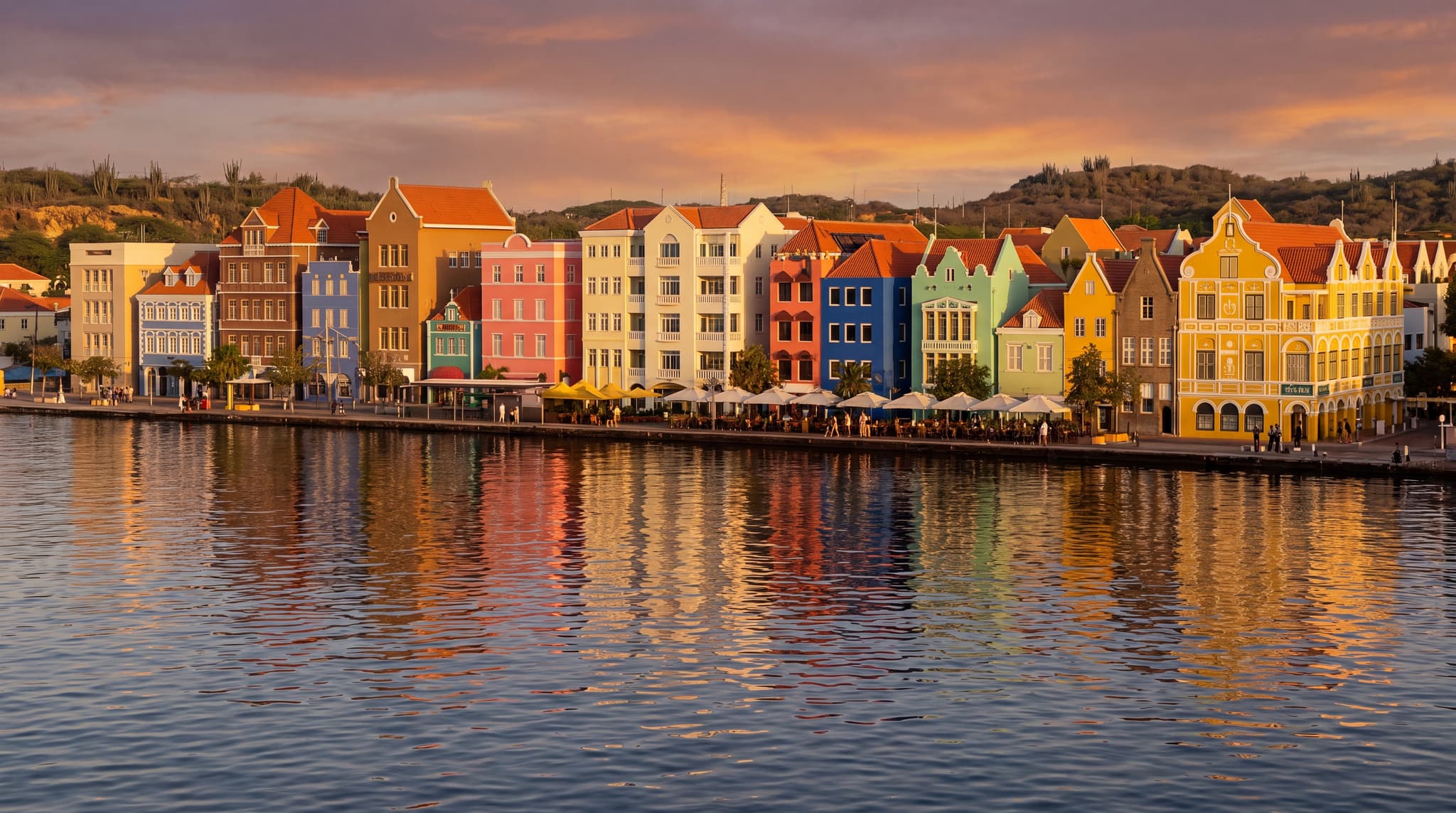
With Carnival behind it, March runs a quiet island calendar, and that is part of its appeal for travellers who want the weather rather than the crowds a festival brings. The island's marquee fixtures all fall in other months: Curacao North Sea Jazz in early September, Curacao Pride in late September, the KLM Curacao Marathon in November, and King's Day on 27 April. So a March trip is everyday island life at its sunniest: Pietermaai's nightlife ticking along in Willemstad, the roadside flamingos out at Jan Kok, and the west-coast beaches at their brightest. For anything with a confirmed date inside your exact travel window, our what is on now page tracks the events we can source rather than the ones we cannot.
Getting around, and where to base yourself
None of the weather changes the one rule that governs every Curacao trip: you will want a rental car. The best beaches, both national parks and the quiet coves are spread along a long coastline, well beyond walking distance of any single hotel zone, and in peak-season March the cars go early along with the rooms. Our car rental guide covers pickup and insurance. Where you base yourself shapes how much you drive: our west side versus east side guide and where to stay guide walk through the choice, and our 7-day itinerary and 5-day itinerary show how the days fit together. When you are ready to line up the pieces, /book and the activities page are where to start.
Find your hotel by month, beach & budget
Compare current Curacao rates across the major booking sites in one place, in USD. Most rooms are free to cancel.
So, is March a good time to visit Curacao?
Yes, and for pure weather it may be the best month of the year, with two honest caveats. It is peak season, so it is one of the busiest and most expensive stretches on the calendar, and it comes after Carnival rather than during it. And the sea is at its yearly coolest, around 26 C, still warm but off its late-summer peak. What you get in return is the driest, most reliably sunny month on the island, a fresh trade wind that keeps the heat comfortable, some of the clearest underwater visibility of the year, and a hurricane season that is months away in every direction. Book early, because a Dutch long-stay market and the US spring-break wave both converge on these weeks. Pack for sun and wind rather than rain; our packing list has the specifics. And if seaweed is on your mind, that is a separate question with its own answer in our sargassum guide.